
T: +86-0731-85185770
E: enquiry@qilumetal.com
E: enquiry@qilumetal.com
No. 18 Xiangfu Middle Road,Yuhua District, Changsha City
Views: 0 Author: Site Editor Publish Time: 2026-06-03 Origin: Site


Choosing between 1018 vs 1045 steel can be tough. Both have unique strengths and weaknesses. Picking the right steel affects your project’s success. In this post, you’ll learn the key differences, challenges, and how to select the best steel for your needs.
When deciding between 1018 vs 1045 steel, understanding their differences helps you pick the right material for your project. The key factor separating these two is carbon content, which influences strength, hardness, weldability, and machinability.
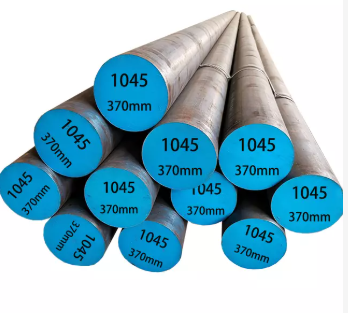
1018 steel is a low-carbon steel with about 0.18% carbon. This lower carbon content makes it softer, more ductile, and easier to weld. In contrast, 1045 steel is a medium-carbon steel with roughly 0.45% carbon. The higher carbon content increases its strength and hardness but reduces ductility and weldability.
This difference means 1018 steel is better for parts needing good formability and welding, while 1045 steel suits applications requiring higher strength and wear resistance.
Mechanically, 1045 steel outperforms 1018 in tensile and yield strength. For example, 1045’s tensile strength can reach around 91,000 psi, compared to 64,000 psi for 1018. Its Brinell hardness is also higher, typically near 179 versus 126 for 1018.
If your project demands parts that endure heavy loads or wear, 1045 is the stronger choice. But if you need a material that’s easier to shape or weld, 1018 often fits better.
Welding 1018 steel is straightforward due to its low carbon content. It rarely requires preheating or special procedures, reducing fabrication time and cost. On the other hand, 1045 steel’s higher carbon makes it prone to cracking during welding, necessitating preheating and controlled cooling.
If your design involves extensive welding or complex assemblies, 1018 steel helps avoid common welding challenges.
1018 steel machines easily with less tool wear, allowing faster cutting and better surface finishes. Its ductility also aids forming processes like bending or stamping. 1045 steel, being harder, wears down tools faster and requires slower machining speeds.
For tight tolerance parts or high-volume production where machining efficiency matters, 1018 steel is often preferred. However, 1045 can still be machined effectively with the right tooling and techniques, especially when strength is critical.
Generally, 1018 steel is more cost-effective due to lower raw material costs and easier processing. Its excellent weldability and machinability reduce fabrication expenses. Conversely, 1045 steel costs more upfront and may increase machining and heat treatment expenses.
Balancing budget constraints with performance needs is key. For less demanding applications, 1018 saves money without sacrificing quality. For high-stress parts, investing in 1045’s strength is worthwhile.
1018 steel offers higher ductility, making it less likely to crack under bending or impact. 1045 steel trades some ductility for greater wear resistance and hardness. This trade-off means 1018 suits parts needing flexibility, while 1045 is better for components exposed to abrasion or heavy loads.
Choose 1018 steel when weldability, machinability, and cost are priorities, especially for low-stress parts.
Choose 1045 steel for higher strength, hardness, and wear resistance, particularly when heat treatment is planned.
Consider fabrication methods and application demands to avoid overdesign or manufacturing difficulties.
Understanding these factors in the 1018 vs 1045 steel comparison helps you select the best material, ensuring your project meets performance and budget goals.
The primary chemical difference between 1018 and 1045 steel lies in their carbon content. 1018 steel contains about 0.18% carbon, classifying it as a low-carbon steel. This low carbon level gives it better ductility and weldability. On the other hand, 1045 steel has approximately 0.45% carbon, making it a medium-carbon steel. This higher carbon content increases its strength and hardness but reduces ductility and weldability.
Both 1018 and 1045 steels contain similar amounts of manganese, typically between 0.60% and 0.90%. Manganese improves hardenability and tensile strength while maintaining toughness. Phosphorus and sulfur are present in trace amounts, usually capped at 0.04% and 0.05%, respectively. These elements can negatively affect steel toughness and weldability if present in higher quantities, so their low levels help maintain good mechanical properties in both grades.
Element | 1018 Steel (%) | 1045 Steel (%) |
Carbon (C) | 0.18 | 0.45 |
Manganese (Mn) | 0.60 - 0.90 | 0.60 - 0.90 |
Phosphorus (P) | ≤ 0.04 | ≤ 0.04 |
Sulfur (S) | ≤ 0.05 | ≤ 0.05 |
Iron (Fe) | Balance (~98.8 - 99.3) | Balance (~98.5 - 99.0) |
The carbon content directly affects mechanical properties. The higher carbon in 1045 steel results in increased tensile and yield strength, along with higher hardness. This makes 1045 steel ideal for parts requiring greater wear resistance and load-bearing capacity. Conversely, 1018 steel’s lower carbon content provides better ductility and formability, making it easier to machine and weld without cracking.
Manganese supports strength and toughness in both steels, while phosphorus and sulfur levels are kept low to avoid brittleness and weld defects. The balance of these elements ensures that both steels meet performance expectations for their intended applications.
When comparing 1018 vs 1045 steel strength and mechanical properties, several key factors come into play. These differences influence how each steel grade performs under stress, fatigue, and in various fabrication processes.
1045 steel, with its medium carbon content, offers significantly higher tensile strength than 1018. Typically, 1045 steel's tensile strength reaches around 91,000 psi, while 1018 steel averages near 64,000 psi. Similarly, the yield strength of 1045 is about 77,000 psi, compared to 54,000 psi for 1018. This makes 1045 steel a better choice for components that must withstand higher loads and stresses.
Ductility measures how much a material can stretch before breaking. 1018 steel exhibits greater elongation, around 15%, compared to 12% for 1045 steel. This means 1018 is more flexible and less prone to cracking under bending or impact. The higher carbon content in 1045 reduces ductility, making it stiffer but also more brittle under strain.
Hardness impacts wear resistance and surface durability. Brinell hardness numbers typically range from 120 to 130 for 1018 steel, whereas 1045 steel scores higher, generally between 170 and 210. This increased hardness allows 1045 steel to better resist abrasion and deformation, making it suitable for parts exposed to heavy wear.
Both 1018 and 1045 steels are commonly supplied as cold drawn bars, which improves surface finish and dimensional accuracy. Cold drawing also slightly increases strength and hardness in both grades. However, 1045 steel responds much better to heat treatment processes like quenching and tempering, which can further enhance its mechanical properties. In contrast, 1018 steel has limited heat treatment potential due to its low carbon content.
In applications involving cyclic loading, 1045 steel generally offers better fatigue resistance because of its higher strength and hardness. However, its reduced ductility means it can be more susceptible to cracking if improperly processed. 1018 steel, with its higher ductility, tolerates bending and impact better but may not endure prolonged high-stress cycles as effectively.
When comparing 1018 vs 1045 steel machinability, 1018 stands out for its ease of machining. Its low carbon content results in a softer, more ductile material that cuts smoothly. This means less tool wear, faster feed rates, and better surface finishes. For manufacturers focusing on high-volume production or parts requiring tight tolerances, 1018 steel often reduces machining time and costs.
On the other hand, 1045 steel, with its medium carbon content, is harder and stronger. While it machines well, it causes more rapid tool wear and typically requires slower cutting speeds and more robust tooling. Using carbide or coated tools and proper cooling can improve tool life when machining 1045. The increased hardness also means achieving fine surface finishes can be more challenging compared to 1018.
Welding 1018 steel is relatively straightforward. Its low carbon content minimizes the risk of cracking and distortion, allowing welding without preheating in most cases. This ease of welding makes 1018 ideal for fabrications involving extensive welds or complex assemblies. Standard welding methods with common filler materials are usually sufficient.
In contrast, 1045 steel demands more careful welding procedures. Its higher carbon content increases the risk of martensite formation and cold cracking in the heat-affected zone. Preheating before welding and controlled cooling afterward are often necessary. Post-weld heat treatment, such as tempering, may be required to relieve stresses and improve toughness. These additional steps elevate fabrication time and cost but are essential for maintaining integrity in welded 1045 components.
Heat treatment is a key distinction between 1018 and 1045 steel properties. 1045 steel responds well to quenching and tempering, significantly increasing its hardness, tensile strength, and wear resistance. This capability makes 1045 suitable for parts exposed to heavy loads or abrasive conditions, such as gears, shafts, and axles.
Conversely, 1018 steel has limited heat treatment potential due to its low carbon content. While annealing or normalizing can improve machinability and relieve stresses, it cannot achieve the high hardness levels possible with 1045. For applications requiring enhanced strength through heat treatment, 1045 is the preferred choice.
Both 1018 and 1045 steels are commonly available as cold drawn bars. Cold drawing improves dimensional accuracy, surface finish, and mechanical properties such as strength and hardness. For 1018 steel, cold drawing enhances its already excellent machinability and surface quality, making it ideal for precision parts and finished components.
1045 steel also benefits from cold drawing, which refines its grain structure and surface texture. However, due to its higher hardness, achieving ultra-smooth finishes may require additional machining or polishing steps. Choosing cold drawn stock in either grade supports better control over tolerances and aesthetics.
Fabrication challenges differ between the two steels. With 1018, the main advantages are ease of machining and welding, but its lower strength limits use in high-stress parts. For 1045, the higher strength and hardness come with increased machining difficulty and welding complexity.
Best practices for 1018 include selecting appropriate cutting tools to maximize tool life and ensuring proper weld parameters to avoid overheating. For 1045, using carbide tooling, optimizing feed rates, and implementing pre/post-weld heat treatments are critical to prevent tool damage and weld defects.
Understanding these fabrication and processing nuances ensures you select the right steel grade for your manufacturing capabilities and project requirements.
Choosing between 1018 and 1045 steel often comes down to the specific application and performance requirements. Each grade offers distinct advantages that suit different industrial uses.
1018 steel is prized for its excellent weldability, machinability, and formability. These characteristics make it ideal for:
Welded frames and structural components: Its low carbon content minimizes cracking risks during welding.
General-purpose machine parts: Pins, shafts, bolts, and studs often use 1018 due to ease of machining.
Fixtures and mounting plates: Components that require good surface finish and moderate strength.
Formed parts: Bending, stamping, and cold forming are easier with 1018 steel.
Automotive brackets and mounts: Where moderate strength and good weldability are needed.
Because 1018 steel is softer and more ductile, it suits applications where the parts undergo shaping or frequent welding. It also helps reduce fabrication costs in large-volume production.
1045 steel’s higher carbon content delivers greater strength and hardness, making it suitable for more demanding uses such as:
Axles, shafts, and crankshafts: Parts exposed to significant mechanical stress.
Gears and sprockets: Components requiring wear resistance and durability.
Machine tool parts: Where hardness and fatigue resistance are critical.
High-stress fasteners and pins: Fasteners that must withstand heavy loads.
Heat-treated parts: 1045 is often quenched and tempered to boost strength.
Its medium carbon content means 1045 steel is less weldable and machinable than 1018, but it performs better in load-bearing and wear-intensive environments.
Choose 1018 steel when your project prioritizes:
Ease of welding: Minimal preheating and fewer welding complications.
Machining efficiency: Faster cutting speeds and less tool wear.
Cost-effectiveness: Lower raw material and fabrication costs.
Parts with moderate strength needs: When high hardness is not essential.
Complex assemblies: Where welding is extensive and part shape flexibility matters.
Opt for 1045 steel when:
Higher strength and hardness are essential: For parts under heavy load or wear.
Heat treatment is planned: To further enhance mechanical properties.
Wear resistance is critical: Such as in gears and shafts.
Fatigue resistance matters: For cyclically loaded components.
Machining challenges can be managed: Using appropriate tooling and cutting parameters.
Welded conveyor frame: 1018 steel is preferred for its weldability and cost savings since loads are light.
Transmission pinion gear: 1045 steel, often heat-treated, provides the strength and wear resistance needed.
Machine brackets: 1018 steel offers ease of fabrication and good finish.
Axle shafts: 1045 steel’s higher tensile strength ensures durability under stress.
Matching steel grade to application needs avoids overengineering and ensures optimal performance.
When choosing between 1018 vs 1045 steel, cost is a crucial factor that often guides the decision-making process. Understanding how raw material prices, machining expenses, heat treatment costs, and regional market trends influence overall project budgets helps optimize steel selection.
1018 steel is generally more affordable than 1045. Its low carbon content and widespread production make it a cost-effective option. On average, 1018 steel prices per kilogram are lower due to simpler manufacturing processes and abundant supply. In contrast, 1045 steel commands a premium because of its higher carbon content, tighter quality controls, and enhanced mechanical properties.
Region | 1018 Steel (USD/kg) | 1045 Steel (USD/kg) |
China | 0.80 – 1.10 | 1.20 – 1.50 |
United States | 1.00 – 1.30 | 1.50 – 1.80 |
Europe | 1.10 – 1.40 | 1.60 – 1.90 |
Prices fluctuate with market demand, raw material costs, and geopolitical factors. Always check current quotes for accurate budgeting.
Machining 1018 steel is easier and faster due to its softer nature and better machinability. This reduces tooling wear and cutting time, lowering labor and equipment expenses. Conversely, 1045 steel’s higher hardness increases tool wear and requires slower machining speeds or specialized tooling. These factors add to machining costs, especially in high-volume production.
Fabricators must consider the trade-off between material strength and machining efficiency. For projects with tight tolerances and complex geometries, 1018 may offer cost savings, while 1045’s strength justifies higher machining expenses in demanding applications.
Heat treatment is often necessary for 1045 steel to reach its full mechanical potential. Quenching and tempering improve hardness and wear resistance but add processing time and cost. 1018 steel typically requires minimal or no heat treatment, further reducing fabrication expenses.
Welding 1045 steel also demands preheating and controlled cooling to prevent cracking, increasing labor and energy costs. In contrast, 1018 steel’s excellent weldability minimizes these additional expenses.
Regional differences in raw material sourcing, labor rates, and steel demand impact pricing. For example, 1018 steel may be especially economical in regions with high production volumes, while 1045 steel prices can spike due to specialized treatment capabilities.
Market trends such as steel tariffs, supply chain disruptions, or raw material shortages can also sway prices. Staying informed about regional and global steel markets helps anticipate cost changes.
Match steel grade to actual performance needs: Avoid over-specifying high-strength 1045 when 1018 suffices.
Plan fabrication steps carefully: Minimize heat treatment or welding complexities where possible.
Leverage bulk purchasing: Larger orders often secure better pricing.
Use local suppliers: Reduce shipping and lead times.
Consider total cost of ownership: Factor in machining, treatment, and maintenance, not just raw material price.
Balancing cost with mechanical requirements ensures the best value in steel selection.
Choosing between 1018 and 1045 steel depends on balancing strength, weldability, and cost. 1018 offers excellent machinability and weldability for low-stress parts. In contrast, 1045 provides higher strength and wear resistance, ideal for heavy-duty applications. Consider your project’s mechanical needs and fabrication methods carefully. For reliable steel products and expert support, Hunan Qilu Steel Co., Ltd. delivers quality materials that optimize performance and cost-efficiency. Their offerings ensure you get the best value for your steel procurement and manufacturing requirements.
A: The key difference in 1018 vs 1045 steel lies in carbon content—1018 is low-carbon (~0.18%) offering better ductility and weldability, while 1045 is medium-carbon (~0.45%) with higher strength and hardness but reduced weldability. This affects their machinability, strength, and suitable applications.
A: 1045 steel has significantly higher tensile and yield strength (around 91,000 psi tensile) compared to 1018 (about 64,000 psi), making 1045 better for load-bearing parts, while 1018 suits moderate strength needs with easier fabrication.
A: 1018 steel machines easier due to its lower carbon content, resulting in less tool wear and faster processing. 1045 steel is harder, causing more tool wear and requiring slower machining speeds.
A: 1018 steel’s low carbon content allows welding without preheating and reduces cracking risk. In contrast, 1045 steel needs preheating and controlled cooling to avoid weld defects.
A: 1018 is ideal for welded frames, machine parts, and formed components needing good weldability and machinability. 1045 suits gears, shafts, and high-stress parts requiring greater strength and wear resistance.
A: 1018 steel is generally more cost-effective due to lower raw material and machining costs. 1045 steel, while more expensive, justifies its price for applications needing higher strength and heat treatment.