
T: +86-0731-85185770
E: enquiry@qilumetal.com
E: enquiry@qilumetal.com
No. 18 Xiangfu Middle Road,Yuhua District, Changsha City
Views: 0 Author: Site Editor Publish Time: 2026-11-17 Origin: Site


A replacement shaft can look straightforward on the drawing: turn the bar, finish the journals, and reproduce the keyway. The material decision becomes harder when the old shaft also shows journal wear, fatigue damage, or permanent bending. In a 1045 vs 4140 steel comparison, work out whether the replacement needs a hard surface at a few locations or higher strength through a loaded section. Both grades are medium-carbon steels. The chromium and molybdenum in 4140 change how it responds during hardening, which matters when the critical area lies below the surface.
A worn journal, a cracked shoulder, and a bent shaft each call for a different review. A journal running in a bearing or against a seal may need a controlled surface hardness and finish. A crack starting at a keyway points to the stress range and the geometry of a highly loaded location. A shaft that takes a permanent bend needs its load, section, and required yield strength checked together.
Record where the damage occurred, how the part was loaded, and which dimensions were still within tolerance at removal. For example, if a seal track has worn while the rest of a moderate-duty shaft remains sound, a localized surface treatment can be a reasonable direction to evaluate. If the shaft repeatedly bends near a large shoulder, a harder journal leaves the underlying section question open.
Include the reason for removal in the replacement job record, along with the location of the critical section. That gives the designer, purchaser, and machine shop a common basis for deciding which properties belong on the drawing.
1045 is a plain medium-carbon steel. 4140 is a medium-carbon chromium-molybdenum steel. Although 1045 commonly has a higher nominal carbon content, 4140 generally has greater hardenability. Carbon content influences the hardness that can develop in a hardened structure. Hardenability describes how far that structure can develop under a given cooling history.
The distinction is easy to miss when two samples show similar surface hardness. During quenching, the surface cools faster than the center. A large 1045 section can therefore develop a harder outer region while retaining a softer core. 4140 extends the range of sections in which the required condition can be achieved more deeply. The exact result depends on the heat, section, geometry, and process. Assign the requirement to a location before comparing either material.
1045 and 4140 steel selection by part requirement
Decision |
1045 |
4140 |
|---|---|---|
Material family |
Medium-carbon plain steel |
Medium-carbon chromium-molybdenum alloy steel |
Localized journal wear |
Candidate for induction hardening on suitable geometry |
Can combine specified core properties with a local hardening treatment |
Core strength in a thicker section |
Verify the response on the actual section if required |
Generally has greater hardenability. Verify the required section and condition. |
Machining and finishing |
Compare hot-rolled or cold-drawn stock and stock allowance |
Compare softer starting stock with quenched-and-tempered bar and its machining condition |
A moderate-load shaft with a worn bearing seat may be a candidate for 1045 with localized induction hardening. Define the treated zone, hardness range, effective depth where required, and final finish. Identify which surfaces will be measured after grinding so the accepted part still has the required hardness and depth at the finished dimensions.
For a heavily loaded shaft, quenched-and-tempered 4140 is often the more useful starting point for evaluating bulk strength. Identify the diameter or thickness that governs cooling and confirm where the required properties will be verified. A stepped shaft may have a small journal that is easy to test and a larger section that governs the strength review. A hardness reading at the journal answers only the question associated with that location.
Supplier-treated stock and heat treatment after rough machining are separate options. Starting with treated bar can simplify the production sequence when the delivered section and condition satisfy the requirements. Rough-machining first and treating the part later may suit a drawing that calls for a particular final condition or verification at a specific section. Compare finishing allowance, machining effort, and inspection access for each route.
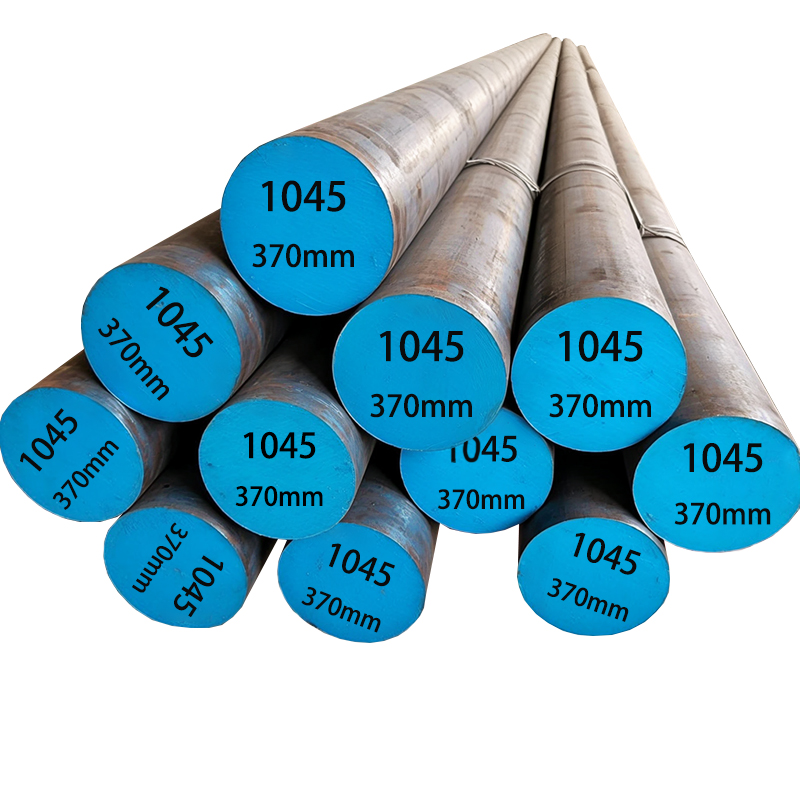
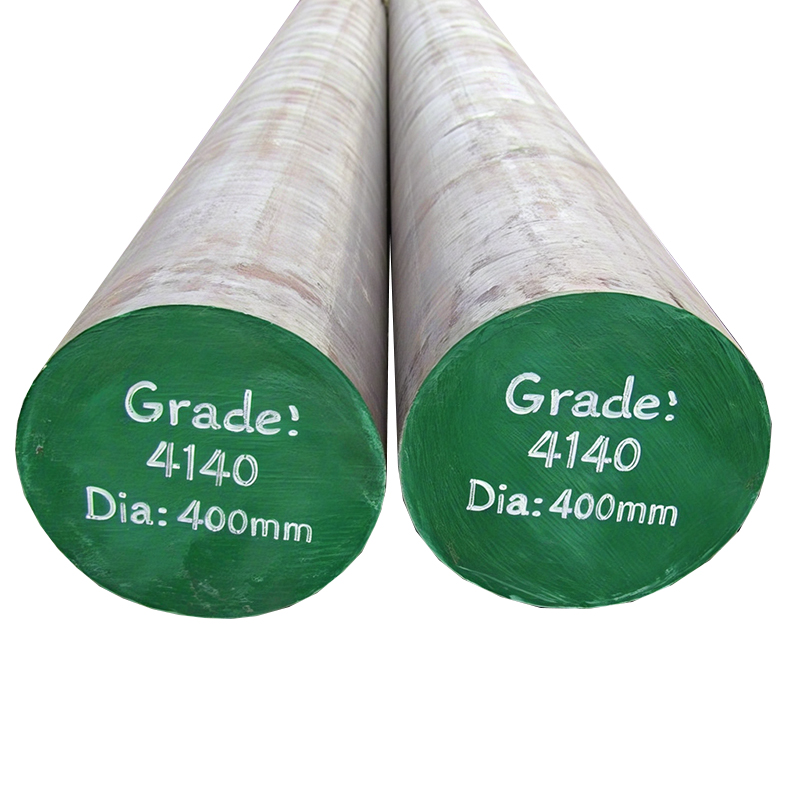
Hunan Qilu Steel offers 1045 carbon steel in cold-drawn, hot-rolled, and hot-forged bar. It also lists those routes for 4140 alloy steel bar, with finish options such as turned, peeled, and ground surfaces. Compare the stock forms against the part envelope and the material that must be removed to establish a clean, concentric surface.
|
|
For a straightforward shaft, a closer incoming diameter or better surface finish may reduce the first turning operation. For a large stepped shaft, the available starting section and allowance at the shoulder may matter more. Confirm straightness and diameter tolerances for the ordered condition, especially if a long shaft will be gripped or supported through several operations.
Compare quotations on the cost of producing an accepted shaft. Material, stock cleanup, tool wear, heat treatment, straightening, grinding, and any additional inspection can change the order of preference. Ask each supplier to quote the same starting dimensions or show the differences in product form and finish explicitly. That makes it possible to compare processing work along with the quoted material price.
Imagine that the same shaft drawing can be machined from a near-size rolled bar or a larger forged blank. The near-size bar leaves less stock to remove. The forged blank may be the only practical form for a particular combination of starting size and finish. If either blank will be heat treated before the shaft is machined, its original section becomes relevant to treatment and inspection. If the shop rough-turns first and treats it later, the section at that stage may be considerably smaller.
Write down which section enters the furnace for each quotation. A supplier’s material test might represent the bar as delivered, while the shop’s acceptance plan might represent the rough-turned shaft. These results serve different purposes. Tie any specified core property to the appropriate stage and location, and identify the test or documentation that will support acceptance.
Use a first-off record to capture incoming diameter and straightness, near-net dimensions before treatment, hardness measurements, and the amount removed in final grinding. Compare runout and journal dimensions after finishing. If the finished shaft misses tolerance, those measurements can distinguish incoming stock variation from movement during heat treatment or grinding. A repeat order can then specify a different stock finish or allowance with a reason tied to the shop’s actual results.
For a shaft that uses a localized hardening treatment, verify that the specified zone covers the final bearing or seal track, including any transition near the edge. An allowance that makes cleanup easier can also remove part of the hardened layer. Set the treatment and inspection stages together so the final surface and depth are checked where they matter in service.
A workable specification identifies the grade and governing material specification, stock form, starting diameter, delivery condition, and required certificate. If core strength drives selection, state the property and where it must be demonstrated. If journal wear drives selection, define the hardening zone and how hardness, depth, and finish are accepted after the final operation.
For a first article, verify the delivered material identity, review the condition shown on its certificate, and inspect the features that led to the grade decision. Record the diameter or section represented by any test. When a change from 1045 to 4140 is proposed for an existing shaft, involve the designer and fabricator because machining, welding, and heat treatment can all be affected.
Choose between 1045 and 4140 by identifying the location that governs performance. A moderate-duty part with a worn working surface can justify evaluating locally hardened 1045. A heavier section with a core-strength requirement gives 4140 a stronger reason to be considered. Hunan Qilu Steel manufactures and supplies both grades in several bar forms, so the buyer can match the starting stock to the machining route. Specify the final condition, test location, and surface requirements before placing the order.
Compare the same property in the specified conditions and section sizes. Quenched-and-tempered 4140 can provide higher strength through thicker sections, while delivered values depend on the material and treatment.
Yes. On suitable geometry, it can develop a hardened surface. The setup, depth, finished hardness, and treated area should be defined and verified for the part.
Compare the actual delivery conditions. Cold-drawn 1045 and prehardened 4140 can machine differently. Starting diameter, finish, tooling, and cutting conditions also affect the total work.
A substitution should be approved against the drawing, required properties, treatment route, and any joining or code requirements. Compare the finished component rather than the grade name alone.