
T: +86-0731-85185770
E: enquiry@qilumetal.com
No. 18 Xiangfu Middle Road,Yuhua District, Changsha City
Views: 0 Author: Site Editor Publish Time: 2026-11-24 Origin: Site


A welded bracket and a solid drive shaft can both lead an engineer to the chromium-molybdenum steel family. The first needs a joint that meets the drawing after welding. The second may need a specified strength through a substantial section. In a 4130 vs 4140 steel comparison, the most useful questions are where the part will be joined, how thick it is at the critical location, and what condition it must have at inspection. 4130 has a lower nominal carbon content. 4140 is often evaluated when the section needs the higher strength or hardness available from its heat-treatment response.
Look at the drawing as a sequence of operations. A welded assembly may be cut, fitted, joined, and inspected before final machining. A one-piece shaft may be rough-turned, heat treated, and ground. Identify which operation changes the condition of the steel at the part’s most important feature.
For the welded bracket, locate the joint relative to the peak load. Check joint thickness, restraint, and the conditions in which the assembly will be tested. For the shaft, identify the shoulder or central section that carries load. The smallest feature may govern stress concentration, while a larger adjacent section can govern the response during quenching. Both belong in the review.
If the job is a repair or repeat order, ask for the previous material condition and manufacturing sequence. A designation on a sketch may be only part of the original specification. A grade substitution can affect the welding or machining steps even when the finished dimensions are unchanged.
4130 and 4140 are chromium-molybdenum alloy steels. Their nominal carbon contents are about 0.30% and 0.40%, respectively. The higher carbon in 4140 generally allows greater hardness after hardening and increases the importance of managing welding conditions. Chemistry and condition should be verified against the specified product and material documents.
A meaningful strength comparison uses the same property and an identified material condition. Annealed bar, normalized stock, and quenched-and-tempered steel can have different strengths even within one grade. Compare the actual section represented by the test and check whether the values are guaranteed or merely typical. A specimen from thinner material may have cooled differently from the section that controls the part.
4130 and 4140 by design and fabrication priority
Question | 4130 | 4140 |
|---|---|---|
Does welding govern the job? | Lower nominal carbon can make it a candidate for welded structures when the specified procedure and properties suit the joint. | Review whether the procedure covers the higher-carbon grade, section, starting condition, and restraint. |
Does through-section strength govern? | Compare qualified properties at the relevant section in the required condition. | Evaluate the quenched-and-tempered response for the required strength, hardness, and section size. |
What needs to be ordered? | Exact grade, product form, condition, applicable tolerances, and joint-related requirements. | Exact grade, blank dimensions, delivery condition, and properties tied to the test location. |
Lower nominal carbon makes 4130 a useful candidate where the assembly must be welded and the design can use the resulting properties. It still requires an applicable procedure. Plate or bar thickness, restraint, initial heat-treated condition, and the other material in the joint all influence the review. Define what the completed assembly needs in the weld and adjacent heat-affected zone.
Think through a clevis bracket built from plate and machined pieces. The weld location, section transitions, and fit-up determine where inspection is practical. Pass the material condition and drawing to the welding team before stock is released. The qualified procedure and project requirements govern consumables, thermal controls, and inspection. If the fabrication process calls for further heat treatment, check when dimensions and mechanical acceptance are established.
Hunan Qilu Steel lists 4130 alloy steel as hot-rolled plate, cold-drawn and hot-rolled bar, and forged stock. Choose the form that matches the bracket or machined feature. If the design specifies tubing, order the exact tubing specification and dimensions through a qualified source. A plate or bar product listing establishes the options for those forms.
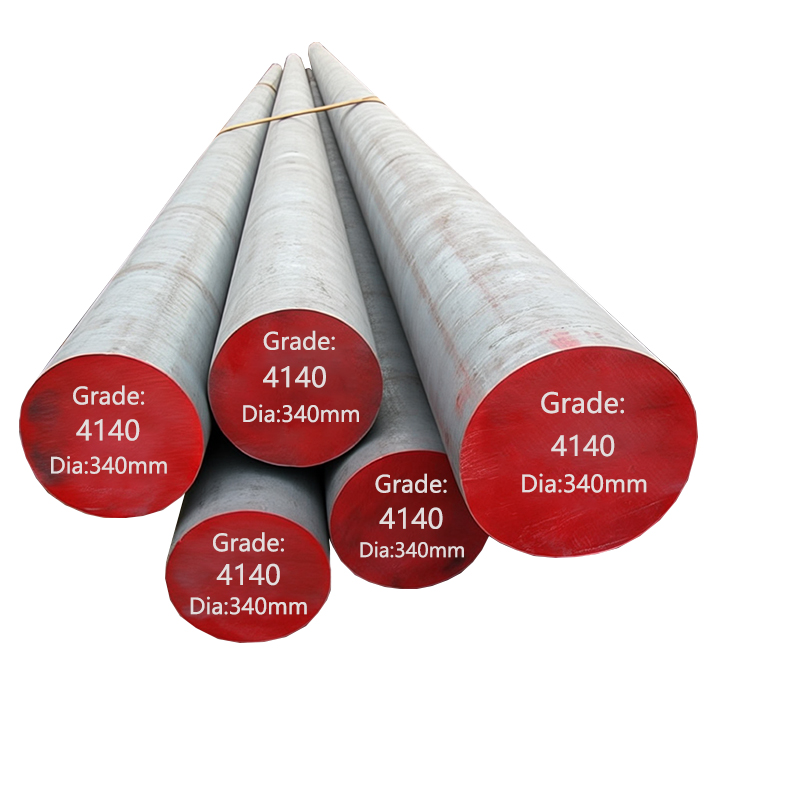
For a machined shaft, focus on what the largest relevant section must achieve after treatment. 4140 alloy steel bar is available from Qilu in several starting forms, including hot-rolled and forged bar. The starting diameter affects stock removal and may affect the section that goes through heat treatment. Choose the blank and rough-machining allowance with the machining route in mind.
If the shop intends to machine from material already in a treated condition, match the incoming certificate to the required properties and section. If the shaft will be treated after rough turning, define the condition and test location on the finished or representative piece. Also check what machining allowance is needed at journals and shoulders if the treatment causes movement.
Some shafts may need welding or a welded repair. Treat that as a separate engineering and fabrication decision within the specification. The applicable procedure needs to address the actual starting condition, load, and finished properties. Early review is especially useful when the part has already been hardened or is critical to an assembly.
For the example bracket, identify which surfaces establish the fit before welding and which surfaces will be machined afterward. Check that enough material remains for cleanup after the assembly moves during fabrication. Place weld inspection and any final machining checks where the relevant joint and surfaces are still accessible. These details affect the plate and bar dimensions the purchaser puts on the order.
If a bracket uses material in a specified heat-treated condition, pass that condition to the welding team before fabrication. The properties of the incoming plate establish a starting point. The welding and any subsequent operations determine the condition at the joint. When a drawing relies on the properties of the completed assembly, include the required inspection or qualification evidence in the planning review.
For the example shaft, decide whether it will be purchased in a specified treated condition or hardened after rough machining. In the first route, establish the property and section the mill or material supplier must document. In the second, identify the downstream treatment, measurement location, and the party responsible for verifying the finished result. The same grade and stock size can appear on both orders while the scope of acceptance differs.
Consider what happens if the certificate shows a result from a section that does not represent the ordered diameter. Ask how the specimen was selected and whether the applicable specification allows it for that order. If the drawing identifies a critical region, resolve whether further testing or a revised test plan is needed before accepting a substitution.
Where the welded bracket and shaft are purchased together, give each item its own material condition and inspection requirements. Grade numbers alone leave room for a plate intended for welding or a bar intended for machining to be quoted in the wrong condition. A clear description of the supplied state prevents that mismatch from carrying into production.
Write down the controlling feature for each part, then connect it to the material grade and processing plan. For a welded bracket, confirm the governing material and welding requirements, product form, thickness, and post-weld inspection. For a quenched-and-tempered shaft, identify the stock size, delivery condition, relevant section, and final strength or hardness requirements.
If both grades remain viable, compare them in the finished condition. Review machining and fabrication work, how the critical properties will be demonstrated, and which steps require a separate qualification. Procurement can then compare like-for-like material offers, while engineering retains a clear record of why the grade was chosen.
The better choice between 4130 and 4140 depends on how the part is made and which feature controls service. Consider 4130 for a welded component when its properties and an applicable welding procedure satisfy the design. Evaluate 4140 for a loaded shaft when its heat-treated response suits the governing section. Hunan Qilu Steel manufactures and supplies both alloy grades in bar and other listed forms. Start the order with the required condition, dimensions, and inspection evidence so the material can be checked against the drawing.
Its lower nominal carbon can offer an advantage, but weldability also depends on thickness, restraint, chemistry, material condition, and the applicable procedure.
4140 can achieve higher strength or hardness under suitable heat treatment. Compare the specified properties at comparable section sizes and conditions before selecting material.
Review the required strength, hardness, toughness, and fatigue assumptions at the governing section. The proposed 4130 condition must meet those requirements with appropriate verification.
The starting condition affects the weld and heat-affected zone. Have the applicable procedure and design authority address the specific material, joint, and required properties before welding.