
T: +86-0731-85185770
E: enquiry@qilumetal.com
E: enquiry@qilumetal.com
No. 18 Xiangfu Middle Road,Yuhua District, Changsha City
Views: 0 Author: Site Editor Publish Time: 2026-07-12 Origin: Site


Engineers and procurement teams constantly balance material economy, machinability, and mechanical durability when specifying low-carbon alloys. Finding a single material to check all these boxes often feels impossible.
High-friction, high-impact environments require components featuring a hard, wear-resistant surface alongside a tough, ductile core to prevent brittle fracture. Relying on improper materials often leads to catastrophic failure under heavy shock loads. You need a reliable baseline material to handle these demanding physical parameters.
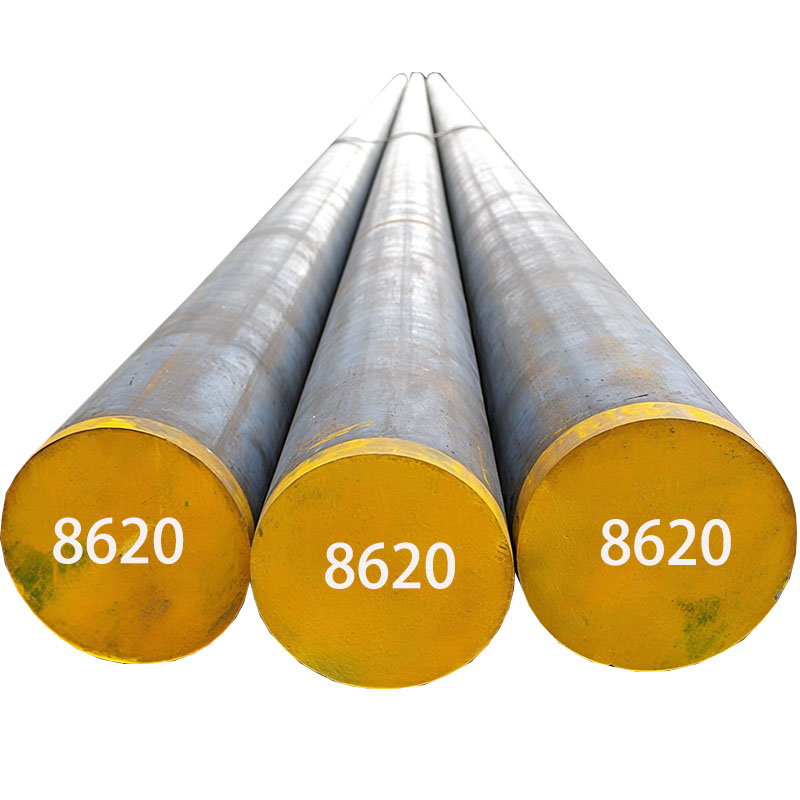
Enter AISI 8620, an industry-standard nickel-chromium-molybdenum alloy tailored specifically for case-hardening. We designed this guide to evaluate specific 8620 steel applications, compare the material against alternative alloys, and outline critical production realities. You will discover exactly how to specify this grade for maximum mechanical performance.
Optimal Balance: 8620 steel offers a highly reliable combination of case hardenability (surface wear resistance) and core toughness (impact absorption).
Primary Use Case: It is the dominant material for medium-duty transmission parts, particularly automotive gears and differentials.
Cost-to-Performance: Compared to high-alloy alternatives like EN36, 8620 provides sufficient mechanical properties for most commercial applications at a significantly lower material and machining cost.
Manufacturing Reality: While it boasts excellent machinability in its annealed state, managing distortion during the carburizing (heat treatment) process is the primary implementation challenge.
Understanding the performance of this alloy requires a close look at its chemical composition. The material relies on a precise nickel-chromium-molybdenum makeup. It features a nominal carbon content of approximately 0.20 percent. This low carbon ceiling intentionally prevents through-hardening during thermal processing. Instead, the specific alloying elements enable deep, uniform case hardening during the carburization cycle. You receive a hard outer shell protecting a ductile center.
We can break down the exact function of each primary alloying element:
Nickel: Enhances overall baseline toughness and dramatically improves the impact resistance of the core.
Chromium: Increases hardenability while providing slight corrosion resistance and significantly better wear properties on the surface.
Molybdenum: Ensures uniform hardness depth and actively prevents temper embrittlement during post-quench cooling.
These elements work together seamlessly in industrial environments. Post-treatment surface hardness reliably reaches 50 to 60 HRC. Meanwhile, the core retains excellent ductility. Core tensile strength typically falls between 530 and 900 MPa. Your final strength numbers depend heavily on your chosen tempering parameters.
Predictable heat-treatment responses create significant business advantages. They directly translate into lower scrap rates on the factory floor. Consistent batch-to-batch processing ensures predictable component lifespans in the field. Manufacturers trust this alloy because it delivers reliable repeatability across massive production runs.
Automotive differentials and ring gears rely heavily on this specific metal. Differential assemblies must handle massive torque loads. They also face sudden shock impacts when vehicle traction changes rapidly. A rigid material would shear under these extreme kinetic forces. The ductile core absorbs these shocks easily. Simultaneously, the hardened outer case resists continuous mechanical friction.
You will frequently find it specified for spur, helical, and bevel gears. Complex gear tooth geometries endure intense sliding friction during continuous operation. The material maintains tight dimensional tolerances across these intricate profiles. It proves highly stable under steady frictional wear.
Engineers specify it constantly for manual and automatic transmission parts. Surface fatigue resistance remains absolutely critical for overall assembly longevity. Proper carburization extends the operational life of these rotary components significantly. The hardened case prevents premature pitting along the contact surfaces.
However, you must evaluate your load criteria carefully before selection. This alloy serves perfectly for medium-to-heavy industrial loads. Extreme heavy-duty applications often exceed its baseline mechanical limits. You might require stepping up to higher-alloy alternatives for those specialized scenarios. Do not stretch its limits beyond standard commercial engineering parameters.
Beyond traditional gearing, this alloy excels as a reliable shaft steel for electric motors and industrial pumps. Torsional fatigue represents the primary failure mode in rotary power systems. Twisting forces easily destroy brittle materials. The inherent core ductility prevents these shafts from snapping during high-torque startups.
Camshafts and crankshafts also benefit heavily from these exact mechanical properties. Internal engine components require exceptional contact-fatigue resistance. They must survive thousands of revolutions per minute over decades of use. The carburized surface resists cam lobe wear effectively. The tough core prevents the crank from fracturing under piston firing pressures.
Secondary use cases exist across various industrial machinery sectors. You will find it commonly used for heavy-duty pins, fasteners, and machine tool collets. High clamping forces and repetitive friction usually dictate material choices in these areas. Its baseline toughness makes it a highly versatile structural foundation for countless mechanical designs.
Selecting the right gear steel means understanding regional specifications and high-performance alternatives. Global supply chains require engineers to recognize equivalent grades to avoid production delays.
The European DIN standard designates 16MnCr5 as the closest functional equivalent. Trace alloy differences exist between the two specifications. These variations primarily involve slightly different nickel and chromium ratios. Availability and supply chain logistics often drive this choice based on geographic manufacturing hubs. They perform very similarly across standard commercial applications. You can often substitute them directly if your metallurgist approves the specific heat-treatment modifications.
Conversely, EN36 (BS 970) provides a much higher-alloy alternative. We must contrast the high-nickel content of EN36 against the economical baseline of the 8620 grade. EN36 delivers truly superior core strength alongside extreme impact resistance.
Follow a clear decision logic when specifying these materials. You should specify EN36 for critical aerospace assemblies or heavy mining equipment. The operational risks justify the premium material pricing. Default to the standard 8620 alloy for automotive and industrial gearing to control overall project expenses.
The chart below outlines standard baseline comparisons for these common industrial alloys.
| Alloy Grade | Regional Standard | Key Mechanical Characteristics | Ideal Application Scenarios |
|---|---|---|---|
| 8620 | AISI / SAE (USA) | Economical balance, excellent core toughness, good surface hardenability | Automotive gears, transmission shafts, heavy-duty pins |
| 16MnCr5 | DIN (Europe) | Highly comparable baseline strength, strong manganese presence | European automotive supply chains, industrial machinery |
| EN36 | BS 970 (UK) | High nickel content, extreme impact resistance, superior core strength | Aerospace components, mining excavators, heavy lifting gear |
The alloy boasts an excellent machinability rating in its forged or fully annealed condition. It typically rates at approximately 66 percent of standard B1112 free-machining steel. CNC turning, multi-axis milling, and gear hobbing operations proceed smoothly. Standard carbide tooling easily cuts the material before any heat treatment occurs.
You must follow a strict thermal cycle during the carburizing process. The workflow demands precise temperature control.
Carburize: Heat the component in a carbon-rich atmosphere to infuse carbon into the outer layer.
Quench: Rapidly cool the part in oil to lock the molecular structure and harden the carbon-rich case.
Temper: Reheat the part to a lower temperature to relieve internal stresses and restore core ductility.
Dimensional distortion during the quenching phase poses an inherent manufacturing risk. The martensitic transformation causes the outer case to expand slightly. Engineers solve this using several standard engineering solutions. You can leave excess grind stock on the part before heat treatment. This allows you to grind the gear teeth back to perfect tolerances afterward. Alternatively, utilize specialized press quenching for highly critical gear geometries to restrict physical movement during cooling.
Standard industrial methods can weld this material successfully. However, pre-heating the joint area is absolutely mandatory. Post-weld stress relieving must follow immediately. Skipping these thermal steps will almost certainly cause micro-cracking along the heat-affected zone.
Choose this alloy when your project demands high surface hardness coupled directly with good core ductility.
Leverage its high-volume manufacturing economy perfectly for medium-duty commercial components.
Anticipate inherent dimensional distortion during the design phase. Plan your post-heat-treatment grinding operations accordingly to maintain tight geometric tolerances.
We strongly recommend consulting your metallurgist or CNC machining partner before finalizing your bill of materials.
Reviewing your specific load requirements and regional heat-treatment capabilities ensures highly successful, predictable production runs.
A: No, its low carbon content restricts hardening to the outer case via carburizing; the core remains tough and ductile. You cannot achieve uniform hardness throughout the entire cross-section of the component without risking severe brittleness.
A: No, it is a low-alloy steel and requires secondary surface coatings or oil preservation to prevent oxidation. Without proper protective finishes or constant lubrication, the material will rust quickly in humid environments.
A: The carburized case begins to lose its engineered hardness typically around 300°F (150°C). This threshold depends heavily on the specific tempering cycle used during manufacturing. Exceeding this temperature risks premature surface wear and component fatigue.
A: The raw material pricing remains highly comparable between both grades. However, 8620 strictly serves case-hardening applications, while 4140 excels at through-hardening. Your final component cost usually depends more on the required thermal processing time than the baseline metal purchase price.