
T: +86-0731-85185770
E: enquiry@qilumetal.com
E: enquiry@qilumetal.com
No. 18 Xiangfu Middle Road,Yuhua District, Changsha City
Views: 0 Author: Site Editor Publish Time: 2026-07-18 Origin: Site


Global supply chain variations frequently disrupt raw material procurement. Engineering and purchasing teams often face delays when native regional standards remain unavailable. You must act fast to keep assembly lines running.
AISI 8620 remains the industry standard for case-hardened components. You rely on it for parts demanding a tough core and wear-resistant surface. Typical applications include heavy-duty gears, camshafts, and fasteners. When mills cannot deliver native 8620 material, you must qualify reliable substitutes quickly.
This article provides an objective, data-backed comparison of the top global alternatives. You will learn how to qualify equivalents safely. We analyze chemistry, tolerances, and sourcing logic to protect your mechanical integrity. This ensures you avoid compromising performance or regulatory compliance.
Direct Equivalency: 20CrNiMo (GB), 20NiCrMo2-2 / 1.6523 (DIN/EN), and SNCM220 (JIS) are the primary, globally recognized structural equivalents to AISI 8620.
Performance Parity: All four alloy grades exhibit near-identical case-hardening capabilities, relying on similar Nickel-Chromium-Molybdenum compositions for core toughness.
Implementation Reality: While chemically equivalent, successful substitution requires verification of regional mill tolerances, delivery conditions, and valid Material Test Reports (MTRs) to ensure heat treatment predictability.
Relying on a single geographic region for steel creates immense vulnerability. Factory shutdowns or shipping bottlenecks can easily halt your entire production schedule. Qualifying alternative alloy grades ensures uninterrupted manufacturing. You build supply chain resilience by expanding your accepted material lists ahead of crises.
Substitution requires strict technical validation. A successful 8620 steel equivalent must deliver identical hardenability during furnace cycles. It needs equivalent machinability ratings to protect your tooling. It also requires matched weldability under identical pre-heating conditions. You cannot simply accept loose matches when manufacturing high-stress automotive or aerospace gears.
Localized sourcing offers significant cost advantages. Buying Asian equivalents near your assembly node slashes freight bills dramatically. However, you must weigh these savings against compliance costs. Re-qualifying materials for OEM approval takes engineering hours. You must balance lower raw material prices against necessary testing and certification overhead.
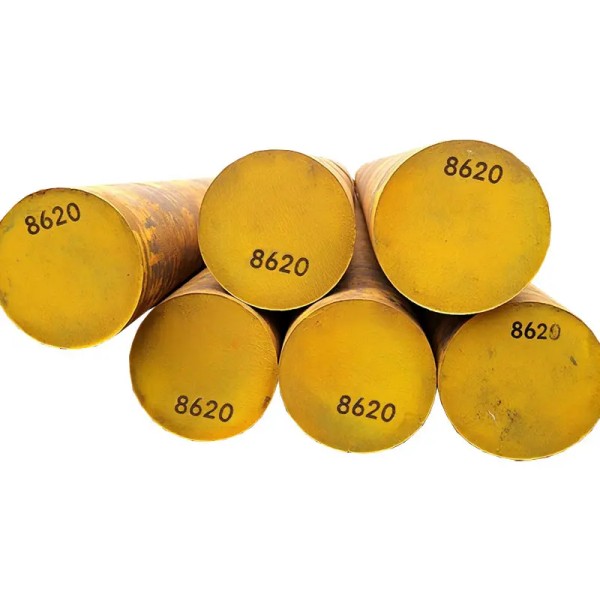
International bodies classify steels using different naming conventions. Yet, they often describe nearly identical low-carbon, low-alloy nickel-chromium-molybdenum chemistries. Understanding these standard frameworks simplifies your global procurement process.
Here is the core equivalency matrix mapping these critical materials across major industrial regions:
US (ASTM/SAE): AISI 8620 / UNS G86200
China (GB/T 3077): 20CrNiMo steel
Europe (DIN EN 10084): 20NiCrMo2-2 / Material No. 1.6523
Japan (JIS G4053): SNCM220 steel
Treat these as functional equivalents, not exact chemical clones. Minor allowable elemental variances exist between the governing standards. The European norm might allow slightly different trace limits than the Chinese standard. You must verify these margins against your specific engineering drawings.
The performance of these grades relies on a precise balance of key elements. Carbon drives the surface hardness potential. Nickel guarantees core toughness and impact resistance. Chromium increases hardenability. Molybdenum ensures uniform hardening across larger cross-sections.
Below is a functional breakdown of the core alloying elements across these global standards:
| Element | Functional Range (%) |
|---|---|
| Carbon (C) | 0.18 – 0.23 |
| Nickel (Ni) | 0.40 – 0.70 |
| Chromium (Cr) | 0.40 – 0.60 |
| Molybdenum (Mo) | 0.15 – 0.25 |
Trace differences require careful attention. Sulfur and phosphorus limits vary slightly between EN and GB standards. Higher sulfur improves machinability but harms transverse ductility. Phosphorus limits directly impact long-term fatigue life. Premium mills often produce material tighter than standard limits dictate.
Core tensile strength defines the structural integrity of your finished part. Compare baseline tensile strength alongside yield strength post-carburizing. The core must remain ductile to absorb shock loads. Meanwhile, the outer case transforms into a rigid, wear-resistant shield.
Evaluate the response of each grade to identical carburizing and quenching cycles. Manufacturers typically target 60-63 HRC surface hardness. All four equivalent grades hit this mark reliably. They behave predictably under standard atmosphere-controlled furnace conditions.
Emphasize J-band hardenability specifications during procurement. Standard chemistry alone does not guarantee performance. You need Jominy hardenability testing data. This ensures your substitute grade matches the depth of hardness expected from native 8620 stock.
Tooling expectations remain consistent across these grades. All 8620 equivalents generally offer a 65% machinability rating relative to standard B1112 free-machining steel. Delivery state heavily impacts tool wear. Annealed bars cut much smoother than as-rolled stock. You should optimize your CNC feeds and speeds based on the actual delivery condition.
Weldability constraints apply equally to all these variations. You face identical welding restrictions across 20CrNiMo, SNCM220, and 20NiCrMo2-2. The carbon equivalent requires mandatory pre-heating before any welding operation. Post-weld stress relieving prevents catastrophic cracking in the Heat-Affected Zone (HAZ). Never skip these thermal steps.
Shape and size tolerances depend on regional norms, not chemical grades. The mill and the governing dimensional standard dictate acceptable out-of-roundness. For instance, European mills follow EN 10060 for round bars. American mills follow ASTM A29. You must verify physical tolerances separately from chemical compliance.
You must demand rigorous documentation from any new supplier. Buyers should always require EN 10204 3.1 Material Test Reports (MTRs). This document verifies the actual melt chemistry against your claimed standard. It proves the mill actually tested your specific batch.
The quality of the initial melt determines fatigue performance. Cheaper regional alternatives often carry higher non-metallic inclusion ratings. These inclusions act as stress concentrators. Discuss vacuum degassing requirements for high-fatigue gear applications. Clean steel matters regardless of the specific equivalent grade chosen.
Counterfeit materials pose a severe risk in global supply chains. Some brokers mislabel uncertified commercial quality steel as strict equivalents. Spotting these fakes requires independent third-party laboratory testing. Always verify the mechanical properties and micro-cleanliness before approving a new mill source.
Selecting the right standard depends on your production geography and final market destination. Follow these targeted strategies:
For Asian Manufacturing & Assembly: Specify 20CrNiMo or SNCM220. Sourcing locally reduces raw material lead times drastically. It also cuts international freight costs out of your production budget.
For European Export: Adopt 20NiCrMo2-2 (1.6523) for localized EU production. You need this specific standard to meet local engineering approvals smoothly. It simplifies your path to mandatory CE marking.
Actionable Next Step: Always initiate a pilot run. Order a small batch of the chosen equivalent first. Validate the heat-treat response and CNC machinability before committing to long-term procurement contracts.
AISI 8620, 20CrNiMo, SNCM220, and 20NiCrMo2-2 remain functionally interchangeable for most industrial applications. They share identical core chemistries and heat treatment profiles. You can switch between them safely provided you maintain strict quality control.
Base your final purchasing decisions on geographic availability and mill reputation. Verifiable MTRs matter far more than the perceived superiority of one regional standard. Secure reliable, clean steel from validated suppliers to protect your production continuity.
Start your qualification process by requesting sample bars. Run them through your standard carburizing cycles. Verify the case depth and core toughness through physical testing today.
A: Yes. You can use it as a direct replacement. However, the carbon and molybdenum content of the specific batch must align tightly with your required Jominy hardenability bands. Matching these variables ensures the gear achieves the correct case depth during heat treatment.
A: No. Carburizing, quenching, and tempering parameters remain virtually identical. Both alloys share a matching carbon and alloy base. Your heat treatment facility can run the exact same furnace cycles without modifying ramp rates or soak times.
A: Functionally, no. Fatigue resistance depends heavily on the specific mill's cleanliness. You need an absence of non-metallic inclusions to prevent crack initiation. This melt quality matters far more than the minor elemental variations existing between EN and ASTM specifications.