
T: +86-0731-85185770
E: enquiry@qilumetal.com
E: enquiry@qilumetal.com
No. 18 Xiangfu Middle Road,Yuhua District, Changsha City
Views: 0 Author: Site Editor Publish Time: 2026-03-24 Origin: Site


Every industrial project relies heavily on the predictable performance of its materials. When a load-bearing beam or a precision-machined gear fails, the consequences are severe. These failures span from costly operational downtime to catastrophic safety incidents.
Engineers often grapple with distinguishing between ultimate tensile strength (UTS) and yield strength. Selecting an improper grade compromises structural integrity. It also heavily impacts your overall project ROI. You must understand these limits to ensure long-term industrial reliability. Theoretical metallurgical science only goes so far without practical application.
Standardized charts bridge this critical gap between metallurgical theory and mechanical engineering. In this guide, we break down essential strength metrics across various grades. You will learn how to apply these insights effectively. By the end, you can make safer, more cost-effective material selection decisions for your upcoming projects.
Yield vs. Tensile: Yield strength is the limit of permanent deformation; tensile strength is the limit of total failure.
Grade Variability: Strength varies significantly across carbon, alloy, and stainless steels based on heat treatment and chemical composition.
Application-Specific Selection: High strength often comes at the cost of machinability and ductility—balancing these is key to TCO.
Compliance Matters: Always cross-reference charts with ASTM, ISO, or SAE standards to ensure regulatory alignment.
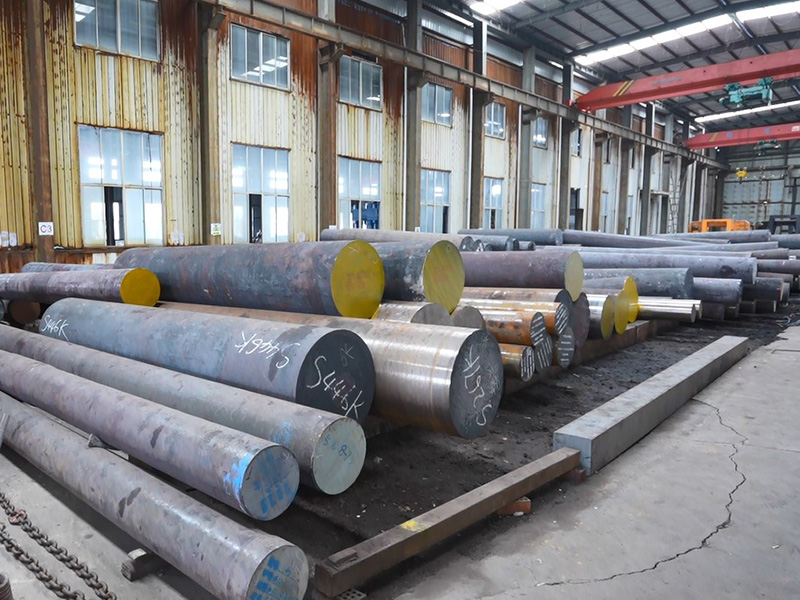
When you evaluate engineering steel, you must first define the elastic and plastic deformation zones. The elastic zone represents temporary bending. If you remove the load, the metal returns to its original shape. The plastic zone represents permanent change. Once metal enters this zone, it stays bent. The boundary between these two zones dictates how a material behaves under stress.
Engineers consistently prioritize yield strength over ultimate tensile strength for safety factors. Yield strength marks the exact point of permanent deformation. UTS marks the point of total catastrophic rupture. If a structural component bends permanently, it has already failed its functional purpose. You build your safety margins around the yield limit to prevent any structural shifting.
High strength often introduces brittleness. You must always read a metal strength chart alongside elongation percentages. Elongation measures ductility. It tells you how much the metal stretches before snapping. A highly ductile metal provides visual warning signs before breaking. A brittle metal simply shatters. Balancing raw strength against ductility prevents unexpected failures in dynamic environments.
Chemical composition dictates the baseline mechanical properties. Carbon content acts as the primary driver for hardness and raw strength. More carbon equals higher baseline strength. Alloying elements refine these traits further. Chromium improves hardenability and corrosion resistance. Nickel drastically improves toughness at low temperatures. Molybdenum helps the metal retain its strength during high-temperature operations.
Best Practice: Do not rely on chemistry alone. Always consider the interaction between alloying elements and your intended manufacturing processes.
Industrial applications require accurate benchmarks. The table below outlines approximate baseline values. Keep in mind these figures represent generalized un-treated or standard normalized states.
| Steel Category | Common Grade | Approx. Yield Strength (MPa) | Approx. UTS (MPa) |
|---|---|---|---|
| Carbon Steel | A36 (Low Carbon) | 250 | 400 - 550 |
| Carbon Steel | 1045 (Medium Carbon) | 310 | 565 |
| Carbon Steel | 1095 (High Carbon) | 460 | 685 |
| Alloy Steel | 4140 | 415 | 655 |
| Alloy Steel | 4340 | 470 | 745 |
| Stainless Steel | 304 (Austenitic) | 205 | 515 |
| Stainless Steel | 410 (Martensitic) | 275 | 480 |
Carbon steels dominate basic manufacturing. Low-carbon options like A36 offer excellent formability. Medium-carbon 1045 provides a balanced middle ground for machinery parts. High-carbon 1095 delivers superior hardness for springs and cutting tools. As carbon increases, weldability generally decreases.
When you source high-quality tensile strength steel, chromium-molybdenum alloys stand out. Grades like 4130, 4140, and 4340 serve as heavy-duty benchmarks. They respond exceptionally well to heat treatment. You will often find them in aerospace components, automotive axles, and oil rig drill collars.
Stainless grades trade some raw physical strength for chemical resistance. Austenitic grades (304/316) offer immense ductility but lower yield points. Martensitic grades (410/440C) can be heat-treated for high hardness. Duplex grades combine the best traits of both, offering high yield strengths alongside superior corrosion resistance.
Tool steels prioritize extreme hardness and wear resistance. Grades like D2, A2, and H13 maintain their cutting edges under immense friction. Engineers usually measure them using the Rockwell Hardness (HRC) scale rather than standard tensile metrics. However, their ultimate tensile limits routinely exceed 1200 MPa.
Bolt and fastener specifications require quick reference guidelines. The SAE J429 standard governs imperial sizes. Grade 2 handles light loads. Grade 5 handles medium automotive loads. Grade 8 handles heavy structural loads. Metric standards use classes like 8.8, 10.9, and 12.9. A 12.9 metric bolt offers a massive 1200 MPa tensile limit.
You cannot select a metal based on strength alone. Real-world applications demand a careful balance of secondary properties.
Structural & Construction: Heavy building projects prioritize weldability and consistent yield strength. You will commonly use A36 and A572. These grades allow construction crews to weld massive frames safely without inducing brittle heat-affected zones.
Automotive & Aerospace: Modern transportation focuses heavily on weight reduction. Advanced High-Strength Steels (AHSS) dominate this space. They allow engineers to use thinner sheets of metal. This reduces vehicle weight without compromising passenger safety.
Precision Machining: High tensile strength severely impacts cutting tools. It slows down cycle times and increases tool replacement costs. You must balance raw strength against "free-machining" properties. Adding sulfur or lead creates chips that break away easily during milling.
Corrosive Environments: Raw mechanical strength vanishes rapidly if rust consumes the part. In marine or chemical settings, you must sacrifice baseline yield strength. You upgrade to high-nickel alloys or duplex stainless options to ensure long-term survivability against oxidation.
Common Mistake: Over-specifying strength is a frequent costly error. Buying a stronger alloy than necessary wastes budget and drastically increases your machining expenses.
Charts provide baseline values, but thermal processing changes everything. Quenching and tempering can literally double the UTS of the exact same base grade. You heat the metal to its critical temperature. You cool it rapidly in oil or water to lock in hardness. Finally, you temper it to restore a safe level of toughness.
Mechanical manipulation alters grain structures. Cold-working processes like rolling or drawing compress the metal grains. This heavily increases the tensile properties of stainless and low-carbon grades. An annealed 304 stainless part is relatively soft. A heavily cold-rolled 304 part becomes surprisingly rigid and strong.
Operating temperatures alter mechanical limits. "Blue Brittleness" occurs in certain plain carbon metals around 300°C, causing a sudden loss of ductility. Conversely, elevated service temperatures above 500°C cause severe creep. The metal loses its rated strength and slowly deforms under constant loads.
Theoretical strength means nothing if the surface is flawed. Forging can cause decarburization, burning the carbon out of the outer layer. Machining can leave deep tool marks. These micro-scratches act as stress risers. They concentrate forces and cause premature fatigue failure, regardless of what the chart promises.
Upgrading to a premium, high-strength alloy increases your cost per pound. However, you must analyze the Total Cost of Ownership (TCO). A stronger material allows you to reduce the total material volume. Lighter parts reduce shipping costs. They also improve the energy efficiency of the final moving assembly. This often justifies the initial material premium.
Selecting a highly specialized niche grade can jeopardize your project timelines. Common grades sit in warehouses globally. Exotic aerospace alloys require custom mill runs. If a machine breaks down, you cannot wait six months for a replacement billet. You must design around locally available materials whenever possible.
Global supply chains require cross-referencing. You will often evaluate "equivalent" grades across AISI, EN, and JIS standards. They are rarely perfect matches. A European standard might allow slightly more phosphorus than an American standard. You must evaluate these minor chemical differences carefully. Failing to do so can silently compromise your safety factors.
Never trust an unverified chart for critical applications. You must rely on Mill Test Reports (MTRs). An MTR validates the exact chemical composition and physical test results of your specific batch. Charts offer theoretical averages. MTRs provide legal proof of mechanical reliability.
The relationship between grade selection and mechanical performance defines the success of modern engineering. Tensile and yield metrics act as the foundation for safe, efficient design. However, raw strength must always be balanced against ductility, machinability, and environmental resistance.
When using a standard reference chart, treat the numbers as starting points. Evaluate your expected operating temperatures. Consider your intended manufacturing processes, such as welding or cold-forming. Always factor in the total cost of ownership rather than just the initial price per pound.
For high-stakes applications involving human safety or extreme loads, never guess. Always consult with metallurgical experts to validate your selections. Proper material science prevents catastrophic failures and ensures your projects stand the test of time.
A: Maraging steels and Ultra-High-Strength Steels (UHSS) rank among the strongest. They frequently exceed tensile limits of 2500 MPa. Aerospace and military sectors use them heavily. They achieve this strength through advanced alloying and complex precipitation hardening rather than relying solely on high carbon content.
A: Hardness and tensile strength share a strong, predictable correlation. As one increases, the other generally increases. Engineers frequently use standard conversion tables to estimate UTS based on Rockwell (HRC) or Brinell (HB) readings. This allows for quick, non-destructive strength estimations on the factory floor.
A: No. Standard ferrous charts are specific to iron-based alloys. Aluminum, titanium, and brass possess entirely different atomic structures and behavioral curves. Aluminum, for example, does not have a clearly defined endurance limit. You must use dedicated non-ferrous material charts for accurate engineering data.
A: Rated charts assume static loads in perfect conditions. Real-world failures stem from cyclic fatigue, environmental corrosion, or stress risers. Sharp internal corners or deep machining scratches concentrate force. This causes microscopic cracks to propagate, leading to failure well below the theoretical ultimate limit.