
T: +86-0731-85185770
E: enquiry@qilumetal.com
E: enquiry@qilumetal.com
No. 18 Xiangfu Middle Road,Yuhua District, Changsha City
Views: 0 Author: Site Editor Publish Time: 2026-01-14 Origin: Site


Metric | Value |
|---|---|
Estimated Production Volume | About 18 million metric tons each year |
Estimated Market Value | More than $30 billion |
Projected CAGR | About 4% |
Expected Market Value in 2026 | Over $40 billion |
There are also new things like nanotechnology, bio-based options, and better ways to get materials. These push the industry ahead. Green processing, like Selective Laser Melting, uses less material and makes less pollution. This makes tool steel production better for the planet than ever before.
Modern technology, like AI and automation, helps tool steel production. It makes the process faster and better. The quality of tool steel also improves.
Sustainable practices, like recycling and green manufacturing, help the environment. They use fewer resources and make less waste.
Advanced melting and refining techniques make tool steel stronger. These methods also help it last longer.
Additive manufacturing lets people make complex shapes. It uses less material and costs less money.
Learning about market trends and new technology is important. It helps businesses change and do well in the tool steel industry.
Tool steel is used for hard jobs. It has a special mix of elements. These elements make it strong and hard. Tool steel keeps its shape under heat and pressure. It has more carbon than regular steel. This helps it cut, shape, and form other things. You see tool steel in drills, dies, and molds.
There are many tool steel grades in factories and shops. Each grade has its own uses and features. The table below lists some common grades and what makes them different:
Tool Steel Grade | Classification | Properties |
|---|---|---|
D2 | High carbon, high chromium | Wear-resistant, heat-resistant |
A2 | Air-hardening | Tough, versatile |
M2 | High-speed steel | High hardness, heat resistance |
You choose a tool steel grade for the job you need. D2 is good for cutting tools because it is hard and resists wear. M2 is best for high-speed tools that get hot.
You can change how tool steel works by changing its elements. The main alloying elements are:
Tungsten
Molybdenum
Cobalt
Vanadium
The table below shows how these elements help tool steel:
Alloying Element | Role in Tool Steel Properties |
|---|---|
Chromium | Makes tool steel very hard and wear-resistant. |
Molybdenum | Adds strength and helps harden steel, even when hot. |
Tungsten | Helps tool steel stay hard and strong at high heat. |
Vanadium | Makes the grain smaller, so steel is tougher and stronger. |
Carbon, manganese, and silicon are also important. Carbon makes tool steel harder and stronger. Manganese and silicon help make steel tough and easy to shape. When you know the right grade and elements, you can pick the best tool steel for your project.
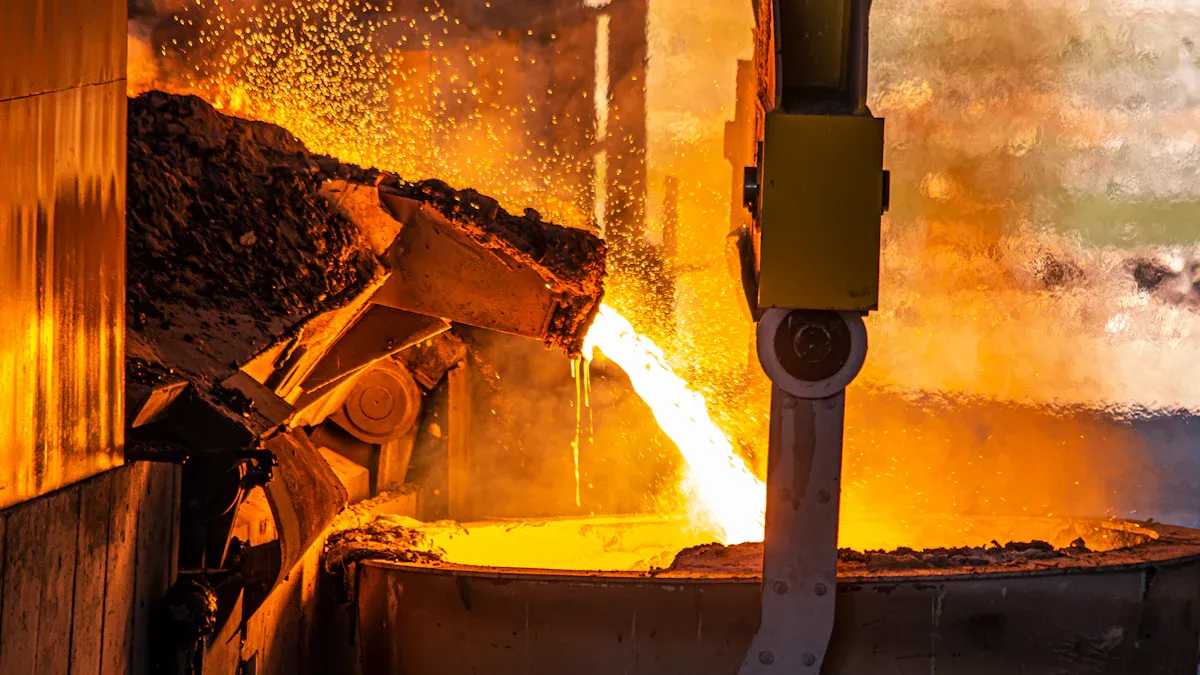
You may wonder how tool steel is made. New technology makes a big difference. The way tool steel is made has changed a lot. Old and new methods are very different. Each step affects how strong and costly tool steel is.
Long ago, factories used blast furnaces to melt iron ore. They mixed coke with iron ore. Workers put raw materials into the furnace. Hot air went in to start burning. Coke burned and melted the iron ore. Molten iron separated from slag. This made pig iron.
Today, most tool steel plants use electric arc furnaces. EAF melting uses electricity to melt scrap steel and alloys. This helps recycle old steel and saves resources. It also cuts down on pollution. Recycling one ton of scrap saves about 1.5 tons of CO2. Modern EAFs use sensors and artificial intelligence. These control temperature and energy use. Smart systems know when to stop melting. This saves money and makes things safer. Tool steel is stronger and tougher because of these changes.
Tip: EAF melting is better for the planet. Choosing products made this way helps the environment.
After melting, special elements are added to tool steel. This is called alloying and refining. In the past, workers added elements by hand. Results were not always the same.
Modern technology gives more control. Advanced melting processes like Vacuum Induction Melting are used. Electroslag Refining helps remove unwanted gases and impurities. This makes tool steel pure and better. Factories use microalloying with vanadium and niobium. This makes steel stronger and more wear-resistant. High-strength low-alloy steels and advanced high-strength steels are common now. These work well in cars, machines, and buildings.
Vacuum refining takes out hydrogen and other gases.
Microalloying makes steel tougher and harder to wear out.
Consistent quality means fewer problems with the final product.
After mixing, tool steel needs to be shaped. Traditional casting pours molten steel into molds. This can make big grains and weak spots if cooled slowly.
Modern atomization sprays molten steel into tiny drops. These drops cool fast and turn into powder. The powder is used for 3D printing or pressed into shapes. Atomization makes even particles. This is important for aerospace and high-tech tools. Powder metallurgy makes tool steel with fine carbides. This helps machinability and heat treatment.
Atomization makes small, even particles for special uses.
Powder metallurgy helps grinding and hardening.
Traditional casting costs less but can make weaker steel.
The last steps are heat treatment and finishing. Tool steel is heated and cooled to set its hardness. Old ways used simple ovens and water baths. Results were not always the same.
Now, vacuum heat treatment and precision quenching are used. These give better control over steel’s structure. Nanotechnology helps make steel harder and more wear-resistant. Green manufacturing saves energy and reduces waste. Tool steel lasts longer and works better.
Innovation Type | Description | Benefits |
|---|---|---|
Advanced Heat Treatment Techniques | Vacuum heat treatment and precision quenching for better control | Consistent quality, longer tool life |
Nanotechnology | Use of nanomaterials for improved properties | Higher hardness, better wear resistance |
Green Manufacturing Processes | Less energy and waste in production | Lower environmental impact |
You can see tool steel making has changed a lot. Every stage uses smart tools and new methods. This means better tool steel for less money and less harm to the planet.
AI and automation are changing tool steel processing a lot. These smart systems help workers make better choices in factories. AI watches machines and can tell if something might break soon. This means workers can fix things before they stop working. This saves both time and money.
Many companies use AI to check tool steel quality. Machine vision systems look for mistakes and find them early. This keeps tool steel strong and safe. AI also helps control smelting, so factories use less energy and make less waste. Inventory is easier to manage, so there is not too much or too little material.
Here are some ways AI and automation help tool steel processing:
Machine vision systems spot problems and help with quality.
Predictive maintenance uses sensors to stop breakdowns early.
Advanced process control makes work faster and saves energy.
AI helps with inventory and shipping, so materials arrive on time.
Robotic process automation and VR training keep workers safe.
These changes show real results. Tata Steel had 15% less downtime. ArcelorMittal used less energy when melting steel. Voestalpine had 20% fewer defects. SSAB saved 7% energy in electric arc furnaces. Some factories had 25% fewer accidents because of robots and training.
Better melting and refining make tool steel stronger. New technology lets workers control what goes into the steel. They can check the mix of elements fast and make sure nothing is missing.
Factories use tools like X-ray Fluorescence (XRF) and Optical Emission Spectrometry (OES). These tools check the steel for the right elements and find bad stuff. Process Analytical Technology (PAT) lets workers watch the steel as it is made. They can change things right away if something is wrong.
Here is a table that shows how these technologies help:
Technology | How It Helps Tool Steel Quality and Sustainability |
|---|---|
X-ray Fluorescence (XRF) | Checks the mix of elements fast and without damage. Makes sure you use good materials. |
Optical Emission Spectrometry (OES) | Finds tiny bits of unwanted elements. Keeps your steel strong and clean. |
Process Analytical Technology (PAT) | Watches the process in real time. Cuts waste and makes production more efficient. |
Tool steel is pure and strong because of these tools. Factories use less energy and make less waste. This helps protect the environment.
Additive manufacturing, or 3D printing, changes how tool steel parts are made. Workers can build shapes that were hard to make before. Less material is used and there is less scrap.
Laser powder bed fusion (LPBF) and laser directed energy deposition are popular methods. These ways make tool steel that is very strong and dense. After tempering, LPBF can give tensile strengths of about 2 GPa. This means tools can do tough jobs.
Laser cladding can fix or build new parts quickly. Binder-jetting with special sintering steps gives almost full density. This is good for making complex tool steel shapes.
LPBF and laser deposition make strong, dense tool steel parts.
Laser cladding fixes tools fast and helps them last longer.
Binder-jetting makes detailed shapes with little waste.
Tools last longer and cost less to make. Using fewer resources also helps the planet.
Factories can make tool steel in ways that help the environment. Many factories recycle old steel to make new tool steel. This saves resources and uses less energy. There is also less greenhouse gas pollution.
Water management is important too. Factories use less water and clean it before putting it back. Cleaner technology helps treat and recycle water in the factory.
Here are some sustainable practices you might see:
Recycling old steel to save resources and energy.
Using less water and cleaning it before release.
Cleaner machines and systems that follow environmental rules.
Tip: Choosing tool steel made this way helps the planet.
You help nature and save money at the same time. Tool steel processing in 2026 is smarter, cleaner, and better for everyone.
Tool steel is much better now. New technology makes it harder and tougher. It also helps steel resist wearing out. Special ways to mix elements and heat steel help a lot. D2 Steel can get very hard after special heating. It can reach 57-62 HRC. This keeps cutting tools sharp for longer. S7 steel does not break easily. It is strong and tough at the same time. Adding vanadium and chromium makes hard carbides. These carbides help steel last longer. They also stop it from wearing out fast. New ideas like nanostructured steels make steel even better. Advanced heat treatments also help high-grade alloy products work well.
Factories make tool steel faster now. Smart machines and new ways of working save time. They also make better steel. The table below shows how some companies did better:
Company | Product/Grade | Improvement Type | Quantitative Evidence |
|---|---|---|---|
Voestalpine | Böhler K490 Microclean | Tool Life | 22% longer tool life in press forming |
Schmolz + Bickenbach | High-speed steel | Fabrication Time | 18% less time to make tools |
Sanyo Special Steel | Hybrid die steel | Wear Resistance | 27% better wear resistance in field trials |
Tools last longer and are made faster. This means less waiting and more work done.
You can save money with new ways to make steel. Factories use lean manufacturing to cut waste. This helps save money. Automation makes more steel with fewer workers. Energy-saving machines use less power. This lowers energy bills. Getting materials smartly helps pay less. Here are ways companies save money:
Use smart forecasting to handle price changes.
Predict market trends to plan ahead.
Use resources wisely to avoid extra costs.
Watching machines in real time helps a lot. Fixing problems early keeps machines working and saves money.
Modern tool steel helps the planet. Old ways to make steel release lots of CO₂. About 2.2 tonnes for each tonne of steel. Electric arc furnaces release much less. Only about 0.5 tonnes of CO₂. This is over 75% less carbon dioxide. New ways use less energy and water. Cleaner factories make less pollution. The footprint is smaller now.
Note: Picking steel made from recycled stuff helps keep Earth clean.
Many top companies use new technology to make tool steel. These companies lead by using smart systems and automation. The table below shows what they did and what happened:
Manufacturer | Technology Implemented | Results Achieved |
|---|---|---|
POSCO | IoT and AI integration | Big improvements in efficiency and lower costs. |
Tata Steel | AI-driven predictive maintenance | 20% less unplanned downtime and saved a lot of money. |
U.S. Steel | MineMind AI application | 20% faster work order completion, so repairs are quicker. |
ArcelorMittal | AI for production scheduling | Saved almost $1 million each year and fixed problems before they happened. |
These examples show smart technology helps factories work better and save money.
You can learn from real stories in the tool steel industry. Tata Steel used AI to know when machines needed fixing. This stopped many breakdowns and saved money. U.S. Steel used MineMind AI to finish repairs faster. ArcelorMittal used AI to plan production. This saved almost $1 million every year. POSCO used smart sensors and AI to cut costs and work faster. These stories show big results come from using new technology.
Tip: Smart systems can make your factory safer and more efficient.
More changes are coming soon in tool steel production. Experts say the market will grow quickly. The table below shows what you might see:
Evidence Type | Details |
|---|---|
Market Size Projection | Market may be over USD 3 billion by the end of 2026. |
Compound Annual Growth Rate | Growth rate could be more than 5% through 2026. |
Key Drivers | New technology, green ideas, and more automation are pushing growth. |
You may face some problems as things change. These include high energy use, carbon emissions, and needing skilled workers. You also need to manage waste and buy new machines. If you train people and make smart choices, you can solve these problems.
High energy use
High carbon emissions
Using resources well and managing waste
Making sure changes make sense for business
Gaps in technology and skills
You can help shape the future of tool steel by learning new skills and using the newest technology.
You can see that technology is changing how tool steel is made in many ways. The table below lists the main good things you get:
Benefit | Description |
|---|---|
Cost Reduction | New ways help factories spend less and make more money. |
Increased Efficiency | Machines do jobs faster and stop work from slowing down. |
Improved Quality Control | Smart tools check if products are good right away. |
Enhanced Sustainability | Cleaner ways make less pollution and waste. |
To keep up, you should do these things:
Look at how the market did before.
Pay attention to how much people want and how much is made.
Watch for signs about the economy.
Keep up with news from around the world.
Find out about new technology.
Know what is happening in other countries.
As technology gets better, you will see lower costs, less pollution, and smarter ways to make tool steel.
Long-term Benefit | Description |
|---|---|
Cost Reduction | Making tool steel will cost less as machines get better. |
Emission Reduction | Cleaner ways will help factories follow the rules for the environment. |
Technological Maturity | New ideas will make tool steel even better after the year 2030. |
Tool steel is much harder than regular steel. It is also stronger. Tool steel does not change shape when it gets hot. It stays the same under pressure. People use tool steel to cut and shape things.
AI watches machines and products all the time. It gives alerts before something goes wrong. This lets you fix problems early. You save energy and make better steel.
Yes, tool steel can be recycled. Factories melt old tool steel in special furnaces. This saves energy and cuts down on waste. Using recycled tool steel helps the planet.
Additive manufacturing builds tool steel parts in layers. 3D printing makes complex shapes easy to create. This way uses less material and makes less waste.
Sustainable tool steel uses less energy and water. It helps lower pollution and saves resources. Picking sustainable steel helps keep the planet clean.