
T: +86-0731-85185770
E: enquiry@qilumetal.com
E: enquiry@qilumetal.com
No. 18 Xiangfu Middle Road,Yuhua District, Changsha City
Views: 0 Author: Site Editor Publish Time: 2026-11-10 Origin: Site


Two die inserts come back from heat treatment at the same hardness. One develops a network of fine surface cracks after repeated casting cycles. The other loses its profile where hot metal flows across an edge. Those failures put different demands on the steel. Hot work tool steel selection starts with what the working surface experiences and how the tool fails. Service temperature, thermal cycling, contact load, section size, and cooling all matter. Once those conditions are understood, the grade, melting route, and heat-treatment plan can be specified together.
Inspect the failure location before replacing the tool. Fine cracks that form a network across a repeatedly heated and cooled area suggest heat checking. A deep crack originating at a corner calls for a closer look at stress concentration, impact, and the tool’s heat-treated condition. A rounded edge or a shallow groove along the metal flow path points the investigation toward hot wear. A change in shape under load can indicate that the steel is losing strength at its working temperature.
Record where damage first appears, how it spreads, and what the tool was doing immediately beforehand. Cooling layout, lubricant or spray practice, cycle interruptions, and local contact with hot metal can explain why damage is concentrated in one region. Review the original hardness readings and service history alongside the part. The most useful tool-steel change is the one that addresses the failure seen in service.
Shortlist grades by matching the operating conditions to the required properties. Toughness matters where shocks, section transitions, or severe restraint can drive cracking. Hot hardness and temper resistance matter where a working surface remains hot long enough for wear or softening to become the main issue. Hardenability matters when the section is thick enough for the core and surface to cool differently.
Shortlisting hot work tool steel grades by duty
Grade | Why it enters the shortlist | What to review before selecting it |
|---|---|---|
H11 | Tooling where toughness deserves extra weight, including some large or heavily loaded dies | Required wear resistance and hardness across the section |
H13 | Die casting, forging, and extrusion tools that need a balance of hot strength, toughness, and thermal cycling resistance | Dominant failure mode, stock route, and achievable cooling |
H21 | Selected hot-working tools where sustained high temperature and hot wear are central concerns | Impact loading, heating and cooling severity, and compatibility with the shop’s process |
For example, a large die with deep cracks around a fillet may warrant closer evaluation of H11 hot work steel alongside a review of the fillet and heat-treatment records. A hot extrusion tool that gradually loses its working profile presents a different question. Compare grades for resistance to softening and wear at the expected operating temperature while confirming that the candidate can tolerate the tool’s loading and thermal cycling.
Start with the blank dimensions and the machining allowance needed to obtain the finished tool. Hunan Qilu Steel offers rolled and forged H13 tool steel bar, with conventional and electroslag-remelted options. A round insert can often be specified from a bar diameter that leaves enough stock for cleanup and finish machining. For a large blank, check the available section and surface condition while the machining route is still being planned.
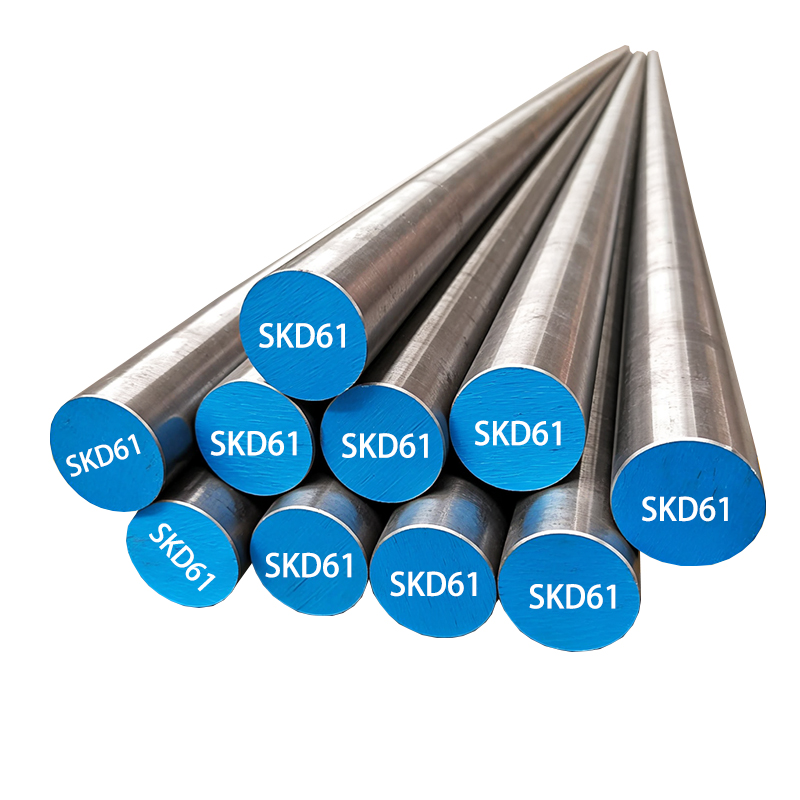
Qilu’s manufacturing facilities include electric arc melting, ladle refining, vacuum degassing, ESR, and forging equipment. In the purchase specification, use this information to select the material route required by the tool. ESR is relevant when the application calls for closer control of steel cleanliness and uniformity. Spell out which grade specification, product form, and route are required so that an offer for the blank can be checked on the same basis.
Specify ultrasonic inspection separately. Qilu lists ultrasonic testing criteria for its 1.2344 range. Agree which standard and acceptance class apply to the ordered section and what inspection record should accompany it. Steelmaking route and ultrasonic acceptance address different characteristics, and each belongs where it can be verified.
Plan heat treatment for the geometry, available equipment, and required hardness. Preheating helps limit thermal gradients in the tool. Austenitizing puts the steel into the condition needed for hardening. Quenching must cool the relevant sections at a rate compatible with the grade and target properties. Tempering then brings the tool to the specified working condition.
A large die blank and a small insert can behave differently under the same nominal furnace settings. The core of the larger die takes longer to respond to heating and cooling, and its section changes can complicate the cycle. Give the heat treater the drawing, critical dimensions, required hardness range, expected machining after treatment, and any service requirement that affects the choice of cooling and tempering conditions.
When reviewing a recurring failure, compare the delivered hardness and the actual location of the test. A reading on an accessible face may be useful for acceptance, while a differently cooled section may require a separate check. Agree on test positions in advance so that readings from successive tools can be compared meaningfully.
Work through the heat-treatment review on an insert whose working face contains a broad cavity and a narrow rib. The rib and the surrounding mass do not follow the same temperature history. The heat treater needs the section drawing to assess where the tool may cool unevenly and where a distortion allowance is useful. The purchaser can help by passing along the actual blank size and identifying when the cavity and rib are machined. A schedule chosen from a grade table still has to suit the geometry of the piece that goes into the furnace.
A related decision is what to do when the target hardness changes. A harder condition may be attractive when the working edge gradually wears away. It can be a poor answer if the previous insert failed by a deep crack or if the extra hardness reduces the toughness margin required at a fillet. Base any change on the failure and the grade’s tempering response. Review the new target with the heat treater and keep cooling and lubrication records so the next trial can be compared fairly.
When testing two candidate grades, use comparable tooling whenever practical. Record the condition received, the treatment applied, and the location where each tool first showed damage. If one insert ran with different spray coverage or longer dwell at temperature, preserve that difference in the record. It can explain an apparent grade effect and identify an operating change that might improve both tools.
Define the delivery condition on the order for the hot work tool steel blank. If the shop expects annealed material for machining, the intake check should reflect that condition and the drawing should separately state the required working hardness. A condition mix-up can disrupt machining before any heat-treatment work begins. Check the paperwork against the actual blank identification when several die jobs arrive together.
At receipt: match the grade, section, melting route, delivery condition, and ultrasonic records to the order.
After heat treatment: confirm hardness at the agreed locations and check the critical dimensions and finish allowance.
After service: record the type and location of wear or cracking and compare it with the original failure that led to the grade choice.
Keep the same tool identifier across those records. If a change to the cooling arrangement, section, or hardness specification is introduced later, the shop can compare performance against the previous tool without losing track of the variables that changed.
Select hot work tool steel from the service conditions and the failure pattern of the existing tool. Use the grade comparison to decide which properties matter, then specify the stock form, steelmaking route, and inspection requirements on the order. Hunan Qilu Steel manufactures and supplies conventional and ESR H13, giving buyers a choice to specify at the blank stage. Pass the finished dimensions, section changes, and target hardness to the heat treater. Incoming stock records and finished-tool inspection together provide a basis for reviewing the next tool’s performance.
It specifies an electroslag remelting step in the steelmaking route. The purchase order should also identify the grade, required section, and any separate cleanliness or inspection criteria.
Nitriding modifies a surface layer. Specify and verify the core condition required to support the working surface before relying on the additional treatment.
Use agreed locations that represent the working area and any section where cooling makes the result important. The drawing and inspection plan should establish those locations before heat treatment.
Confirm the governing grade specification, product form, and acceptance criteria. Compare the applicable composition and other requirements before approving an order under another designation.