T: +86-0731-85185770
E: enquiry@qilumetal.com
E: enquiry@qilumetal.com
No. 18 Xiangfu Middle Road,Yuhua District, Changsha City
 |


Grade: DIN 1.2343
Equivalent Steel: ASTM H11, JIS SKD6, ISO X37CrMoV5-1, GB 4Cr5MoSiV
DIN 1.2343 is a chromium-molybdenum-vanadium hot work tool steel with a precisely balanced chemical composition designed for optimal high-temperature strength and toughness. The carbon content of 0.36-0.42% provides the foundation for hardenability, while chromium at 4.80-5.50% delivers excellent oxidation resistance and thermal fatigue performance. Molybdenum (1.10-1.40%) enhances resistance to temper softening, and vanadium (0.25-0.50%) refines grain structure while improving wear resistance.
| Quantity: | |
|---|---|
1.2343
Qilu
DIN 1.2343 is a premium hot work tool steel engineered to excel in high-temperature and high-stress industrial environments, adhering to the strict specifications of DIN 17350 (German standard). Renowned for its balanced combination of exceptional toughness, superior wear resistance, and high thermal stability, this steel is a go-to choice for manufacturers worldwide seeking reliable performance in heat-intensive processes. Its versatility has led to the development of equivalent grades across major global standards, ensuring consistent availability and compatibility with international manufacturing workflows. Key equivalents include AISI H11 (per ASTM A681), X37CrMoV5-1 (per ISO 4957), JIS SKD6 (per JIS G4404), and 4Cr5MoSiV (per GB/T 1299), making it a universally recognized material in the tool steel industry.
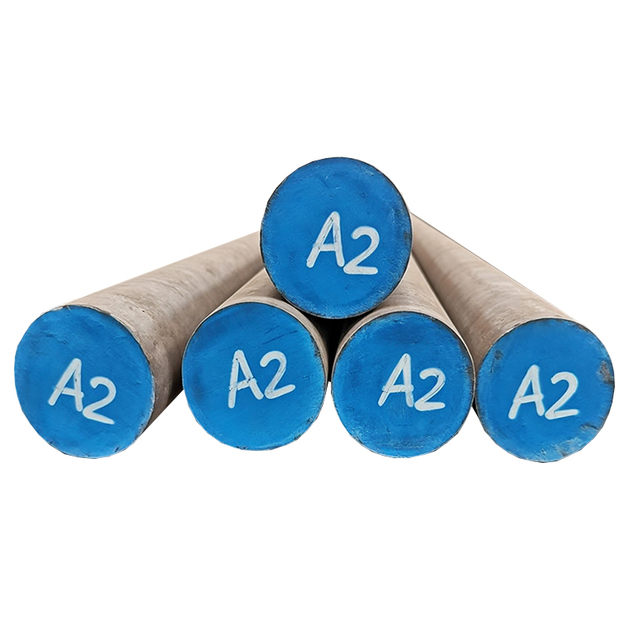
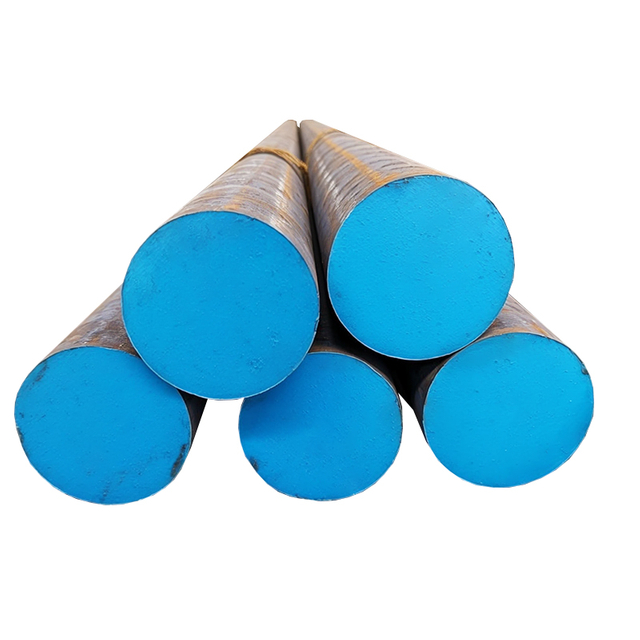
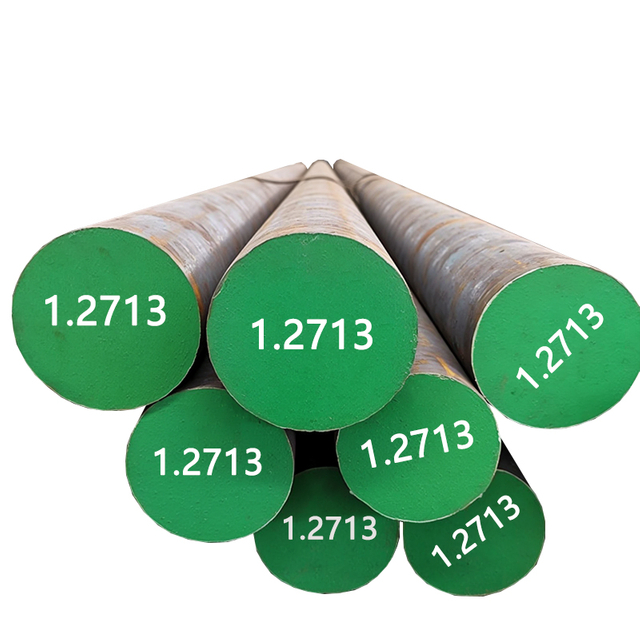
At Hunan Qilu Steel Co., Ltd., we specialize in supplying DIN 1.2343 in a full range of forms—from hot-rolled bars to forged blocks—with consistent quality guaranteed by advanced steelmaking processes (including EF+LF+VD and EAF+LF+VD+ESR). Our monthly stock of over 10,000 tons of hot-rolled and forged bars ensures quick delivery for urgent orders, while our customizable size options meet the unique needs of diverse industrial applications. Whether you require small-diameter bars for precision tooling or large forged blocks for heavy-duty molds, DIN 1.2343 from Hunan Qilu Steel delivers the mechanical properties and dimensional accuracy needed to optimize your production efficiency.
Country | USA | ISO | Germany | China | Japan |
Standard | ASTM A681 | ISO 4957 | DIN17350 | GB/T1299 | JIS G4404 |
Grade | H11 | X37CrMoV5-1 | 1.2343 | 4Cr5MoSiV | SKD6 |
Grade | C | Si | Mn | P | S | Cr | Mo | V |
H11 | 0.33-0.43 | 0.80-1.25 | 0.20-0.60 | 0.030Max | 0.030Max | 4.75-5.50 | 1.10-1.60 | 0.30-0.60 |
X37CrMoV5-1 | 0.33-0.41 | 0.80-1.20 | 0.25-0.50 | 0.030Max | 0.020Max | 4.80-5.50 | 1.10-1.50 | 0.30-0.50 |
1.2343 | 0.36-0.42 | 0.90-1.20 | 0.30-0.50 | 0.030Max | 0.030Max | 4.80-5.50 | 1.10-1.40 | 0.25-0.50 |
4Cr5MoSiV | 0.33-0.43 | 0.80-1.20 | 0.20-0.50 | 0.030Max | 0.030Max | 4.75-5.50 | 1.10-1.60 | 0.30-0.60 |
SKD6 | 0.32-0.42 | 0.80-1.20 | 0.50Max | 0.030Max | 0.020Max | 4.50-5.50 | 1.00-1.50 | 0.30-0.50 |
Heat Treatment | Hardness |
Annealed (+A) | HB229Max |
Cold-drawn condition | HB262Max |
Hardening and Tempering (+HT) | HRC48 Min |
EN10228-3 class III or Sep 1921-84 D/D
Conventional quality: EF+LF+VD / EAF+LF+VD — for general hot‑forging, extrusion, standard injection moulds.
Premium ESR grade: EAF+LF+VD+ESR — higher material cleanliness, fewer non‑metallic inclusions, better polishability and toughness, recommended for high‑end die‑casting, mirror‑surface plastic moulds, heavy‑impact tooling.
Ingot pre‑heat: 700‑800 ℃
Heat up to initial forging temperature: 1050‑1150 ℃
Complete forging above finish‑forging temperature 850‑900 ℃ to prevent hot cracking
Slow cool in sand after forging to relieve thermal stress.
Heat to 840‑880 ℃, hold 2‑4 hours according to section thickness, slow furnace cooling ≤50 ℃/h, final hardness ≤HB 229. Purpose: softening for machining, stress relief.
Pre‑heat: 788 ℃ (avoid thermal shock for large blocks)
Austenitizing temperature: 1010‑1030 ℃ (salt bath / vacuum furnace). Soaking time: ~25 ±1 min per 25 mm section thickness.
Quench in oil.
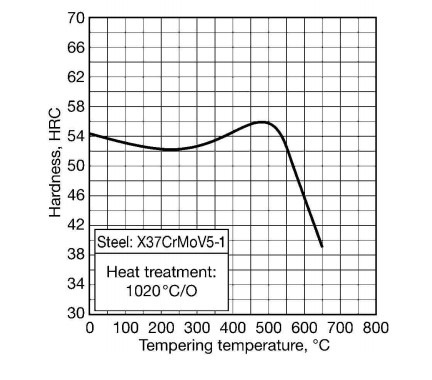
Tempering: 540‑560 ℃, hold minimum 60 min (1 hour per 20 mm thickness). Double tempering is strongly advised for moulds requiring high dimensional stability. Target hardness ≥HRC 48 (50‑52 HRC typical).
Important note: Do not keep working temperature continuously over 600 ℃; obvious softening will occur beyond this threshold.
Product type | Size range | Length |
Hot rolled bar | Φ20-Φ200mm | 2000-5800mm |
Hot forged bar | Φ200-Φ600mm | 2000-5800mm |
Hot rolled plate/sheet | T:10-60mm; W:310-810mm | 2000-5800mm |
Hot forged plate | T:70-250mm; W:310-810mm | 2000-5800mm |
Hot Forged block | T: 260-500mm; W: 300-1000mm | 2000-5800mm |
Surface Finish | Turned | Milled | Grinding(Best) | Polished(Best) | Peeled(Best) | Black Forged | Black Rolled |
Tolerance | +0/+3mm | +0/+3mm | +0/+0.05mm | +0/+0.05mm | +0/+0.1mm | +0/+5mm | +0/+1mm |
Straighness | 1mm/1000mm max. | 3mm/1000mm max. | |||||
Qilu steel stock hot rolled bar and forged bars more than ten thousands tons every month, below our our stock size for round bars
20 | 25 | 30 | 35 | 40 | 45 | 50 | 55 | 60 | 65 | 70 | 75 | 80 | 85 | 90 |
95 | 100 | 105 | 110 | 115 | 120 | 130 | 140 | 150 | 160 | 170 | 180 | 190 | 200 |
Since the stocks change everyday, if you want to know our stock available information, please contact our salesman.
DIN 1.2343 is widely used across industries due to its ability to withstand high temperatures, mechanical stress, and repeated thermal cycles. Below are its key application areas, with details on how its features address specific industrial needs.
Die Casting Dies: Ideal for aluminum, magnesium, and zinc alloy die casting. The steel’s high thermal stability (maintained up to 600℃) and wear resistance prevent die degradation from molten metal flow, extending die life by 20-30% compared to lower-grade steels.
Hot Forging Dies: Used for forging carbon steel, alloy steel, and non-ferrous metals (e.g., copper, brass). Its exceptional toughness absorbs the impact of forging blows, while its Cr-Mo-V composition resists deformation under high pressure.
Extrusion Dies: Critical for aluminum and copper extrusion processes. The steel’s wear resistance (from Mo and V) ensures consistent extrudate dimensions, even after thousands of cycles. It is commonly used for extruding profiles for the automotive and construction industries.
Hot Stamping Tools: Applied in the automotive sector for forming high-strength steel (HSS) parts (e.g., door beams, chassis components). Its hardened & tempered hardness (HRC48 Min) maintains sharp tool edges, ensuring precise part shaping.
Injection Molds: Used for molding engineering plastics (e.g., PA66, PBT, PC) that require processing temperatures above 250℃. The steel’s thermal stability prevents mold warping, while its smooth surface finish (achievable via grinding) ensures plastic parts have a high-quality appearance.
Compression Molds: Ideal for manufacturing composite parts (e.g., fiberglass-reinforced plastics) and thick-walled plastic components. Its toughness resists the high clamping pressures of compression molding machines (up to 50 MPa), reducing mold damage risks.
Hot Runner Systems: Integrated into plastic injection molds to maintain molten plastic flow. The steel’s resistance to softening at high temperatures ensures consistent flow rates, minimizing plastic waste and improving production efficiency.
Shear Blades: Used in steel mills and metal processing plants to cut hot steel plates and bars. Its wear resistance (from Mo and V) extends blade life, reducing maintenance downtime.
Mandrels & Cores: Critical for tube and pipe manufacturing (e.g., seamless steel pipes). The steel’s high strength and corrosion resistance (from Cr) prevent core deformation during pipe extrusion, ensuring uniform pipe wall thickness.
Heat Treatment Fixtures: Used to hold parts during annealing, quenching, or tempering. Its thermal fatigue resistance allows it to withstand repeated heating and cooling cycles without cracking.
Cold Forming Dies: For cold extrusion of non-ferrous metals (e.g., aluminum, copper) where high temperature is not a factor. Its hardness (HRC48 Min) ensures die precision, while its toughness resists cracking from cold working stress.
Punching & Blanking Tools: Suitable for high-precision cutting of thin metal sheets (up to 5mm thick). Its sharp edge retention (from V) ensures clean cuts, reducing the need for post-processing.
A1: DIN 1.2343 and AISI H11 are technically equivalents, but they have minor differences in chemical composition and hardness:
Chemical Composition: AISI H11 has a slightly wider range for Mo (1.10-1.60% vs. 1.10-1.40% for DIN 1.2343) and V (0.30-0.60% vs. 0.25-0.50% for DIN 1.2343). These differences are minimal and do not affect performance in most applications—both steels can be used interchangeably for die casting, forging, and extrusion.
Hardness: Both have an annealed hardness of HB229 Max and a hardened & tempered hardness of HRC48 Min, so they meet the same strength requirements.
At Hunan Qilu Steel, we supply both grades (labeled to match customer specification) with identical quality standards.
A2: We offer DIN 1.2343 in a comprehensive range of sizes to meet diverse needs:
Hot-Rolled Bars: Φ20mm to Φ200mm (length: 2000-5800mm)
Hot-Forged Bars: Φ200mm to Φ600mm (length: 2000-5800mm)
Hot-Rolled Plates: 10mm (T) to 60mm (T), 310mm (W) to 810mm (W) (length: 2000-5800mm)
Hot-Forged Plates: 70mm (T) to 250mm (T), 310mm (W) to 810mm (W) (length: 2000-5800mm)
Common stock sizes (e.g., Φ20mm, Φ50mm, Φ100mm, 10mm-thick plates) are available for same-week shipment. Custom sizes (e.g., Φ650mm forged bars, 300mm-thick plates) can be produced with a 2-4 week lead time.
A3: 1.2343 ESR uses electro‑slag remelting process to lower non‑metallic inclusions. It delivers higher purity, better toughness, improved mirror‑polishing capacity and more uniform microstructure. ESR material costs higher; select ESR for high‑end moulds that demand long service life and fine surface finish.
A4: Yes, especially suitable for high‑temperature engineering plastics (PA66, PBT, PC, glass‑filled compounds). It provides thermal stability and acceptable polish. For large‑volume cosmetic‑appearance moulds requiring super mirror finish, ESR variant is preferred.
A5: Common root causes: insufficient pre‑heating; improper forging finish temperature; single temper only (no second temper); sharp corner design causing stress concentration; EDM white‑layer not removed; over‑quenching cooling rate. Use double tempering and add radius transitions for sharp corners.
We welcome inquiries for DIN 1.2343, AISI H11, JIS SKD6 and equivalent hot work tool steel grades. Custom sizes, heat treatment services, and third-party inspection available upon request.