
T: +86-0731-85185770
E: enquiry@qilumetal.com
E: enquiry@qilumetal.com
No. 18 Xiangfu Middle Road,Yuhua District, Changsha City
Views: 0 Author: Site Editor Publish Time: 2026-11-19 Origin: Site


One transfer chute can wear out in two different ways. Rock striking the inlet leaves dents and gouges, while material sliding down the chute gradually thins the liner. Both zones need a wear plate, yet they place different demands on it. NM450 steel plate belongs on the shortlist when a component needs strong abrasion resistance and must also tolerate the impact and fabrication conditions of the job. Select it by looking at the worn part, checking how the replacement will be made and installed, and deciding what to measure after installation.
Start at the worn component and follow the material path. Long grooves in the direction of flow and gradual thinning suggest sliding abrasion. Deep gouges and dents concentrated below a drop point suggest a more severe combination of impact and abrasive contact. Local distortion around a fastener or unsupported edge can point to how the liner is mounted or loaded.
Record what the equipment handles, where material lands, and whether feed size or drop height changes between operating conditions. Inspect several worn liners if possible. Use photographs with a scale and note where thickness was measured. The objective is to identify whether the replacement plate needs better resistance to sliding wear, a change to the support or liner arrangement, or a review of impact conditions.
Check areas around fasteners and welds as part of the inspection. A liner can be discarded because it has worn through, because an edge has cracked, or because a connection has lost its fit. Each outcome changes what the equipment team should specify for the next part.
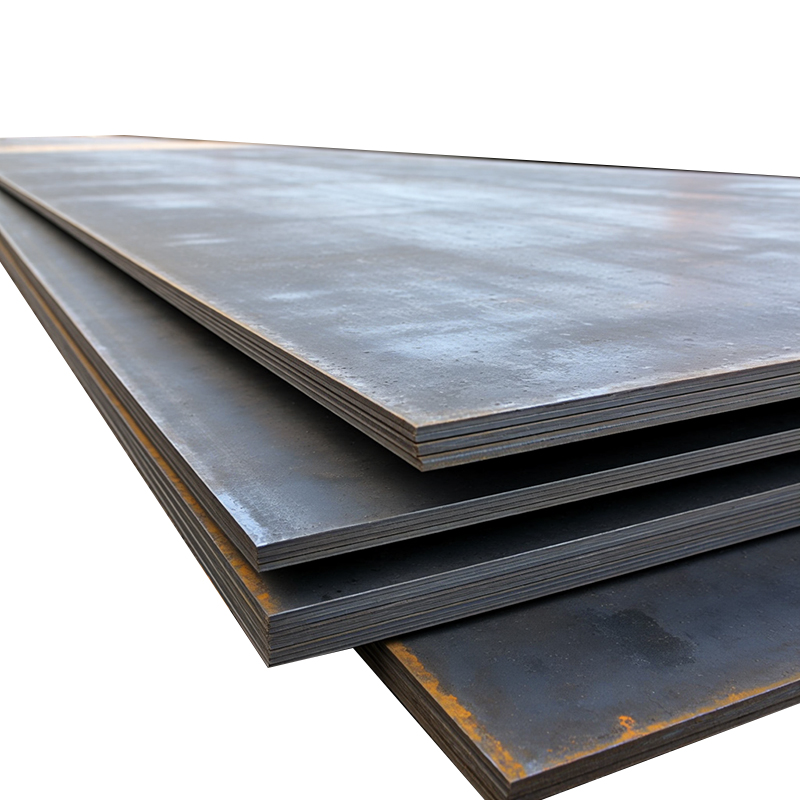
Qilu supplies NM450 steel plate in the quenched-and-tempered condition. Its product specification lists a surface hardness range of 420–480 HBW. Use that specification as one input to the selection, alongside the plate thickness, impact exposure, liner support, and fabrication requirements.
Equipment component | Common wear exposure | When NM450 is worth evaluating | What can change the choice |
|---|---|---|---|
Excavator bucket liner | Sliding soil or rock, with impact during loading | A supported wear surface is thinning or showing gouges | Severe impact, attachment details, or tight forming requirements |
Crusher or hopper liner | Sliding material and repeated strikes near the feed zone | A backed liner sees substantial abrasion and the impact condition is understood | Heavy point impacts, cracked mounts, or limited support |
Transfer chute liner | Concentrated impact at the inlet and sliding farther down | A wear zone needs additional abrasion resistance and the panel can be fabricated to fit | Different inlet conditions may justify a separate plate or liner design |
Dump body liner | Abrasion during unloading and impact during filling | Wear is concentrated where material enters or slides out | Added liner weight, opening geometry, and attachment constraints |
Abrasive-wear experience from one component can inform the shortlist, but compare the conditions before transferring the specification. The return side of a chute, for example, may be easier to replace and experience a different load from the impact area. That can justify different liner thicknesses or grades within the same assembly.
Compare plate grades for the zone being replaced. NM400 is worth evaluating where formability and fabrication are important and the wear demand is compatible. NM450 can suit heavily abraded surfaces that also need to accommodate impact and installation constraints. NM500 enters the comparison when severe sliding abrasion dominates and the shop can meet the fabrication requirements for the selected plate.
For the transfer chute, inspect the inlet separately from the downstream panels. If damaged inlet liners show bending near the mounts, review support and impact severity first. If downstream liners lose thickness along the flow path while staying in shape, compare the candidate plates for sliding abrasion and ease of replacement. The location of the wear and the way each panel is installed should guide the choice. Wear plate grade comparison.
Compare total installed impact on the operation as well as plate grade. A heavier or more difficult-to-form liner may take longer to fit. An accessible panel can be replaced on a different schedule from one that requires substantial dismantling. Record those constraints before choosing a thickness or asking the shop to copy the previous design.
Measure the equipment and any reliable reference points before drawing a replacement. Wear can enlarge holes, remove edges, and alter the contour of the old liner. Confirm the mounting pattern, the direction of material flow, the backing surface, and clearances at adjacent panels. Identify which surfaces need to be flat or flush and where installation tolerance is available.
Hunan Qilu Steel lists custom sizes, cutting, bending, and edge preparation to drawing for NM450, with shot-blasted or primed surface options. Use these options to divide the work clearly. Specify which features must arrive complete, which will be fitted on site, and which edges need preparation for the selected attachment method. Where a plate is to be bent, give the finished geometry and review fabrication constraints for the ordered section with the shop.
Check the backing structure while the old liner is removed. A hollow behind the panel can leave an area unsupported and concentrate bending or impact near the mounts. A ridge between panels can interrupt the material flow and create a new wear zone. For the replacement, show which surfaces need close contact with the backing and where a joint or gap is allowed. This information helps the plate processor and the installation crew work to the same geometry.
Choose the surface condition around the installation work. A shot-blasted or primed plate can be useful when the project has a defined preparation or coating sequence. Identify the faces involved and confirm any separate preparation requirements at welds or mating surfaces. If the expected installation includes field trimming, leave a defined area and tolerance for that work. Avoid uncertainty about which edge is finished at delivery and which will be matched to the existing structure.
Use the mounting method to check the work split. For a bolted panel, confirm hole positions and clearances from intact references on the chute. For a welded panel, mark the attachment locations and drawing requirements for edges and fit-up. Requesting these features with the plate order gives the supplier a clear fabrication scope and gives the installer inspection points before the equipment is taken out of service.
Record the installed grade, starting thickness, liner position, and installation date. Pick thickness measurement points where the surface can be reached repeatedly and mark their locations on a simple drawing. If material flow changes, record that event alongside the readings. This makes a trial interpretable when the equipment sees changing feed or throughput.
At removal, inspect the surface and attachments as well as the remaining thickness. Compare the result with the original failure mode. If sliding wear improved but the liner now cracks at a mount, investigate the local loading and attachment before repeating the order. Use throughput and maintenance records when comparing service intervals across different operating periods.
Define the wear limit before putting the NM450 liner into service. Maintenance needs a usable threshold for replacement, such as a minimum remaining thickness specified for the panel or a condition that exposes the backing or fasteners. Compare wear readings at the same locations and review the inspection interval if the rate of loss changes as the panel wears in.
NM450 steel plate fits equipment components where the wear pattern calls for abrasion resistance and the plate can be fabricated and supported for the actual duty. Select the liner by zone, then turn the installation requirements into a drawing. Hunan Qilu Steel supplies quenched-and-tempered NM450 and offers cutting, bending, and edge preparation for drawing-based orders. Establish how the replacement will be inspected at receipt and where wear will be measured once it enters service. The trial can then support a decision about using the same grade elsewhere in the equipment.
Evaluate the parts separately. A cutting edge sees direct contact, concentrated loads, and geometry requirements that can differ from those of a supported bucket liner. Follow the equipment design requirements for the edge.
It can identify where the stream lands or concentrates. Compare the wear pattern with feed direction, chute geometry, and changes in material flow before modifying the liner design.
A bolted design can simplify removal when the backing structure accommodates the pattern and the fasteners remain accessible. Review exposure of bolt heads and fit-up where the liner meets the material stream.
Review remaining thickness at the wear limit, support, fastener geometry, and any structural role of the existing plate. The acceptable thickness depends on the equipment design and service conditions.