T: +86-0731-85185770
E: enquiry@qilumetal.com
E: enquiry@qilumetal.com
No. 18 Xiangfu Middle Road,Yuhua District, Changsha City
 |


| Quantity: | |
|---|---|
1.2713
Qilu
DIN 1.2713 (55NiCrMoV6) and its global equivalents AISI L6, JIS SKT4, and Chinese 5CrNiMo are nickel-chromium-molybdenum alloyed hot work tool steels engineered for extreme industrial conditions involving repeated high-temperature exposure (500–800°C) and heavy mechanical impact. As a staple in DIN 17350 German standard, this steel grade is renowned for its balanced mechanical properties—combining high toughness, wear resistance, and thermal stability—making it the go-to material for heavy-duty metal forming and mold manufacturing across automotive, aerospace, and general engineering industries.
The core appeal of this steel lies in its balanced chemical composition, which includes elements like nickel (Ni), chromium (Cr), and molybdenum (Mo) to boost toughness and wear resistance. For example, Ni content ranges from 1.25–2.00% (AISI L6) to 1.50–1.80% (DIN 1.2713/JIS SKT4), a key factor in resisting impact damage during forging or extrusion. Additionally, the low phosphorus (P ≤ 0.030%) and sulfur (S ≤ 0.030%) content minimizes brittleness, ensuring long service life for tools made from this material.
Country | USA | ISO | Germany | China | Japan |
Standard | ASTM A681 | ISO 4957 | DIN17350 | GB/T1299 | JIS G4404 |
Grade | L6 | 55NiCrMoV6 | 1.2713 | 5CrNiMo | SKT4 |
Grade | C | Si | Mn | P | S | Cr | Mo | Ni | V |
L6 | 0.65-0.75 | 0.10-0.50 | 0.25-0.80 | 0.030Max | 0.030Max | 0.60-1.20 | 0.50Max | 1.25-2.00 | / |
1.2713/ 55NiCrMoV6 | 0.50-0.60 | 0.10-0.40 | 0.65-0.95 | 0.030Max | 0.030Max | 0.60-0.80 | 0.25-0.35 | 1.50-1.80 | 0.07-0.12 |
5CrNiMo | 0.50-0.60 | 0.40Max | 0.50-0.80 | 0.030Max | 0.030Max | 0.50-0.80 | 0.15-0.30 | 1.40-1.80 | / |
SKT4 | 0.50-0.60 | 0.10-0.40 | 0.60-0.90 | 0.030Max | 0.020Max | 0.80-1.20 | 0.35-0.55 | 1.50-1.80 | 0.05-0.15 |
Hardenability is a defining feature of this steel—even for large-section components, heat treatment delivers consistent hardness across the entire material, eliminating weak spots that cause premature failure:
Annealed Condition: HB ≤248 (cold-drawn: HB ≤262) – a soft, machinable state that allows for complex die cavity machining without excessive wear on cutting tools.
Hardened & Tempered: HRC ≥46 – after precision heat treatment, the steel forms a uniform martensitic microstructure that resists deformation under heavy forging and extrusion loads.
Large-Section Performance: Forged blocks up to Φ600mm achieve consistent hardness throughout, a critical advantage for manufacturing large forging dies and extrusion tools.
Heat Treatment | Hardness |
Annealed (+A) | HB248Max |
Cold-drawn condition | HB262Max |
Hardening and Tempering (+HT) | HRC46 Min |
Thermal fatigue—cracking from repeated heating and cooling—is the leading cause of hot work tool failure. This steel grade addresses this with a stable oxide layer formed by chromium and molybdenum, which reduces heat absorption and minimizes thermal expansion/contraction stress. In industrial tests, forging dies made from DIN 1.2713 lasted 30% longer than standard hot work steels in continuous high-temperature forming processes (e.g., hammer forging of crankshafts and gears).
Hunan Qilu Steel implements a multi-stage quality inspection process for every batch, ensuring compliance with international standards and reliable, predictable performance:
Ultrasonic Testing: EN10228-3 Class III or SEP 1921-84 D/D – detects internal voids, inclusions, and cracks that compromise tool integrity.
Spectral Chemical Analysis: Verifies alloy composition for every coil/bar, ensuring alignment with ASTM, DIN, JIS, or GB standards.
Multi-Point Hardness Testing: Random sampling across each product to confirm uniform hardness and eliminate performance variability.
International Certifications: DIN 17350, ASTM A681, ISO 4957, EN10228-3 – fully compliant for export to Europe, North America, Asia, and global markets.
Hunan Qilu Steel offers flexible supply options for this steel grade, from standard stock sizes to custom-forged components, with precise surface finishes tailored to reduce post-processing. All products are supplied with controlled lengths (2000–5800mm) and tight tolerances.
Product type | Size range | Length |
Hot rolled bar | Φ10-Φ190mm | 2000-5800mm |
Hot forged bar | Φ200-Φ600mm | 2000-5800mm |
Hot rolled plate/sheet | T:10-60mm; W:310-810mm | 2000-5800mm |
Hot forged plate | T:70-250mm; W:310-810mm | 2000-5800mm |
Hot Forged block | T: 260-500mm; W: 300-1000mm | 2000-5800mm |
Surface Finish | Turned | Milled | Grinding(Best) | Polished(Best) | Peeled(Best) | Black Forged | Black Rolled |
Tolerance | +0/+3mm | +0/+3mm | +0/+0.05mm | +0/+0.05mm | +0/+0.1mm | +0/+5mm | +0/+1mm |
Straighness | 1mm/1000mm max. | 3mm/1000mm max. | |||||
Custom Sizes Available: Forged blocks up to 500mm thick × 1000mm wide, cut-to-length bars (any length), and special surface finishes—contact our team for bespoke requirements.
Proper heat treatment is critical to unlocking the full performance of this steel grade. Hunan Qilu Steel offers pre-heat-treated steel upon request, saving customers processing time and ensuring optimal results. Below are the standard heat treatment protocols for AISI L6.
Annealing: Heat to 780–800°C, hold for 2–4 hours (based on component size), then cool slowly in a furnace (≤50°C/hour) to room temperature. Results in HB ≤248 for easy machining.
Preheating: Heat to 649°C, hold to ensure uniform temperature across the component—eliminates thermal shock during quenching.
Quenching: Heat to 830–850°C in a salt bath furnace, hold for 1–2 hours, then quench in oil (fast cooling) to achieve maximum hardness (HRC 58–62).
Tempering: Heat to 490–510°C, hold for 2–3 hours, then air cool. Relieves internal stress, stabilizes the microstructure, and results in a final working hardness of HRC ≥46.
Multiple Tempering: For large components, repeat tempering 2–3 times for full stress relief and uniform performance.
DIN 1.2713: Lower quenching temperature (820–840°C) to preserve vanadium grain refinement.
JIS SKT4: Extend tempering time by 30% to maximize toughness from ultra-low sulfur content.
GB 5CrNiMo: Slightly higher tempering temperature (500–520°C) for cost-effective performance in mass production.

The core use case for this steel, leveraging its thermal fatigue resistance and toughness:
Forging Dies: Hammer forging, press forging, and open-die forging of large metal components (gears, crankshafts, connecting rods, axles). The HRC 46+ hardness resists wear, while nickel-enhanced toughness prevents cracking from high-impact forging.
Extrusion Dies: Hot extrusion of non-ferrous metals (aluminum, copper, brass) into profiles, pipes, and rods. Retains hardness at 500–600°C for consistent extrusion quality in long production runs.
Die-Casting Molds: Zinc, aluminum, and magnesium alloy die-casting for automotive and electronics components (housings, brackets, engine parts). Resists molten metal corrosion and thermal cycling, reducing mold replacement downtime.
While designed for hot work, its exceptional toughness makes it ideal for cold work applications involving heavy impact:
Thick Plate Punching Dies: Punching 6–20mm thick steel plates for construction and machinery parts—absorbs punching impact to prevent die chipping and breakage.
Heavy-Duty Shear Blades: Cutting large steel billets, thick sheets, and structural steel—chromium-rich carbides ensure long edge sharpness and wear resistance.
Cold Heading Dies: Shaping bolts, nuts, and fasteners by cold metal compression—balances hardness and ductility to withstand high pressure without deformation.
For high-volume plastic manufacturing requiring durability and polishability:
Engineering Plastic Injection Molds: Molding high-performance plastics (nylon, polycarbonate, PEEK) for automotive and aerospace parts. Achieves a mirror polish for flawless plastic surface finishes, with wear resistance for millions of injection cycles.
Blow Molds: Manufacturing plastic containers (bottles, jars, industrial tanks)—thermal stability resists heat buildup during blow molding, preventing mold warping and ensuring consistent container dimensions.
Customers often compare this steel to other popular hot work grades like AISI H13, H11, and H21—each has unique composition and performance strengths, making them suited for different applications. Below is a detailed comparison to help you select the right material for your process.
| Aspect | AISI L6 / 1.2713 / SKT4 | AISI H13 / 1.2344 / SKD61 |
| Core Alloying | High Ni (1.25-2.00%); Low Cr/Mo | High Cr (5.00-5.50%); High Mo (1.25-1.75%) |
| Key Strength | Superior impact toughness; resistance to heavy shock | Exceptional thermal stability; high-temperature wear resistance |
| Hardness (HT) | HRC ≥46 | HRC ≥48 |
| Optimal Temp | 500–700°C | 600–800°C |
| Top Applications | Hammer forging dies, high-impact extrusion tools | Aluminum die-casting molds, continuous high-temp forming |
| Best For | Prioritizing impact resistance over extreme heat tolerance | Prioritizing thermal stability for continuous high-temperature production |
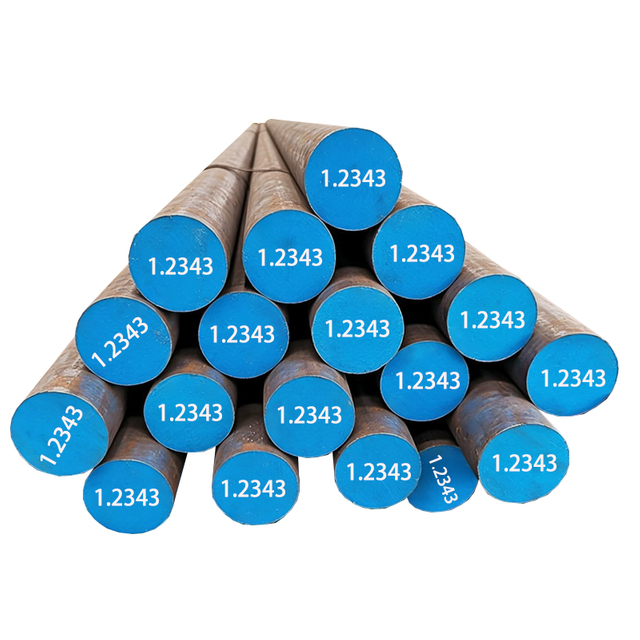
| Aspect | AISI L6 / 1.2713 / SKT4 | AISI H11 / 1.2343 / SKD6 |
| Alloy Difference | Nickel-enhanced toughness; minor V (DIN/JIS) | Chromium-molybdenum core; no nickel |
| Toughness | Excellent (high Ni) | Good (lower impact resistance) |
| Wear Resistance | Balanced (Cr carbides) | Higher (higher Cr content) |
| Cost | Moderate (Ni addition) | Lower (no nickel) |
| Applications | Heavy-duty forging, thick plate punching | Medium-load extrusion, low-impact die-casting |
| Aspect | AISI L6 / 1.2713 / SKT4 | AISI H21 / 1.2581 / SKD5 |
| Alloy Design | Ni-Cr-Mo (toughness/thermal stability) | Cr-W-V (high-temperature hardness) |
| Thermal Fatigue | Excellent (oxide layer protection) | Good (lower resistance to cycling) |
| Machinability | Very good (annealed HB ≤248) | Poor (harder annealed state) |
| Scale Resistance | High (Cr/Mo oxide layer) | Moderate |
| Applications | Versatile hot/cold work, plastic molds | Specialized high-temp forging (900+°C), limited use |
Choose AISI L6 if your process involves high impact + moderate high temperature (forging, thick plate cold work).
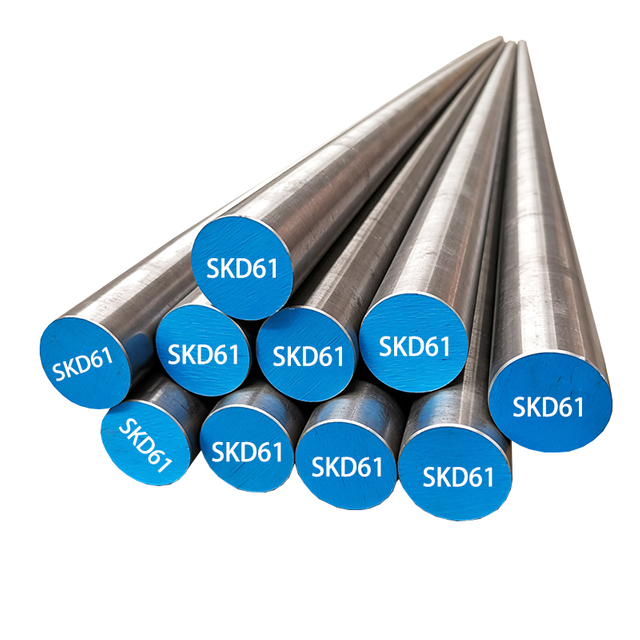
Choose H13 if you need continuous high-temperature performance (aluminum die-casting, long-run extrusion).
Choose H11 for cost-effective medium-load hot work with no high impact.
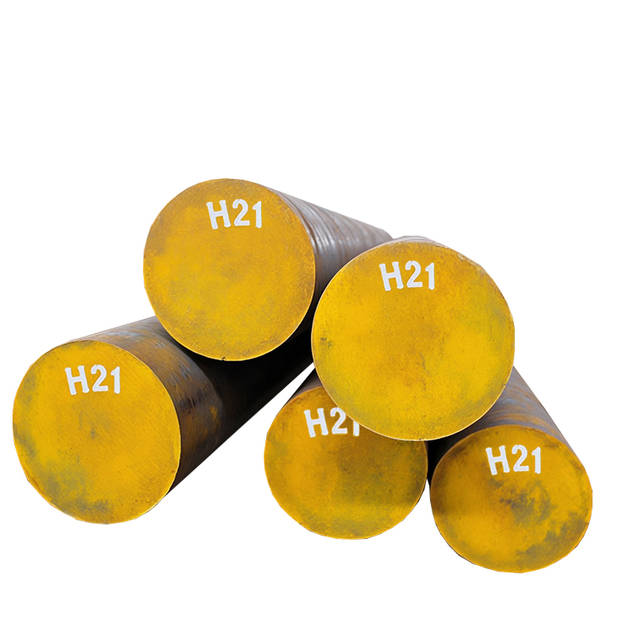
Choose H21 only for specialized ultra-high-temperature forging (rare industrial use).
A1: JIS SKT4 has a strict sulfur limit of ≤0.020% (vs. ≤0.030% for AISI L6/DIN 1.2713). Sulfur creates brittle sulfide inclusions in steel—lower sulfur eliminates these inclusions, maximizing impact toughness for Japan’s high-precision, heavy-duty forging industry (e.g., automotive component manufacturing).
A2: 5CrNiMo is the Chinese cost-effective equivalent of DIN 1.2713, with a streamlined molybdenum range (0.15-0.30%) and no vanadium. It delivers 90% of the performance of DIN 1.2713 at a lower cost, making it ideal for mass production of medium-load tools (e.g., small forging dies, plastic molds) in the Chinese market. For heavy-duty, high-precision applications, DIN 1.2713 is recommended for its vanadium-enhanced grain refinement.
A3: While welding is possible, it is not recommended for critical tool components—welding creates thermal stress and can alter the microstructure, reducing toughness and thermal fatigue resistance. If welding is necessary, use a nickel-chromium-molybdenum welding rod, preheat the steel to 300–400°C before welding, and temper it at 450–500°C after welding to relieve stress.
A4: To achieve optimal properties (HRC 46+), follow this sequence:
Annealing (for machining): Heat to 780–800°C, then cool slowly in the furnace to achieve HB ≤ 248.
Quenching: Preheat to 650°C, then austenitize at 830–850°C. Quench in oil.
Tempering: Temper immediately after quenching at 490–510°C. Double tempering is recommended for stress relief and microstructure stabilization.
For custom size inquiries, heat treatment requirements, price quotes, or sample orders, contact us.