T: +86-0731-85185770
E: enquiry@qilumetal.com
E: enquiry@qilumetal.com
No. 18 Xiangfu Middle Road,Yuhua District, Changsha City
 |
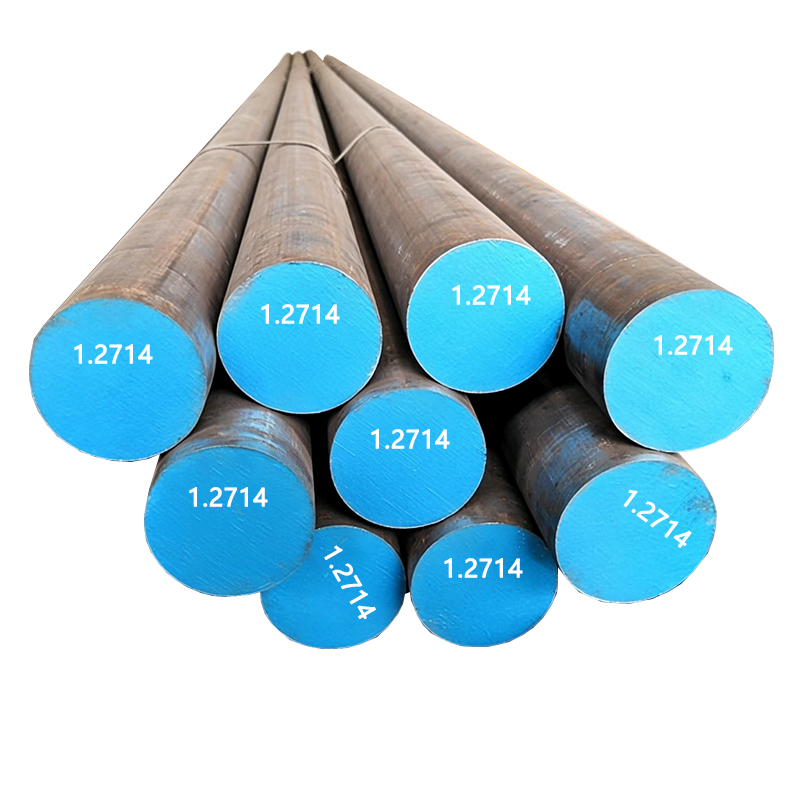
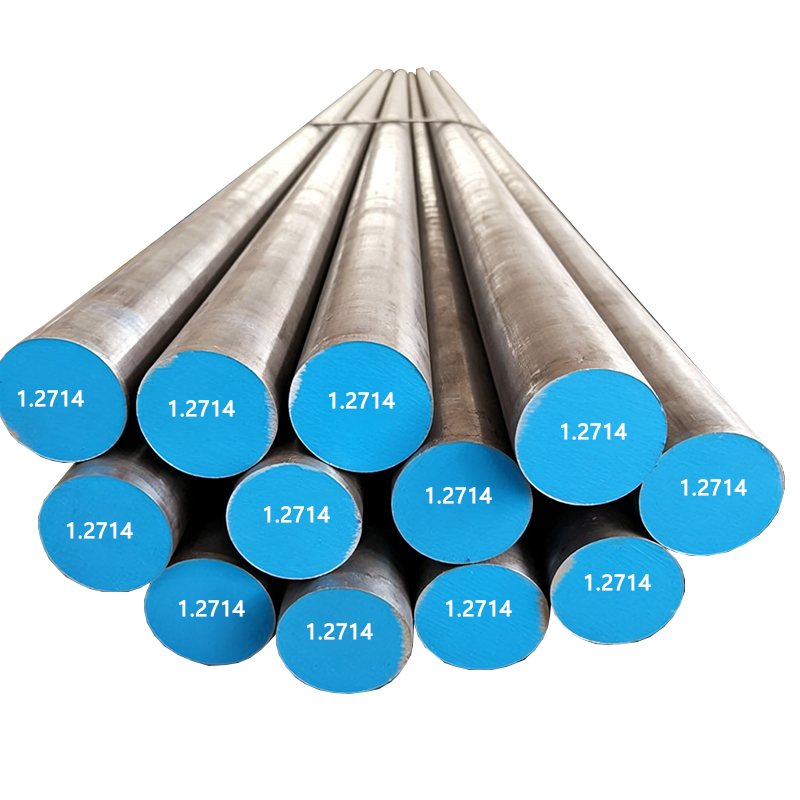
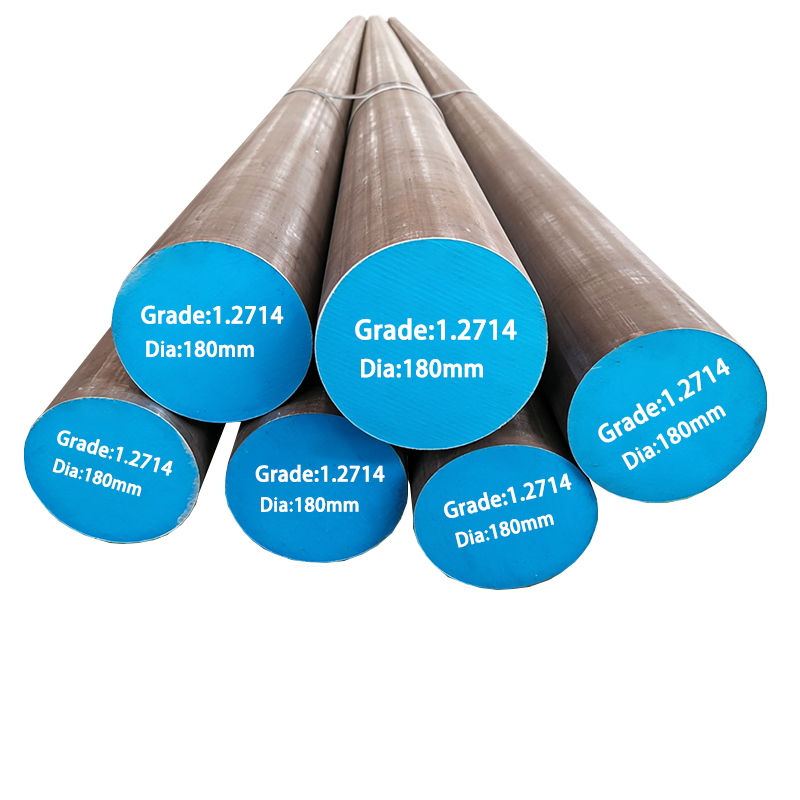
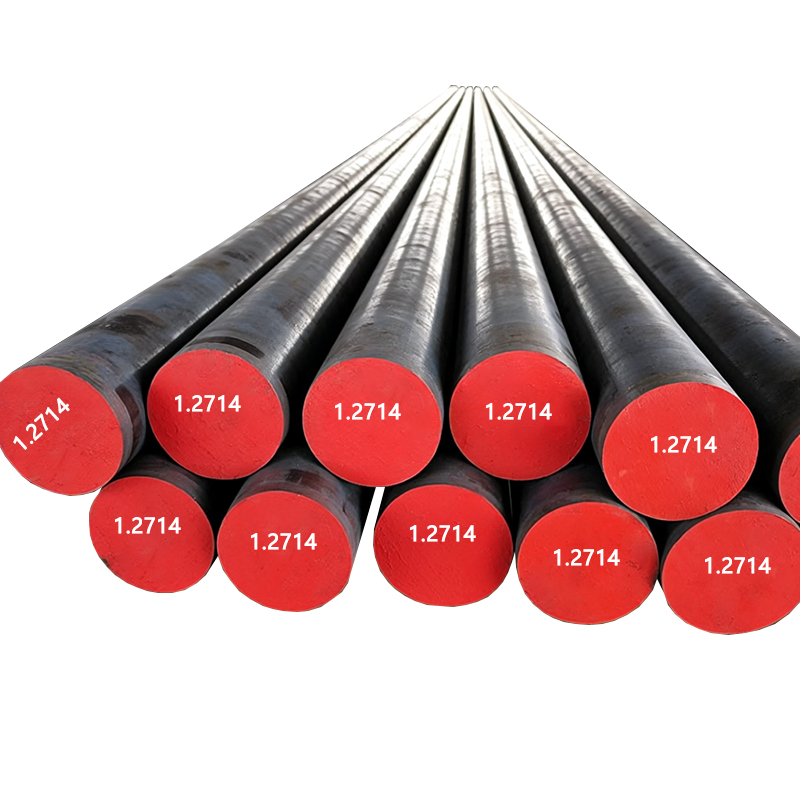
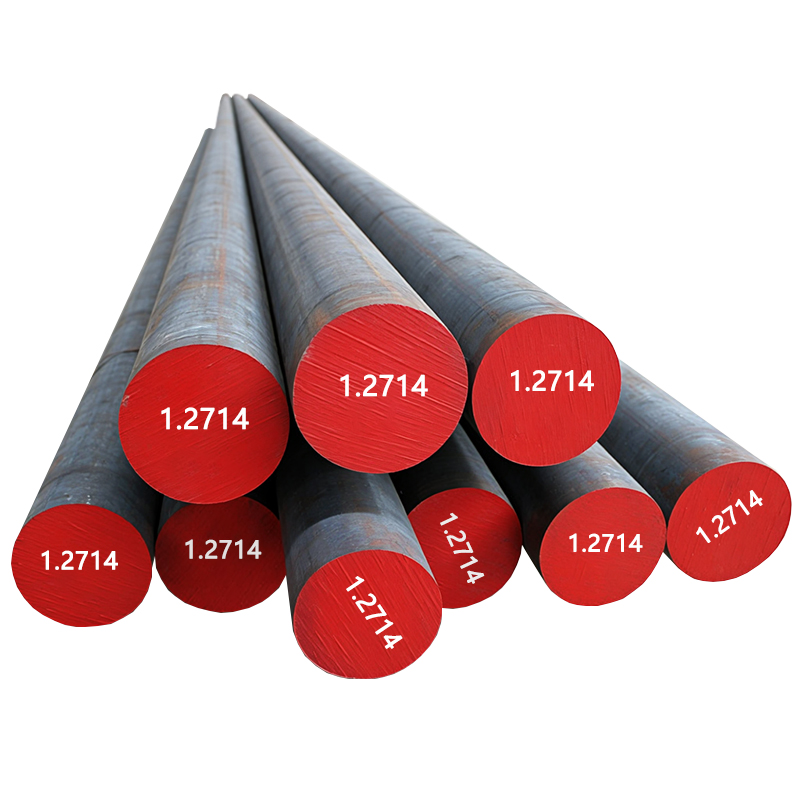
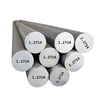
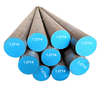
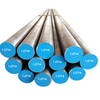
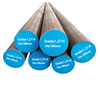
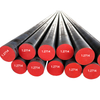
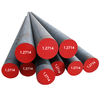


Grade: DIN 1.2714
Equivalent Steel: ISO 55NiCrMoV7, ASTM L6, GB 5CrNiMo
The exceptional high-temperature performance and durability of 1.2714 hot work tool steel are directly attributable to its precisely balanced chemical composition. This chromium-nickel-molybdenum-vanadium alloy features a carbon content of 0.50-0.60%, which provides the necessary core hardness and strength for demanding applications. Its substantial nickel content (1.50-1.80%) is key to imparting superior toughness and impact resistance, enabling it to withstand the severe mechanical shocks of heavy forging. The inclusion of chromium (1.0-1.2%) enhances hardenability, while a synergistic combination of molybdenum (0.45-0.55%) and vanadium (0.07-0.12%) forms stable carbides.
| Quantity: | |
|---|---|
1.2714
Qilu
DIN 1.2714 is a premium German standard hot work die steel, renowned for its exceptional all-round performance in extreme high-temperature and high-mechanical-stress working environments. As a classic nickel-chromium-molybdenum-vanadium alloy steel, it is precisely formulated to balance high-temperature strength, impact toughness and wear resistance—solving the common pain points of ordinary hot work steels such as easy softening, cracking and short service life under thermal cycling conditions.
Compliant with DIN 17350 standard (grade 56NiCrMoV7), 1.2714 has corresponding equivalent grades in major international standards: ASTM A681 L6 (US), ISO 4957 55NiCrMoV7 (Europe) and GB/T 1299 5CrNiMo (China). It is the first choice material for manufacturing molds and tools in aerospace, automotive manufacturing, non-ferrous metal processing and plastic molding industries, where reliable operation under severe thermal stress is required.
The advanced smelting and forging process of 1.2714 ensures the purity and structural uniformity of the material, and its unique alloy composition makes it retain excellent mechanical properties even after long-term exposure to 500℃+ high temperature, providing a strong guarantee for the long service life of molds and high-precision production.
Country | USA | ISO | Germany | China |
Standard | ASTM A681 | ISO 4957 | DIN17350 | GB/T1299 |
Grade | L6 | 55NiCrMoV7 | 56NiCrMoV7/1.2714 | 5CrNiMo |
Grade | C | Si | Mn | P | S | Cr | Mo | Ni | V |
L6 | 0.65-0.75 | 0.10-0.50 | 0.25-0.80 | 0.030Max | 0.030Max | 0.60-1.20 | 0.50Max | 1.25-2.00 | / |
55NiCrMoV7 | 0.50-0.60 | 0.10-0.40 | 0.60-0.90 | 0.030Max | 0.020Max | 0.80-1.20 | 0.35-0.55 | 1.50-1.80 | 0.05-0.15 |
1.2714/ 56NiCrMoV7 | 0.50-0.60 | 0.10-0.40 | 0.65-0.95 | 0.030Max | 0.030Max | 1.00-1.20 | 0.45-0.55 | 1.50-1.80 | 0.07-0.12 |
5CrNiMo | 0.50-0.60 | 0.40Max | 0.50-0.80 | 0.030Max | 0.030Max | 0.50-0.80 | 0.15-0.30 | 1.40-1.80 | / |
1.2714 has excellent heat treatment response, and different hardness states can be obtained through precise process control to adapt to different processing and application requirements:
Annealed state (+A): Maximum hardness HB248, the material has good machinability, easy for rough and fine processing of molds, and can reduce processing time and tool loss.
Cold-drawn state: Maximum hardness HB262, with higher dimensional accuracy and surface finish, suitable for precision forming and semi-finished product processing of small and medium-sized molds.
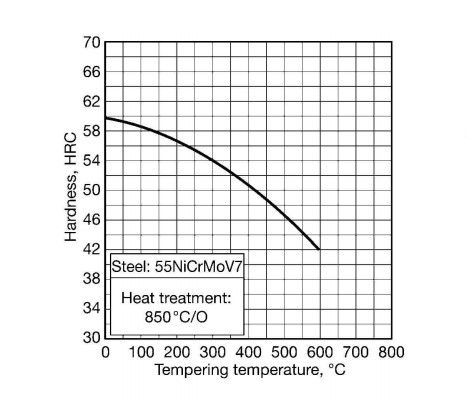
Hardened and tempered state (+HT): Minimum hardness HRC42, after controlled heating (840-860℃) + oil quenching + tempering (490-510℃), the hardness is evenly distributed throughout the material, with high compressive strength and wear resistance, meeting the requirements of heavy-duty working conditions.
Key Heat Treatment Tip: Slow cooling after tempering is recommended to eliminate internal stress and avoid secondary cracking of the mold during use.
Heat the 1.2714 steel uniformly in the furnace to 790–820°C
Hold at this temperature for sufficient soaking time to ensure thorough thermal equilibrium
Cool slowly in the furnace to room temperature
Preheating
Preheat the steel to 649°C before final heating
Quenching
Heat the 1.2714 steel in a salt bath furnace to 840–860°C
Hold at temperature for proper soaking to ensure uniform austenitization
Quench promptly in oil
Tempering
Temper the quenched steel in the furnace at 490–510°C
Remove from the furnace and cool in air
1.2714 is produced by adopting the international advanced steelmaking process, strictly controlling each link to ensure the high quality of the finished product:
Smelting process: EF+LF+VD / EAF+LF+VD+ESR dual process optional, effectively removing inclusions and gas in the steel, improving the purity of the material, and reducing the risk of internal defects.
Forging process: Forging within the strict temperature range (initial forging: 1050-1100℃, final forging: ≥850℃), avoiding grain coarsening and structural cracking caused by overheating or underheating.
Cooling process: Slow cooling after forging to fully release the internal stress of the material, ensuring the dimensional stability of the mold during subsequent processing and use, and reducing the deformation rate.
1.2714 complies with EN10228-3 class III and Sep 1921-84 D/D ultrasonic testing standards, with strict control over internal defects such as voids and cracks. The qualified rate of non-destructive testing reaches 100%, which can meet the high reliability requirements of molds and components in aerospace, high-end automotive and other key fields.
We provide customized processing of 1.2714 in various specifications to meet the different needs of customers for mold processing and production, with strict dimensional tolerance control to ensure processing accuracy:
| Product Type | Size Range | Length | Dimensional Tolerance |
| Hot rolled bar | Φ10-Φ190mm | 2000-5800mm | ±0.5mm (Φ≤50mm); ±0.8mm (Φ>50mm) |
| Hot forged bar | Φ200-Φ600mm | 2000-5800mm | ±1.0mm |
| Hot rolled plate | Thickness:10-60mm; Width:310-810mm | 2000-5800mm | Thickness:±0.3mm; Width:±1.0mm |
| Hot forged plate | Thickness:70-250mm; Width:310-810mm | 2000-5800mm | Thickness:±0.5mm; Width:±1.5mm |
| Hot forged block | Thickness:260-500mm; Width:300-1000mm | 2000-5800mm | Customized according to customer requirements |
Custom Service: We support cutting, rough machining, heat treatment and other pre-processing services according to customer drawings, reducing the customer's subsequent processing steps and improving production efficiency.
Thanks to its excellent comprehensive performance, 1.2714 has a wide range of applications in hot work, cold work and plastic molding fields, and is especially suitable for high-stress working conditions with high temperature, high impact and repeated wear:
Heavy forging dies: Ideal for hammer forging and press forging of large mechanical components such as automotive crankshafts, connecting rods and engine blocks, withstanding repeated high-impact loads and high temperatures above 600℃.
Non-ferrous metal extrusion dies: Used for hot extrusion of aluminum, copper and their alloys, maintaining stable shape and size during long-term contact with molten non-ferrous metals, and resisting erosion and adhesion of molten materials.
Die casting dies: Suitable for die casting of zinc, aluminum and magnesium alloys, with excellent thermal fatigue resistance, effectively preventing mold failure caused by thermal cracking and molten metal erosion.
Thick plate stamping dies: For blanking, bending and forming of thick metal sheets (thickness ≥8mm), relying on high toughness to prevent chipping and edge collapse of the die.
Sheet metal shear blades: Used for cutting carbon steel, stainless steel and non-ferrous metal sheets, with high wear resistance extending the service life of the blades and reducing replacement frequency.
Cold heading dies: Resists the high pressure of cold forming, and is suitable for producing high-strength fasteners such as bolts, nuts and rivets with high precision and consistency.
Large engineering plastic injection molds: For high-volume production of nylon, ABS, PC and other engineering plastic products, with good dimensional stability, ensuring the precision of plastic parts and reducing the scrap rate.
Plastic blow molds: Manufactures PET bottles, plastic barrels and other hollow containers, resisting the wear of molten plastic and the impact of high-pressure air blowing, and adapting to the high-speed production rhythm of the packaging industry.
Machine tool accessories: As heavy-duty cutter bodies, fixtures and guide rails, enduring high cutting forces and repeated friction, improving the stability and service life of machine tools.
Wear-resistant industrial parts: Rolls, guide bushings and conveying components in metallurgy, mining and other industries, reducing maintenance costs and improving production efficiency.
Aerospace components: High-stress structural parts and thermal processing molds for aerospace equipment, withstanding extreme working conditions such as high temperature, low pressure and high impact, and ensuring the reliability of equipment.
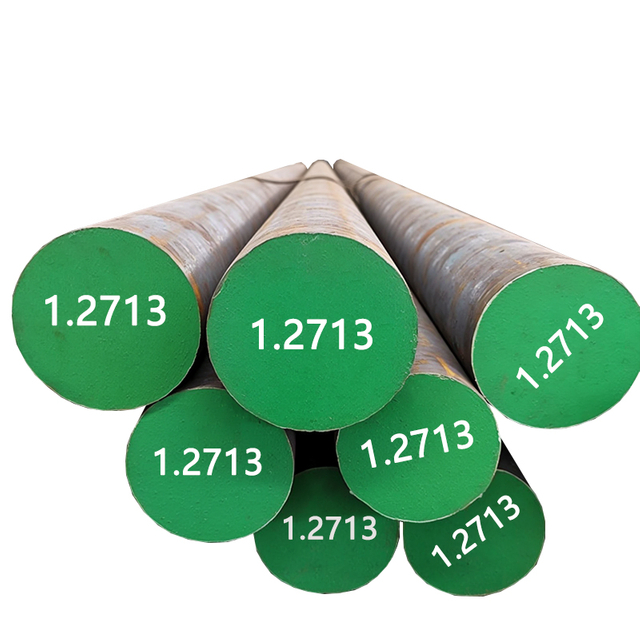
1.2713 is the "sibling grade" of 1.2714, both belonging to nickel-chromium-molybdenum hot work steels, but the core differences are obvious:
Alloy content: 1.2714 has higher molybdenum and vanadium content, and the chromium content is more concentrated (1.0-1.2%).
Performance: 1.2714 has better tempering stability and wear resistance, and lower thermal cracking risk; 1.2713 has better machinability and lower cost.
Application selection: 1.2714 for heavy-duty, long-life high-temperature molds; 1.2713 for medium and low stress, small and medium-sized molds with low cost requirements.
8407 is a classic high-performance hot work steel, and 1.2714 has its own advantages in cost and toughness:
Toughness: 1.2714 has higher nickel content, better impact toughness, and is more suitable for high-impact forging dies; 8407 has better high-temperature hardness and wear resistance.
Cost: 1.2714 has a more moderate raw material and manufacturing cost, with higher cost performance; 8407 is a high-end grade with higher price.
Application selection: 1.2714 for general high-temperature high-impact molds; 8407 for ultra-high temperature (≥700℃) and high-wear die casting molds.
H13 is the most widely used hot work steel in the world, with a chromium-based alloy system, and the difference with 1.2714 is significant:
Alloy system: 1.2714 is nickel-chromium-molybdenum system, focusing on toughness; H13 is chromium-molybdenum-vanadium system, focusing on high-temperature strength and wear resistance.
Thermal fatigue resistance: 1.2714 has better resistance to thermal cracking, suitable for molds with frequent heating and cooling; H13 has better oxidation resistance, suitable for long-term high-temperature holding molds.
Application selection: 1.2714 for forging, stamping and other impact-type hot work molds; H13 for extrusion, die casting and other long-term high-temperature hot work molds.
A1: 5CrNiMo is the Chinese equivalent of 1.2714, but there are differences in alloy composition: 5CrNiMo has lower chromium and molybdenum content, and no vanadium element. In medium and low stress working conditions (such as small forging dies, low-volume plastic molds), the two can be interchanged; in heavy-duty, high-temperature, long-life working conditions (such as large automotive forging dies, high-volume die casting dies), 1.2714 has obvious performance advantages and is not recommended to be replaced by 5CrNiMo.
A2: The heat treatment process is determined according to the mold type and working conditions:
Forging dies/stamping dies (high impact): Quenching at 840℃ + tempering at 500-510℃, hardness HRC42-45, focusing on toughness and impact resistance.
Extrusion dies/die casting dies (high wear): Quenching at 860℃ + tempering at 490-500℃, hardness HRC45-48, focusing on wear resistance and high-temperature strength.
Plastic molds (high precision): Quenching at 850℃ + double tempering (500℃+490℃), hardness HRC40-43, focusing on dimensional stability and machinability.
A3: 1.2714 has good machinability in the annealed state (HB≤248), and the cutting resistance is moderate. It is recommended to use:
Rough machining: Cemented carbide tools (YT15, YT30) with high wear resistance.
Finish machining: Cermet tools or coated carbide tools (TiN/TiCN coating) to improve the surface finish of the mold.
Note: Reduce the cutting speed and feed rate during processing to avoid excessive cutting heat leading to work hardening of the material.
A4: While both are hot-work steels, 1.2714 is alloyed with significantly more nickel, giving it superior toughness and ductility compared to H13. This makes it the preferred choice for dies subjected to high mechanical impact, like heavy forging. H13 typically offers better hot hardness and wear resistance at very high temperatures, making it more common in aluminum die-casting.
We accept customized orders of 1.2714 heat-resistant hot work tool steel in various specifications, and can provide personalized processing and technical solutions according to your actual application needs. If you have any questions about product selection, heat treatment or processing, please contact us at any time.