Grade: DIN 1.2379
Equivalent Steel: ASTM D2, ISO X153CrMoV12, GB Cr12Mo1V1, JIS SKD11
DIN 1.2379 tool steel as a high-carbon, high-chromium cold-work steel, its formulation features a carbon content of 1.50-1.60%, which is fundamental for achieving very high hardness and forming wear-resistant carbides after heat treatment. This is complemented by a significant chromium level of 11.00-12.00%, which not only contributes to hardness but also enhances corrosion resistance. The strategic addition of molybdenum (0.60-0.80%) and vanadium (0.90-1.10%) refines the grain structure, thereby boosting toughness, hot hardness, and secondary hardening properties.
| Availability: | |
|---|---|
| Quantity: | |
1.2379
Qilu
DIN 1.2379 is a premium high-carbon high-chromium cold work tool steel with global recognition, engineered to deliver exceptional wear resistance, high hardness, and balanced toughness—core properties that make it the top choice for precision tools and molds operating under extreme cold working conditions. As a benchmark grade in the tool steel industry, it is widely adopted across aerospace, automotive, mold making, and metal processing sectors for its superior edge retention, dimensional stability, and resistance to abrasive wear.
Molybdenum and vanadium are strategically added to its alloy composition, elevating its performance beyond standard cold work steels: molybdenum enhances hardenability and impact resistance, while vanadium refines grain structure and boosts wear resistance. This unique alloy blend ensures consistent performance even in the most demanding production environments, reducing downtime and scrap rates for mass manufacturing.
DIN 1.2379 has equivalent grades in major industrial countries, enabling seamless global supply and application. Such as the American standard D2 (ASTM A681), the international standard X153CrMoV12 (ISO 4957), the Japanese standard SKD11 (JIS G4404), and the Chinese standard Cr12Mo1V1 (GB/T 1299). Its American equivalent AISI D2 is the most well-known alternative, with minor compositional adjustments across international grades to adapt to regional manufacturing standards—all maintaining the core performance characteristics of DIN 1.2379.

The precisely calibrated chemical ratio (1.50-1.60% C, 11.00-12.00% Cr, 0.60-0.80% Mo, 0.90-1.10% V) creates a synergy of wear resistance, hardness, and toughness. Compared to low-alloy cold work steels, it offers 30% higher wear resistance and better dimensional stability after heat treatment.
The high chromium content forms a dense chromium carbide network in the microstructure, minimizing abrasive wear from repeated metal contact. It withstands moderate to high impact loads, making it suitable for tools and molds subjected to cyclic pressure and repeated use.
Even after rigorous quenching, tempering, and prolonged industrial use, DIN 1.2379 maintains tight dimensional tolerances. This property is critical for precision mold making, ensuring consistent part quality and reducing the need for post-processing adjustments.
It can be uniformly hardened to a high hardness level (HRC61+) across large cross-sections, eliminating the hardness gradient issue common in low-grade tool steels. This ensures consistent performance for large-sized molds and tools.
In the annealed state (HB≤255), DIN 1.2379 features good machinability for turning, milling, grinding, and polishing. After heat treatment, it can be precision ground to a mirror finish, meeting the surface quality requirements of high-precision molds.
DIN 1.2379 has standardized equivalent grades in all major industrial standards, with minor compositional differences that do not affect interchangeability in most applications. The following table details the official equivalents and their respective standards:
Country | USA | ISO | Germany | China | Japan |
Standard | ASTM A681 | ISO 4957 | DIN17350 | GB/T1299 | JIS G4404 |
Grade | D2 | X153CrMoV12 | 1.2379 | Cr12Mo1V1 | SKD11 |
DIN 1.2379 vs AISI D2: 1.2379 has a narrower chromium and vanadium range, offering more consistent performance; D2 has a wider compositional tolerance for more flexible manufacturing.
DIN 1.2379 vs SKD11: SKD11 has lower vanadium and higher molybdenum, with slightly lower wear resistance but better impact toughness; 1.2379 is superior for high-wear applications.
DIN 1.2379 vs Cr12Mo1V1: Cr12Mo1V1 is a direct copy of AISI D2 for the Chinese market, fully interchangeable with 1.2379 in all cold work applications.
All grades comply with their respective standard limits for phosphorus (P≤0.030%) and sulfur (S≤0.030%), ensuring low impurity content and high material purity.
Grade | C | Si | Mn | P | S | Cr | Mo | V |
D2 | 1.40-1.60 | 0.10-0.60 | 0.10-0.60 | 0.030Max | 0.030Max | 11.00-13.00 | 0.70-1.20 | 0.50-1.10 |
X153CrMoV12 | 1.45-1.60 | 0.10-0.60 | 0.20-0.60 | 0.030Max | 0.030Max | 11.00-13.00 | 0.70-1.00 | 0.70-1.00 |
1.2379 | 1.50-1.60 | 0.10-0.40 | 0.15-0.45 | 0.030Max | 0.030Max | 11.00-12.00 | 0.60-0.80 | 0.90-1.10 |
Cr12Mo1V1 | 1.40-1.60 | 0.60Max | 0.60Max | 0.030Max | 0.030Max | 11.00-13.00 | 0.70-1.20 | 0.50-1.10 |
SKD11 | 1.40-1.60 | 0.40Max | 0.60Max | 0.030Max | 0.030Max | 11.00-13.00 | 0.80-1.20 | 0.20-0.50 |
DIN 1.2379’s hardness varies with heat treatment conditions, all meeting industrial cold work tool steel standards. The tempered hardness (HRC61+) is the standard working hardness for most applications.
Heat Treatment | Hardness |
Annealed (+A) | HB255Max |
Cold-drawn condition | HB269Max |
Hardening and Tempering (+HT) | HRC61 Min |
We offer a full range of DIN 1.2379 products in hot rolled, hot forged, and precision finished forms, with fixed lengths of 2000-5800mm (custom lengths available upon request). All products are stocked in large quantities (10,000+ tons monthly) for fast delivery.
Product type | Size range | Length |
Hot rolled bar | Φ10-Φ190mm | 2000-5800mm |
Hot forged bar | Φ200-Φ600mm | 2000-5800mm |
Hot rolled plate/sheet | T:10-60mm; W:310-810mm | 2000-5800mm |
Hot forged plate | T:70-250mm; W:310-810mm | 2000-5800mm |
Hot Forged block | T: 260-500mm; W: 300-1000mm | 2000-5800mm |
Hot Rolled Bar Stock: Φ10, 12, 15, 18, 20, 22, 25, 28, 30, 32, 35, 38, 40, 45, 50, 55, 60, 65, 70, 75, 80, 85, 90, 95, 100, 105, 110, 120, 130, 140, 150, 160, 170, 180, 190mm
Hot Forged Bar Stock: Φ200, 210, 220, 230, 240, 250, 260, 270, 280, 290, 300, 310, 320, 330, 340, 350, 360, 370, 380, 390, 400mm
Precision finishing options are available for high-precision applications, with grinding/polishing offering the tightest tolerances.
Surface Finish | Turned | Milled | Grinding(Best) | Polished(Best) | Peeled(Best) | Black Forged | Black Rolled |
Tolerance | +0/+3mm | +0/+3mm | +0/+0.05mm | +0/+0.05mm | +0/+0.1mm | +0/+5mm | +0/+1mm |
Straighness | 1mm/1000mm max. | 3mm/1000mm max. | |||||
All DIN 1.2379 products pass strict ultrasonic flaw detection, complying with EN10228-3 Class III or Sep 1921-84 D/D standards, ensuring no internal defects (cracks, inclusions) that affect performance.
We use advanced refining processes to ensure high material purity and uniform microstructure, with optional ESR (Electroslag Remelting) for ultra-high precision applications:
Standard Process: EF+LF+VD / EAF+LF+VD
Premium Process (for high-precision molds): EF+LF+VD+ESR / EAF+LF+VD+ESR
Forging is critical to refining the grain structure and improving mechanical properties; our forging process strictly follows temperature control standards:
Preheat ingot to 700-800℃ in a controlled atmosphere furnace
Raise temperature to initial forging temperature: 1000-1100℃
Forge at no less than 850-900℃ (critical for avoiding cold cracking)
Sand cooling after forging to reduce internal stress
Proper heat treatment is essential to unlock DIN 1.2379’s full performance; the following processes are optimized for industrial production (suitable for equivalent grades like AISI D2/SKD11).
Annealing relieves internal stress and softens the material for machining:
Heat to 840-880℃ in a furnace
Soak at holding temperature (time based on cross-section: 1 hour per 25mm)
Slow furnace cooling (≤50℃/hour) to room temperature
Result: HB≤255, good machinability for all cutting processes.
This process achieves the high hardness and toughness required for cold work applications (salt bath furnace recommended for uniform heating):
Preheat to 816℃ (eliminates thermal shock)
Heat to austenitizing temperature: 1010-1030℃
Soak at holding temperature (25±1 minutes for test pieces; extended for thick workpieces)
Air quench (no water quench—avoids cracking)
Temper at 170-190℃ (60 minutes for test pieces)
Air cool to room temperature
Result: HRC≥61, high wear resistance and dimensional stability.

Above curve in figure is just a rough guide to the tempering behaviour of steels. When applying the curves for an estimation of the hardness which can be expected in quenched and tempered tools, it should be taken into account that the optimum heat-treatment conditions for the tools are not necessarily identical with those specified for the test pieces.
Total heating time of test pieces in a salt bath
Nature of steel | Hardening Time min | Tempering Time min |
Cold or hot work steels | 25 +/- 1 | 60 |
High-speed steels | 3 | Minimum 2 periods of 60 each |
Note: For non-salt bath heating (e.g., air furnace), extend heating time by 50-100%; heating times for thick tools (>100mm) need to be calculated based on cross-section.
DIN 1.2379 is a versatile cold work tool steel suitable for all low-temperature metal processing applications requiring wear resistance and precision. Its main applications are categorized as follows:
Blanking Dies: Clean, precise cutting of carbon steel, stainless steel, and aluminum sheets/strips (thickness 0.5-10mm)
Forming Dies: Cold bending, stamping, and forming of metal parts with tight dimensional tolerances
Drawing Dies: Deep drawing of automotive parts, household hardware, and metal containers (ensures no scratch on workpiece surface)
Trimming Dies: Trimming and finishing of stamped parts for consistent edge quality
Shear Blades: Cutting metal sheets, strips, and bars in steel mills and metal processing plants (minimal wear, long service life)
Slitting Knives: Precision slitting of thin foils (aluminum, copper, stainless steel) for electronics and packaging industries
Punching Tools: High-precision punching of holes in metal plates for aerospace and automotive components
Guide Rails: Smooth guidance for high-wear machinery (injection molding machines, metal stamping machines)
Wear Plates: Protection of machine beds and worktables in abrasive environments (mining, metallurgy)
Rollers: Rolling mill rollers and conveyor rollers for metal processing (resists abrasive and impact wear)
Gauges & Measuring Tools: Calibration gauges and precision inspection tools for quality control (maintains accuracy over time)
Thread Rolling Dies: Thread rolling for bolts, nuts, and mechanical fasteners (sharp, durable edges)
Cold Extrusion Dies: Cold extrusion of complex metal shapes for automotive and aerospace parts
High-Hardness Mechanical Parts: Bearings, gears, and shafts for high-speed, high-wear industrial machinery
A1: DIN 1.2379 is a German standard grade (DIN 17350) that has direct equivalents in major industrial nations. This makes it easy to source globally. The primary equivalents are:
USA (AISI): D2 (ASTM A681)
Japan (JIS): SKD11 (JIS G4404)
China (GB): Cr12Mo1V1 (GB/T 1299)
International (ISO): X153CrMoV12 (ISO 4957)
While there are minor variations in the specified elemental ranges, for all practical purposes in tooling and die applications, these grades are functionally interchangeable.
A2: The hardness depends on the heat treatment condition. In the soft annealed condition supplied for machining, the hardness is maximum 255 HB. After the full hardening and tempering process (typically austenitized at 1010-1030°C, air quenched, and tempered at 170-190°C), this steel achieves a working hardness of minimum 61 HRC. This high hardness is the key to its exceptional wear resistance in service.
A3: In its annealed state (approx. 240 HB), D2 is machinable but is considered more challenging than low-carbon or many standard alloy steels due to its high chromium carbide content. It requires the use of rigid machine tools, sharp carbide inserts, and proper cooling to achieve optimal results. Its excellent wear resistance during use is a direct result of the same hard carbides that make machining more demanding. After heat treatment, machining is only possible via grinding..
A4: Yes, absolutely. Quality assurance is a priority for us. We can supply material tested in accordance with international standards, commonly EN10228-3 Class 3 or SEP 1921-84 D/d. Please specify your testing requirements when requesting a quotation.
Minimum Order Quantity: 1 piece/bar/plate
Stock Availability: 10,000+ tons of hot rolled/forged bars in stock (real-time stock subject to inquiry)
Custom Services: Custom cutting, heat treatment, and surface finishing available
Delivery Terms: FOB, CIF, EXW (all international terms accepted)
Contact Us: For real-time stock information, custom quotes, and technical support, please contact our sales team via the [Inquire] button or email/phone on our website.
We guarantee all DIN 1.2379/AISI D2 products meet the respective international standards, with a full material certificate (MTC) provided for each order.
DIN 1.2379 is a premium high-carbon high-chromium cold work tool steel with global recognition, engineered to deliver exceptional wear resistance, high hardness, and balanced toughness—core properties that make it the top choice for precision tools and molds operating under extreme cold working conditions. As a benchmark grade in the tool steel industry, it is widely adopted across aerospace, automotive, mold making, and metal processing sectors for its superior edge retention, dimensional stability, and resistance to abrasive wear.
Molybdenum and vanadium are strategically added to its alloy composition, elevating its performance beyond standard cold work steels: molybdenum enhances hardenability and impact resistance, while vanadium refines grain structure and boosts wear resistance. This unique alloy blend ensures consistent performance even in the most demanding production environments, reducing downtime and scrap rates for mass manufacturing.
DIN 1.2379 has equivalent grades in major industrial countries, enabling seamless global supply and application. Such as the American standard D2 (ASTM A681), the international standard X153CrMoV12 (ISO 4957), the Japanese standard SKD11 (JIS G4404), and the Chinese standard Cr12Mo1V1 (GB/T 1299). Its American equivalent AISI D2 is the most well-known alternative, with minor compositional adjustments across international grades to adapt to regional manufacturing standards—all maintaining the core performance characteristics of DIN 1.2379.

The precisely calibrated chemical ratio (1.50-1.60% C, 11.00-12.00% Cr, 0.60-0.80% Mo, 0.90-1.10% V) creates a synergy of wear resistance, hardness, and toughness. Compared to low-alloy cold work steels, it offers 30% higher wear resistance and better dimensional stability after heat treatment.
The high chromium content forms a dense chromium carbide network in the microstructure, minimizing abrasive wear from repeated metal contact. It withstands moderate to high impact loads, making it suitable for tools and molds subjected to cyclic pressure and repeated use.
Even after rigorous quenching, tempering, and prolonged industrial use, DIN 1.2379 maintains tight dimensional tolerances. This property is critical for precision mold making, ensuring consistent part quality and reducing the need for post-processing adjustments.
It can be uniformly hardened to a high hardness level (HRC61+) across large cross-sections, eliminating the hardness gradient issue common in low-grade tool steels. This ensures consistent performance for large-sized molds and tools.
In the annealed state (HB≤255), DIN 1.2379 features good machinability for turning, milling, grinding, and polishing. After heat treatment, it can be precision ground to a mirror finish, meeting the surface quality requirements of high-precision molds.
DIN 1.2379 has standardized equivalent grades in all major industrial standards, with minor compositional differences that do not affect interchangeability in most applications. The following table details the official equivalents and their respective standards:
Country | USA | ISO | Germany | China | Japan |
Standard | ASTM A681 | ISO 4957 | DIN17350 | GB/T1299 | JIS G4404 |
Grade | D2 | X153CrMoV12 | 1.2379 | Cr12Mo1V1 | SKD11 |
DIN 1.2379 vs AISI D2: 1.2379 has a narrower chromium and vanadium range, offering more consistent performance; D2 has a wider compositional tolerance for more flexible manufacturing.
DIN 1.2379 vs SKD11: SKD11 has lower vanadium and higher molybdenum, with slightly lower wear resistance but better impact toughness; 1.2379 is superior for high-wear applications.
DIN 1.2379 vs Cr12Mo1V1: Cr12Mo1V1 is a direct copy of AISI D2 for the Chinese market, fully interchangeable with 1.2379 in all cold work applications.
All grades comply with their respective standard limits for phosphorus (P≤0.030%) and sulfur (S≤0.030%), ensuring low impurity content and high material purity.
Grade | C | Si | Mn | P | S | Cr | Mo | V |
D2 | 1.40-1.60 | 0.10-0.60 | 0.10-0.60 | 0.030Max | 0.030Max | 11.00-13.00 | 0.70-1.20 | 0.50-1.10 |
X153CrMoV12 | 1.45-1.60 | 0.10-0.60 | 0.20-0.60 | 0.030Max | 0.030Max | 11.00-13.00 | 0.70-1.00 | 0.70-1.00 |
1.2379 | 1.50-1.60 | 0.10-0.40 | 0.15-0.45 | 0.030Max | 0.030Max | 11.00-12.00 | 0.60-0.80 | 0.90-1.10 |
Cr12Mo1V1 | 1.40-1.60 | 0.60Max | 0.60Max | 0.030Max | 0.030Max | 11.00-13.00 | 0.70-1.20 | 0.50-1.10 |
SKD11 | 1.40-1.60 | 0.40Max | 0.60Max | 0.030Max | 0.030Max | 11.00-13.00 | 0.80-1.20 | 0.20-0.50 |
DIN 1.2379’s hardness varies with heat treatment conditions, all meeting industrial cold work tool steel standards. The tempered hardness (HRC61+) is the standard working hardness for most applications.
Heat Treatment | Hardness |
Annealed (+A) | HB255Max |
Cold-drawn condition | HB269Max |
Hardening and Tempering (+HT) | HRC61 Min |
We offer a full range of DIN 1.2379 products in hot rolled, hot forged, and precision finished forms, with fixed lengths of 2000-5800mm (custom lengths available upon request). All products are stocked in large quantities (10,000+ tons monthly) for fast delivery.
Product type | Size range | Length |
Hot rolled bar | Φ10-Φ190mm | 2000-5800mm |
Hot forged bar | Φ200-Φ600mm | 2000-5800mm |
Hot rolled plate/sheet | T:10-60mm; W:310-810mm | 2000-5800mm |
Hot forged plate | T:70-250mm; W:310-810mm | 2000-5800mm |
Hot Forged block | T: 260-500mm; W: 300-1000mm | 2000-5800mm |
Hot Rolled Bar Stock: Φ10, 12, 15, 18, 20, 22, 25, 28, 30, 32, 35, 38, 40, 45, 50, 55, 60, 65, 70, 75, 80, 85, 90, 95, 100, 105, 110, 120, 130, 140, 150, 160, 170, 180, 190mm
Hot Forged Bar Stock: Φ200, 210, 220, 230, 240, 250, 260, 270, 280, 290, 300, 310, 320, 330, 340, 350, 360, 370, 380, 390, 400mm
Precision finishing options are available for high-precision applications, with grinding/polishing offering the tightest tolerances.
Surface Finish | Turned | Milled | Grinding(Best) | Polished(Best) | Peeled(Best) | Black Forged | Black Rolled |
Tolerance | +0/+3mm | +0/+3mm | +0/+0.05mm | +0/+0.05mm | +0/+0.1mm | +0/+5mm | +0/+1mm |
Straighness | 1mm/1000mm max. | 3mm/1000mm max. | |||||
All DIN 1.2379 products pass strict ultrasonic flaw detection, complying with EN10228-3 Class III or Sep 1921-84 D/D standards, ensuring no internal defects (cracks, inclusions) that affect performance.
We use advanced refining processes to ensure high material purity and uniform microstructure, with optional ESR (Electroslag Remelting) for ultra-high precision applications:
Standard Process: EF+LF+VD / EAF+LF+VD
Premium Process (for high-precision molds): EF+LF+VD+ESR / EAF+LF+VD+ESR
Forging is critical to refining the grain structure and improving mechanical properties; our forging process strictly follows temperature control standards:
Preheat ingot to 700-800℃ in a controlled atmosphere furnace
Raise temperature to initial forging temperature: 1000-1100℃
Forge at no less than 850-900℃ (critical for avoiding cold cracking)
Sand cooling after forging to reduce internal stress
Proper heat treatment is essential to unlock DIN 1.2379’s full performance; the following processes are optimized for industrial production (suitable for equivalent grades like AISI D2/SKD11).
Annealing relieves internal stress and softens the material for machining:
Heat to 840-880℃ in a furnace
Soak at holding temperature (time based on cross-section: 1 hour per 25mm)
Slow furnace cooling (≤50℃/hour) to room temperature
Result: HB≤255, good machinability for all cutting processes.
This process achieves the high hardness and toughness required for cold work applications (salt bath furnace recommended for uniform heating):
Preheat to 816℃ (eliminates thermal shock)
Heat to austenitizing temperature: 1010-1030℃
Soak at holding temperature (25±1 minutes for test pieces; extended for thick workpieces)
Air quench (no water quench—avoids cracking)
Temper at 170-190℃ (60 minutes for test pieces)
Air cool to room temperature
Result: HRC≥61, high wear resistance and dimensional stability.

Above curve in figure is just a rough guide to the tempering behaviour of steels. When applying the curves for an estimation of the hardness which can be expected in quenched and tempered tools, it should be taken into account that the optimum heat-treatment conditions for the tools are not necessarily identical with those specified for the test pieces.
Total heating time of test pieces in a salt bath
Nature of steel | Hardening Time min | Tempering Time min |
Cold or hot work steels | 25 +/- 1 | 60 |
High-speed steels | 3 | Minimum 2 periods of 60 each |
Note: For non-salt bath heating (e.g., air furnace), extend heating time by 50-100%; heating times for thick tools (>100mm) need to be calculated based on cross-section.
DIN 1.2379 is a versatile cold work tool steel suitable for all low-temperature metal processing applications requiring wear resistance and precision. Its main applications are categorized as follows:
Blanking Dies: Clean, precise cutting of carbon steel, stainless steel, and aluminum sheets/strips (thickness 0.5-10mm)
Forming Dies: Cold bending, stamping, and forming of metal parts with tight dimensional tolerances
Drawing Dies: Deep drawing of automotive parts, household hardware, and metal containers (ensures no scratch on workpiece surface)
Trimming Dies: Trimming and finishing of stamped parts for consistent edge quality
Shear Blades: Cutting metal sheets, strips, and bars in steel mills and metal processing plants (minimal wear, long service life)
Slitting Knives: Precision slitting of thin foils (aluminum, copper, stainless steel) for electronics and packaging industries
Punching Tools: High-precision punching of holes in metal plates for aerospace and automotive components
Guide Rails: Smooth guidance for high-wear machinery (injection molding machines, metal stamping machines)
Wear Plates: Protection of machine beds and worktables in abrasive environments (mining, metallurgy)
Rollers: Rolling mill rollers and conveyor rollers for metal processing (resists abrasive and impact wear)
Gauges & Measuring Tools: Calibration gauges and precision inspection tools for quality control (maintains accuracy over time)
Thread Rolling Dies: Thread rolling for bolts, nuts, and mechanical fasteners (sharp, durable edges)
Cold Extrusion Dies: Cold extrusion of complex metal shapes for automotive and aerospace parts
High-Hardness Mechanical Parts: Bearings, gears, and shafts for high-speed, high-wear industrial machinery
A1: DIN 1.2379 is a German standard grade (DIN 17350) that has direct equivalents in major industrial nations. This makes it easy to source globally. The primary equivalents are:
USA (AISI): D2 (ASTM A681)
Japan (JIS): SKD11 (JIS G4404)
China (GB): Cr12Mo1V1 (GB/T 1299)
International (ISO): X153CrMoV12 (ISO 4957)
While there are minor variations in the specified elemental ranges, for all practical purposes in tooling and die applications, these grades are functionally interchangeable.
A2: The hardness depends on the heat treatment condition. In the soft annealed condition supplied for machining, the hardness is maximum 255 HB. After the full hardening and tempering process (typically austenitized at 1010-1030°C, air quenched, and tempered at 170-190°C), this steel achieves a working hardness of minimum 61 HRC. This high hardness is the key to its exceptional wear resistance in service.
A3: In its annealed state (approx. 240 HB), D2 is machinable but is considered more challenging than low-carbon or many standard alloy steels due to its high chromium carbide content. It requires the use of rigid machine tools, sharp carbide inserts, and proper cooling to achieve optimal results. Its excellent wear resistance during use is a direct result of the same hard carbides that make machining more demanding. After heat treatment, machining is only possible via grinding..
A4: Yes, absolutely. Quality assurance is a priority for us. We can supply material tested in accordance with international standards, commonly EN10228-3 Class 3 or SEP 1921-84 D/d. Please specify your testing requirements when requesting a quotation.
Minimum Order Quantity: 1 piece/bar/plate
Stock Availability: 10,000+ tons of hot rolled/forged bars in stock (real-time stock subject to inquiry)
Custom Services: Custom cutting, heat treatment, and surface finishing available
Delivery Terms: FOB, CIF, EXW (all international terms accepted)
Contact Us: For real-time stock information, custom quotes, and technical support, please contact our sales team via the [Inquire] button or email/phone on our website.
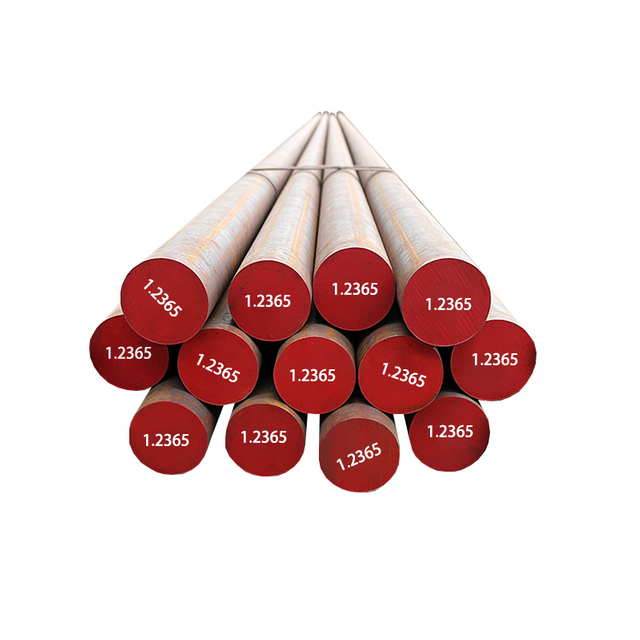
We guarantee all DIN 1.2379/AISI D2 products meet the respective international standards, with a full material certificate (MTC) provided for each order.