English 
T: +86-0731-85185770
E: enquiry@qilumetal.com
E: enquiry@qilumetal.com
No. 18 Xiangfu Middle Road,Yuhua District, Changsha City
 |


Grade: DIN 1.2316
Equivalent Steel: ISO X36CrMo17, JIS SUS420J2
The chemical composition of 1.2316 mold steel is precisely engineered to achieve an optimal balance between exceptional corrosion resistance and robust mechanical properties. Its high chromium content of 15.00-17.00% provides the fundamental basis for superior corrosion resistance, effectively protecting the steel against aggressive gases released during the processing of corrosive plastics like PVC. Furthermore, the addition of 1.00-1.30% molybdenum refines the grain structure, enhances hardenability and wear resistance, and contributes to its resistance against high-temperature corrosion.
| Quantity: | |
|---|---|
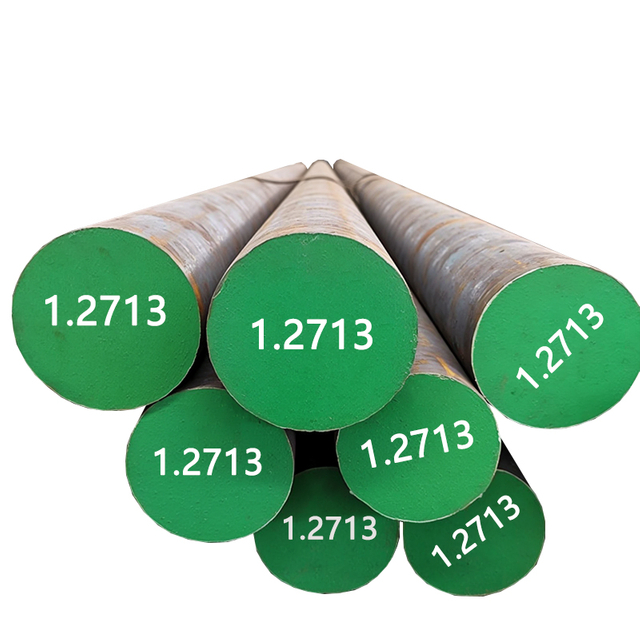
1.2316
Qilu
DIN 1.2316 tool steel is a chromium-molybdenum alloy plastic mold steel standardized under Germany's DIN 17350, with the international ISO 4957 X36CrMo17 and Japanese JIS G4303 SUS420J2 as its equivalent grades. Adopting vacuum degassing refining technology, the steel has extremely low impurity content, uniform internal structure and excellent performance stability, which fundamentally solves the problems of surface defects and performance inconsistency of traditional mold steel.
Supplied in a pre-hardened state (280-325HB / 29-33HRC), 1.2316 can be directly machined into complex mold geometries without additional pre-heat treatment, which shortens the mold manufacturing cycle by 30% or more and significantly reduces production costs. The core alloy composition of 15-17% chromium and 1.00-1.30% molybdenum forms a dense passivation film on the steel surface, which endows it with excellent corrosion resistance and wear resistance, and is far superior to ordinary carbon steel and low-chromium mold steel in harsh working environments.
Driven by the high chromium content (15-17%), 1.2316 forms a stable chromium oxide passivation film on the surface, which can effectively resist the corrosion of acidic and alkaline gases released during the processing of corrosive plastics such as PVC, fluorine-based materials and flame-retardant ABS+PC blends. It has strong resistance to pitting, rust and chemical erosion, and can maintain the precision of the mold for a long time even in high-humidity or chemical-rich production environments. The corrosion resistance is about 2 times that of the JIS equivalent SUS420J2 and 3 times that of ordinary P20 mold steel.
The pre-hardened supply state eliminates the need for intermediate heat treatment steps, and manufacturers can use standard cutting tools for turning, milling, drilling and other processing operations. With the balanced composition of max 1.00% silicon and max 1.00% manganese, the steel has stable cutting performance, low tool wear rate and small machining deformation, which is suitable for manufacturing molds with complex structures and high dimensional accuracy. Even for deep cavity and fine structure processing, it can maintain consistent processing accuracy.
With ultra-low impurity control (max 0.030% phosphorus and max 0.030% sulfur), 1.2316 avoids surface defects such as pinholes and sand holes during polishing, and can achieve a mirror finish with Ra ≤ 0.05μm. It is the first choice for manufacturing high-aesthetic plastic parts such as cosmetic packaging, optical lenses, car lights and display light guide plates. Its polishing performance is close to that of high-end S136 mold steel, and it has higher cost performance in medium and high-end mirror mold applications.
After professional hardening and tempering treatment, 1.2316 can reach a minimum hardness of HRC46, and the addition of 1.00-1.30% molybdenum further improves the wear resistance and tempering stability of the steel. It can withstand the friction and impact of repeated molding cycles (100,000+ times), and is suitable for high-volume continuous production of plastic parts. At the same time, it has good toughness matching, avoiding brittle fracture of the mold during use.
The steel has stable performance at high temperatures (≤300℃), small thermal expansion coefficient and no obvious deformation, which is suitable for high-temperature injection molding processes. It can withstand repeated high-temperature sterilization processes such as autoclaving (121℃, 0.1MPa), and does not produce material degradation or performance reduction, meeting the strict hygiene and performance requirements of the medical device industry.
The following is the official equivalent grade comparison of 1.2316 in major international standards, which is convenient for global procurement and production matching:
Country | ISO | Germany | Japan |
Standard | ISO 4957 | DIN17350 | JIS G4303 |
Grade | X36CrMo17 | 1.2316 | SUS420J2 |
The scientific ratio of chemical elements is the foundation of 1.2316's excellent performance, and the strict composition control ensures the stability of the steel's performance:
| Grade | C | Si | Mn | P | S | Cr | Mo | V |
| X36CrMo17/1.2316 | 0.33-0.43 | 1.00Max | 1.00Max | 0.030Max | 0.030Max | 15.00-17.00 | 1.00-1.30 | 1.00Max |
| SUS420J2 | 0.26-0.40 | 1.00Max | 1.00Max | 0.040Max | 0.030Max | 12.00-14.00 | / | / |
1.2316 has flexible heat treatment process options, and the hardness can be adjusted according to actual application requirements, with stable hardenability and small deformation after heat treatment:
| Heat Treatment Process | Hardness Index | Application Scenario |
| Annealed (+A) | HB ≤285 | Pre-machining state, easy for rough machining of large molds |
| Hardening + Tempering (+HT) | HRC ≥46 | Finished mold state, high wear resistance and corrosion resistance for high-volume production |
| Pre-hardened (as supplied) | 29-33HRC / 280-325HB | Direct machining state, no additional heat treatment required |
| Low-temperature tempering (180-250℃) | HRC 58-60 | High wear resistance demand parts, small mold cores |
| Nitriding treatment (525℃×20h) | Surface HV ≥650 | Further improve surface wear resistance and corrosion resistance |
We provide a full range of 1.2316 steel products with strict size tolerance control, which can be customized according to customer's drawing requirements, and the stock is updated in real time to meet the urgent production needs of customers:
| Product Type | Size Range | Length | Size Tolerance |
| Hot rolled bar | Φ10-Φ190mm | 2000-5800mm | ±0.3mm |
| Hot forged bar | Φ200-Φ600mm | 2000-5800mm | ±0.5mm |
| Hot rolled plate/sheet | Thickness:10-60mm; Width:310-810mm | 2000-5800mm | Thickness ±0.2mm; Width ±1mm |
| Hot forged plate | Thickness:70-250mm; Width:310-810mm | 2000-5800mm | Thickness ±0.3mm; Width ±1mm |
| Hot forged block | Thickness:260-500mm; Width:300-1000mm | 2000-5800mm | ±1.0mm |
1.2316 is a multi-functional mold steel with a wide range of applications, and its performance advantages are fully exerted in various high-demand mold manufacturing fields:
The core application field of 1.2316, suitable for manufacturing injection molds for corrosive plastics (PVC, flame-retardant plastics, reinforced PA/PC), high-gloss plastics (PMMA, PC transparent parts) and daily plastic parts. It can effectively prevent mold surface corrosion and discoloration caused by plastic decomposition gas, and maintain the surface finish of plastic parts. Typical products: car light shells, electronic product casings, high-gloss household appliances parts.
Ideal for producing molds for disposable medical devices such as syringes, infusion bottles, catheters and surgical instruments. It meets the FDA food and medical grade material requirements, resists the corrosion of medical disinfectants (ethanol, hydrogen peroxide), and can withstand repeated high-temperature sterilization without polluting the medical parts.
Specially used for PET bottle embryo molds, food packaging container molds and beverage bottle molds in the food and beverage industry. Its mirror surface meets the food safety and hygiene requirements, and its corrosion resistance can adapt to the cleaning of high-concentration cleaning agents in the food production line, ensuring the integrity and sanitation of the mold for a long time.
For aluminum and magnesium alloy die-casting processes, it is used to manufacture non-high-pressure bearing parts such as inserts, sprue sets, die nuts and positioning pins. It leverages the heat resistance and corrosion resistance of the steel to resist the erosion of molten aluminum/magnesium alloy and extend the service life of auxiliary parts.
In addition to mold manufacturing, 1.2316 is also suitable for manufacturing small chemical industry components (valves, pump cores), precision measuring tools and low-load wear-resistant parts due to its corrosion resistance and wear resistance.
Customers often compare 1.2316 with P20 and SUS420J2 when selecting materials. The following is a detailed performance and application comparison to help you make the most suitable material selection:
| Performance Index | 1.2316 | P20 |
| Corrosion Resistance | Excellent (15-17% Cr) | Poor (low alloy content), easy to rust |
| Polishability | Mirror grade (Ra≤0.05μm) | General (Ra≥0.2μm), no mirror effect |
| Supply State | Pre-hardened, direct machining | Pre-hardened, direct machining |
| Wear Resistance | High (Mo added) | General |
| Application | Corrosive plastics, high-gloss parts | Ordinary non-corrosive plastics, low-aesthetic parts |
| Cost | Slightly higher | Lower |
| Performance Index | 1.2316 | SUS420J2 |
| Chromium Content | 15-17% | 12-14% |
| Molybdenum Content | 1.00-1.30% (added) | 0 |
| Corrosion Resistance | Excellent (resist strong corrosive gases) | General (only resist mild corrosion) |
| Wear Resistance | High | General |
| Hardness After Tempering | HRC≥46 | HRC≤42 |
| Application | High-demand corrosive plastic molds | Low-demand non-corrosive plastic molds, ordinary hardware |
1.2316 has a mature heat treatment process, and the correct process operation can maximize its performance. The following are the standard and optimized heat treatment processes for different application requirements:
Preheating: 500-600℃, heat preservation for 1 hour (to eliminate internal stress and avoid thermal shock)
Austenitizing: 900-1010℃ (salt bath furnace), heat preservation for 1-2 hours (adjust according to the cross-section size of the mold)
Quenching: Oil cooling (uniform cooling, avoid air cooling which leads to insufficient hardness)
Tempering: 170-190℃, heat preservation for 2 hours, air cooling (to eliminate quenching stress and ensure hardness stability)
Quenching: 1020-1050℃ (vacuum furnace), heat preservation for 1-2 hours, oil cooling
Low-temperature tempering: 180-250℃, heat preservation for 2 hours, air cooling (hardness up to HRC58-60)
Pre-treatment: Clean the mold surface (remove oil, rust and oxide skin)
Nitriding: 525℃, heat preservation for 20 hours (gas nitriding)
Post-treatment: Air cooling, no need for tempering (surface hardness HV≥650, internal toughness remains unchanged)
Annealing temperature: 780-820℃, heat preservation for 2-3 hours
Cooling: Slow furnace cooling (cooling rate ≤50℃/h) to 600℃, then air cooling (hardness HB≤285, easy for rough machining)
Key Notes: Avoid rapid cooling of large-size molds to prevent cracking; use vacuum furnace or salt bath furnace for heat treatment to ensure uniform heating; the mold after heat treatment needs to be subjected to stress relief treatment before precision machining.
A1: 1.2316's core competitive advantage is the perfect combination of high corrosion resistance (15-17% chromium), pre-hardened direct machining state and mirror-grade polishability. Unlike P20 (poor corrosion resistance) and S136 (annealed supply, need additional heat treatment), it can adapt to harsh corrosive plastic processing environments while reducing mold manufacturing time and cost, with higher comprehensive cost performance.
A2: Yes, 1.2316 has good weldability. It is recommended to use matching chromium-molybdenum welding rods for welding, and preheat the welding area to 200-300℃ before welding to avoid welding cracks; after welding, perform low-temperature tempering (180-200℃) to eliminate welding stress and ensure the performance consistency of the welding area.
A3: No, SUS420J2 is only a low-demand equivalent grade of 1.2316. SUS420J2 has lower chromium content (12-14%) and no molybdenum added, so its corrosion resistance and wear resistance are significantly lower than 1.2316. It can only be used as a substitute in low-demand non-corrosive plastic mold applications, and cannot replace 1.2316 in processing PVC, flame-retardant plastics and other corrosive materials.
A4: 1.2316 MOD is the electroslag remelting (ESR) modified version of 1.2316, with lower impurity content (P≤0.015%, S≤0.005%), more uniform internal structure and better polishability and corrosion resistance. It is suitable for ultra-high-end mirror molds and medical precision molds, while the standard 1.2316 is sufficient for medium and high-end applications with higher cost performance.
Contact Us: For real-time stock inquiry, customized processing and technical consultation, please contact our sales team, and we will provide you with high-quality products and services with the most favorable price and the fastest speed!