| Availability: | |
|---|---|
| Quantity: | |
95MnWCr5
Qilu
95MnWCr5 / 1.2825 is a widely used medium-alloy cold work tool steel conforming to the German standard DIN EN ISO 4957. It is renowned for its excellent wear resistance, high toughness, and outstanding compressive strength.
This steel grade contains alloying elements such as manganese, tungsten, and chromium. These components work together to achieve high hardness and sufficient hardenability after heat treatment. The addition of tungsten particularly enhances the steel's red hardness and wear resistance, while chromium improves hardenability and provides increased resistance to tempering. Therefore, 1.2825 steel is particularly suitable for manufacturing cold work dies, stamping tools, and shearing tools that endure certain impact loads.
1: Steel equivalent
Country | ISO | Germany |
Standard | ISO 4957 | DIN 17350 |
Grade | 95MnWCr5 | 1.2825 |
2: Chemical composition
Grade | C | Si | Mn | Cr | P | S | V | W |
| 95MnWCr5/1.2825 | 0.90-1.00 | 0.10-0.40 | 1.05-1.35 | 0.40-0.65 | 0.030Max | 0.030Max | 0.05-0.20 | 0.40-0.70 |
3: Surface hardness and hardenability
Heat Treatment | Hardness |
Annealed (+A) | HB229Max |
| Hardening and Tempering (+HT) | HRC60 Min |
| Quenched and tempred (+QT) | HRC28-32(Common Range) |
4: Supply size & Tolerance & Stock size
Product type | Size range | Length |
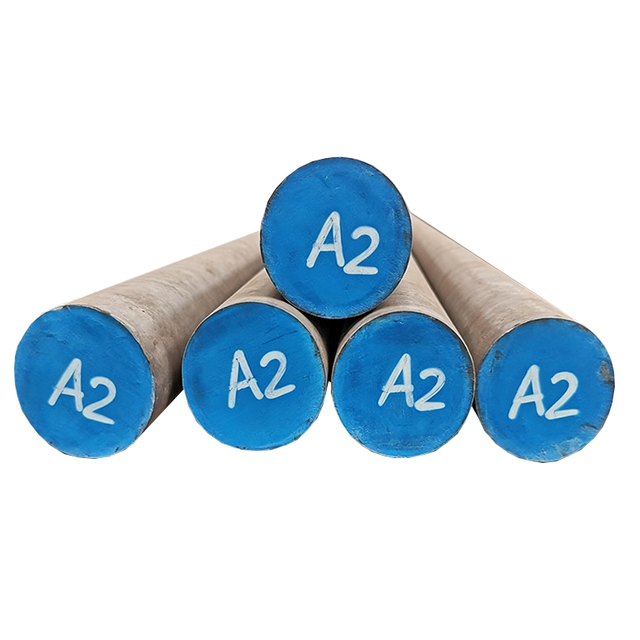
Hot rolled bar | Φ10-Φ190mm | 2000-5800mm |
Hot forged bar | Φ200-Φ600mm | 2000-5800mm |
Hot rolled plate/sheet | T:10-60mm; W:310-810mm | 2000-5800mm |
Hot forged plate | T:70-250mm; W:310-810mm | 2000-5800mm |
Hot Forged block | T: 260-500mm; W: 300-1000mm | 2000-5800mm |
Surface Finish | Turned | Milled | Grinding(Best) | Polished(Best) | Peeled(Best) | Black Forged | Black Rolled |
Tolerance | +0/+3mm | +0/+3mm | +0/+0.05mm | +0/+0.05mm | +0/+0.1mm | +0/+5mm | +0/+1mm |
Straighness | 1mm/1000mm max. | 3mm/1000mm max. | |||||
To ensure optimal performance for your application, we produce 1.2825 tool steel on a dedicated make-to-order basis. This approach guarantees fresh production and allows us to customize the process for your specific requirements. Tell us your needs, and let's get started.
5: Ultrasonic Test
EN10228-3 class III or Sep 1921-84 D/D
6:Steel making & Forging processing
1): Steel making process:
EF+LF+VD
EAF+LF+VD
EF+LF+VD+ESR
EAF+LF+VD+ESR
2): Forging processing:
Initial temperature: 1100-1150℃
Final temperature: 850℃
Cooling in the furnace or in the sand
7: Heat treatment
1): Annealed:
Heat 1.2825 steel to 770-800℃
Extremely slow cooling rate (approximately 10-20°C per hour) Cooled in the furnace to approximately 650°C
2): Quenching and tempering:
Heat 1.2825 steel to 790-810℃ in the salt bath furnace
Quench in the oil
Temper steel at 170-190℃ in the furnace
Cooling in the air.

Above curve in figure is a rough guide to the tempering behaviour of steels.
8:Application
1.2825, as a medium-alloy cold work tool steel with balanced comprehensive properties, boasts an exceptionally broad range of applications. It combines excellent wear resistance, high toughness, and outstanding compressive strength, making it a reliable choice across multiple industries. Below are the primary application classifications for 1.2825 steel:
1. Cold Work Dies
Punching Dies: Punching dies, blanking dies, trimming dies for medium-to-thick plates
Forming Dies: Bending dies, flanging dies, deep drawing dies (especially for non-aggressive forming components)
Embossing Dies: Used for surface embossing on coins, badges, hardware fittings, etc.
Drawing Dies: Used for deep drawing forming of metal sheets
Cold heading dies: Secondary components or parts requiring high toughness in dies for manufacturing standard fasteners like bolts and nuts
2. Cutting and Shearing Tools
Cutting Tools: Tools for processing wood, plastics, and soft metals, such as planes and paper cutters
Shearing Blades: Various scissors, shearing machine blades, and band saw blades for cutting sheet metal, bars, or tubes
Taps and Dies: For threading operations
3. Measuring Tools and Wear-Resistant Components
Measuring Tools: Calipers, plug gauges, templates, and other measuring instruments requiring wear resistance and dimensional stability
Wear-Resistant Components: Guide rails, wear plates, pins, and other mechanical parts requiring high wear resistance and impact resistance
95MnWCr5 / 1.2825 is a widely used medium-alloy cold work tool steel conforming to the German standard DIN EN ISO 4957. It is renowned for its excellent wear resistance, high toughness, and outstanding compressive strength.
This steel grade contains alloying elements such as manganese, tungsten, and chromium. These components work together to achieve high hardness and sufficient hardenability after heat treatment. The addition of tungsten particularly enhances the steel's red hardness and wear resistance, while chromium improves hardenability and provides increased resistance to tempering. Therefore, 1.2825 steel is particularly suitable for manufacturing cold work dies, stamping tools, and shearing tools that endure certain impact loads.
1: Steel equivalent
Country | ISO | Germany |
Standard | ISO 4957 | DIN 17350 |
Grade | 95MnWCr5 | 1.2825 |
2: Chemical composition
Grade | C | Si | Mn | Cr | P | S | V | W |
| 95MnWCr5/1.2825 | 0.90-1.00 | 0.10-0.40 | 1.05-1.35 | 0.40-0.65 | 0.030Max | 0.030Max | 0.05-0.20 | 0.40-0.70 |
3: Surface hardness and hardenability
Heat Treatment | Hardness |
Annealed (+A) | HB229Max |
| Hardening and Tempering (+HT) | HRC60 Min |
| Quenched and tempred (+QT) | HRC28-32(Common Range) |
4: Supply size & Tolerance & Stock size
Product type | Size range | Length |
Hot rolled bar | Φ10-Φ190mm | 2000-5800mm |
Hot forged bar | Φ200-Φ600mm | 2000-5800mm |
Hot rolled plate/sheet | T:10-60mm; W:310-810mm | 2000-5800mm |
Hot forged plate | T:70-250mm; W:310-810mm | 2000-5800mm |
Hot Forged block | T: 260-500mm; W: 300-1000mm | 2000-5800mm |
Surface Finish | Turned | Milled | Grinding(Best) | Polished(Best) | Peeled(Best) | Black Forged | Black Rolled |
Tolerance | +0/+3mm | +0/+3mm | +0/+0.05mm | +0/+0.05mm | +0/+0.1mm | +0/+5mm | +0/+1mm |
Straighness | 1mm/1000mm max. | 3mm/1000mm max. | |||||
To ensure optimal performance for your application, we produce 1.2825 tool steel on a dedicated make-to-order basis. This approach guarantees fresh production and allows us to customize the process for your specific requirements. Tell us your needs, and let's get started.
5: Ultrasonic Test
EN10228-3 class III or Sep 1921-84 D/D
6:Steel making & Forging processing
1): Steel making process:
EF+LF+VD
EAF+LF+VD
EF+LF+VD+ESR
EAF+LF+VD+ESR
2): Forging processing:
Initial temperature: 1100-1150℃
Final temperature: 850℃
Cooling in the furnace or in the sand
7: Heat treatment
1): Annealed:
Heat 1.2825 steel to 770-800℃
Extremely slow cooling rate (approximately 10-20°C per hour) Cooled in the furnace to approximately 650°C
2): Quenching and tempering:
Heat 1.2825 steel to 790-810℃ in the salt bath furnace
Quench in the oil
Temper steel at 170-190℃ in the furnace
Cooling in the air.

Above curve in figure is a rough guide to the tempering behaviour of steels.
8:Application
1.2825, as a medium-alloy cold work tool steel with balanced comprehensive properties, boasts an exceptionally broad range of applications. It combines excellent wear resistance, high toughness, and outstanding compressive strength, making it a reliable choice across multiple industries. Below are the primary application classifications for 1.2825 steel:
1. Cold Work Dies
Punching Dies: Punching dies, blanking dies, trimming dies for medium-to-thick plates
Forming Dies: Bending dies, flanging dies, deep drawing dies (especially for non-aggressive forming components)
Embossing Dies: Used for surface embossing on coins, badges, hardware fittings, etc.
Drawing Dies: Used for deep drawing forming of metal sheets
Cold heading dies: Secondary components or parts requiring high toughness in dies for manufacturing standard fasteners like bolts and nuts
2. Cutting and Shearing Tools
Cutting Tools: Tools for processing wood, plastics, and soft metals, such as planes and paper cutters
Shearing Blades: Various scissors, shearing machine blades, and band saw blades for cutting sheet metal, bars, or tubes
Taps and Dies: For threading operations
3. Measuring Tools and Wear-Resistant Components
Measuring Tools: Calipers, plug gauges, templates, and other measuring instruments requiring wear resistance and dimensional stability
Wear-Resistant Components: Guide rails, wear plates, pins, and other mechanical parts requiring high wear resistance and impact resistance