| Availability: | |
|---|---|
| Quantity: | |
HS0-4-1
Qilu
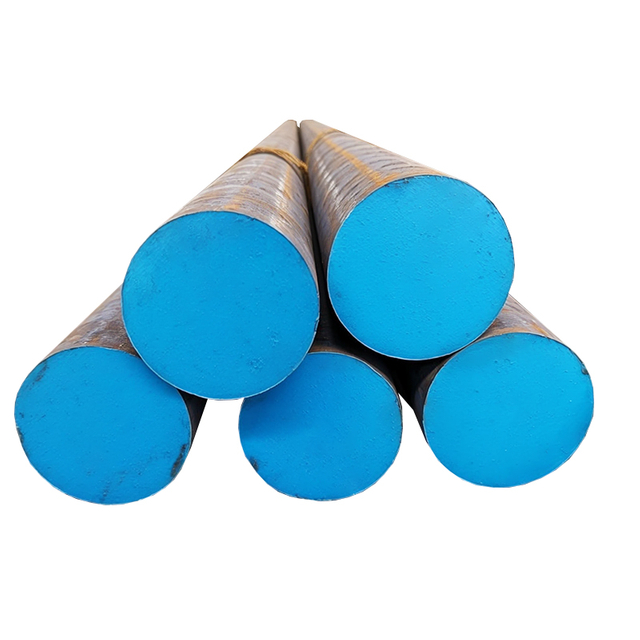
HS0-4-1/1.3325 is a high-speed tool steel compliant with the German standard DIN EN ISO 4957. It is widely used in the manufacture of high-performance cutting tools and high-temperature forming dies. It is renowned for its outstanding hardness retention at elevated temperatures (heat resistance), excellent wear resistance, and a favorable balance of toughness.
The core alloying system of 1.3325 steel comprises molybdenum and vanadium. The high molybdenum content is key to its outstanding thermal hardness, while the addition of vanadium significantly enhances wear resistance and refines the grain structure. Chromium primarily provides good hardenability and moderate oxidation resistance.
1: Steel equivalent
Country | ISO | Germany |
Standard | ISO 4957 | DIN 10027-2 |
Grade | HS0-4-1 | 1.3325 |
2: Chemical composition
Grade | C | Si | Mn | Cr | P | S | V | Mo |
| HS0-4-1/1.3325 | 0.770.85 | 0.65 Max | 0.40 Max | 3.90-4.40 | 0.030Max | 0.030Max | 0.90-1.10 | 4.00-4.50 |
3: Surface hardness and hardenability
Heat Treatment | Hardness |
Annealed (+A) | HB262Max |
| Hardening and Tempering (+HT) | HRC60 Min |
| Quenched and tempred (+QT) | HRC28-32(Common Range) |
4: Supply size & Tolerance & Stock size
Product type | Size range | Length |
Hot rolled bar | Φ10-Φ190mm | 2000-5800mm |
Hot forged bar | Φ200-Φ600mm | 2000-5800mm |
Hot rolled plate/sheet | T:10-60mm; W:310-810mm | 2000-5800mm |
Hot forged plate | T:70-250mm; W:310-810mm | 2000-5800mm |
Hot Forged block | T: 260-500mm; W: 300-1000mm | 2000-5800mm |
Surface Finish | Turned | Milled | Grinding(Best) | Polished(Best) | Peeled(Best) | Black Forged | Black Rolled |
Tolerance | +0/+3mm | +0/+3mm | +0/+0.05mm | +0/+0.05mm | +0/+0.1mm | +0/+5mm | +0/+1mm |
Straighness | 1mm/1000mm max. | 3mm/1000mm max. | |||||
To ensure optimal performance for your application, we produce 1.3325 high speed tool steel on a dedicated make-to-order basis. This approach guarantees fresh production and allows us to customize the process for your specific requirements. Tell us your needs, and let's get started.
5: Ultrasonic Test
EN10228-3 class III or Sep 1921-84 D/D
6:Steel making & Forging processing
1): Steel making process:
EF+LF+VD
EAF+LF+VD
EF+LF+VD+ESR
EAF+LF+VD+ESR
2): Forging processing:
Initial temperature: 1050-1100℃
Final temperature: 900℃
Cooling in the furnace or in the sand
7: Heat treatment
1): Annealed:
Heat 1.3325 steel to 850-880℃
Cool extremely slowly in the furnace at ≤ 20°C/hour to 500°C
2): Quenching and tempering:
Heat 1.3325 steel to 1110-1130℃ in the salt bath furnace
Quench in the oil
Temper steel at 550-570℃ in the furnace
Cooling in the air.

Above curve in figure is a rough guide to the tempering behaviour of steels.
8:Application
1.3325 steel, as a molybdenum-based general-purpose high-speed steel, offers well-balanced properties. It achieves an optimal equilibrium between high-temperature hardness, wear resistance, and toughness, while maintaining relatively economical costs. Its primary applications include:
1. Cutting Tools
Drills: Manufacture twist drills, straight-shank drills, and tapered-shank drills for boring holes in steel and cast iron, particularly medium-diameter general-purpose drills.
Taps and dies: Hand and machine taps and dies for cutting metric and imperial threads, requiring good wear resistance and sufficient toughness to prevent tooth breakage
Milling cutters: Manufacture of end mills, keyway cutters, cylindrical cutters, etc., for milling flat surfaces and grooves
Turning tools and planing tools: Used to make relatively simple turning tool shanks (welded inserts) and planing tools for general turning and planing operations
Saw blades: Used to manufacture machine saw blades and high-speed saw blades for cutting metal profiles
Gear cutting tools: Some hobs and broaches can be made from 1.3325 when high requirements are not demanded
2. Mold and Wear-Resistant Components
1) Cold-Work Dies:
Punches and Dies: For blanking and punching medium-thickness sheet metal
Cold-Heading Dies and Cold-Extrusion Dies: For forming standard parts and fasteners; cavity sections subjected to high pressure and wear
2) Hot-Work Dies:
Die-casting mold components: Parts like cores, ejector pins, and nozzles in aluminum/zinc alloy dies that endure thermal wear
Hot forging dies and punches: For forging ferrous/non-ferrous metals at moderate temperatures, suitable for small-to-medium batch production
3) Wear-resistant components:
Mechanical parts requiring high wear resistance, such as guide plates, bushings, and slides
HS0-4-1/1.3325 is a high-speed tool steel compliant with the German standard DIN EN ISO 4957. It is widely used in the manufacture of high-performance cutting tools and high-temperature forming dies. It is renowned for its outstanding hardness retention at elevated temperatures (heat resistance), excellent wear resistance, and a favorable balance of toughness.
The core alloying system of 1.3325 steel comprises molybdenum and vanadium. The high molybdenum content is key to its outstanding thermal hardness, while the addition of vanadium significantly enhances wear resistance and refines the grain structure. Chromium primarily provides good hardenability and moderate oxidation resistance.
1: Steel equivalent
Country | ISO | Germany |
Standard | ISO 4957 | DIN 10027-2 |
Grade | HS0-4-1 | 1.3325 |
2: Chemical composition
Grade | C | Si | Mn | Cr | P | S | V | Mo |
| HS0-4-1/1.3325 | 0.770.85 | 0.65 Max | 0.40 Max | 3.90-4.40 | 0.030Max | 0.030Max | 0.90-1.10 | 4.00-4.50 |
3: Surface hardness and hardenability
Heat Treatment | Hardness |
Annealed (+A) | HB262Max |
| Hardening and Tempering (+HT) | HRC60 Min |
| Quenched and tempred (+QT) | HRC28-32(Common Range) |
4: Supply size & Tolerance & Stock size
Product type | Size range | Length |
Hot rolled bar | Φ10-Φ190mm | 2000-5800mm |
Hot forged bar | Φ200-Φ600mm | 2000-5800mm |
Hot rolled plate/sheet | T:10-60mm; W:310-810mm | 2000-5800mm |
Hot forged plate | T:70-250mm; W:310-810mm | 2000-5800mm |
Hot Forged block | T: 260-500mm; W: 300-1000mm | 2000-5800mm |
Surface Finish | Turned | Milled | Grinding(Best) | Polished(Best) | Peeled(Best) | Black Forged | Black Rolled |
Tolerance | +0/+3mm | +0/+3mm | +0/+0.05mm | +0/+0.05mm | +0/+0.1mm | +0/+5mm | +0/+1mm |
Straighness | 1mm/1000mm max. | 3mm/1000mm max. | |||||
To ensure optimal performance for your application, we produce 1.3325 high speed tool steel on a dedicated make-to-order basis. This approach guarantees fresh production and allows us to customize the process for your specific requirements. Tell us your needs, and let's get started.
5: Ultrasonic Test
EN10228-3 class III or Sep 1921-84 D/D
6:Steel making & Forging processing
1): Steel making process:
EF+LF+VD
EAF+LF+VD
EF+LF+VD+ESR
EAF+LF+VD+ESR
2): Forging processing:
Initial temperature: 1050-1100℃
Final temperature: 900℃
Cooling in the furnace or in the sand
7: Heat treatment
1): Annealed:
Heat 1.3325 steel to 850-880℃
Cool extremely slowly in the furnace at ≤ 20°C/hour to 500°C
2): Quenching and tempering:
Heat 1.3325 steel to 1110-1130℃ in the salt bath furnace
Quench in the oil
Temper steel at 550-570℃ in the furnace
Cooling in the air.

Above curve in figure is a rough guide to the tempering behaviour of steels.
8:Application
1.3325 steel, as a molybdenum-based general-purpose high-speed steel, offers well-balanced properties. It achieves an optimal equilibrium between high-temperature hardness, wear resistance, and toughness, while maintaining relatively economical costs. Its primary applications include:
1. Cutting Tools
Drills: Manufacture twist drills, straight-shank drills, and tapered-shank drills for boring holes in steel and cast iron, particularly medium-diameter general-purpose drills.
Taps and dies: Hand and machine taps and dies for cutting metric and imperial threads, requiring good wear resistance and sufficient toughness to prevent tooth breakage
Milling cutters: Manufacture of end mills, keyway cutters, cylindrical cutters, etc., for milling flat surfaces and grooves
Turning tools and planing tools: Used to make relatively simple turning tool shanks (welded inserts) and planing tools for general turning and planing operations
Saw blades: Used to manufacture machine saw blades and high-speed saw blades for cutting metal profiles
Gear cutting tools: Some hobs and broaches can be made from 1.3325 when high requirements are not demanded
2. Mold and Wear-Resistant Components
1) Cold-Work Dies:
Punches and Dies: For blanking and punching medium-thickness sheet metal
Cold-Heading Dies and Cold-Extrusion Dies: For forming standard parts and fasteners; cavity sections subjected to high pressure and wear
2) Hot-Work Dies:
Die-casting mold components: Parts like cores, ejector pins, and nozzles in aluminum/zinc alloy dies that endure thermal wear
Hot forging dies and punches: For forging ferrous/non-ferrous metals at moderate temperatures, suitable for small-to-medium batch production
3) Wear-resistant components:
Mechanical parts requiring high wear resistance, such as guide plates, bushings, and slides